Iran
As of 6 April, Human Rights Activists in Iran (HRANA), a US-based non-governmental organization, documented 3,597 deaths in Iran due to strikes, including 1,665 civilians, 1,221 military personnel, and 711 unclassified. According to HRANA, "[i]t is believed that military casualties are significantly higher than the figures reported in [its] reports" as confirmations depend largely on government data that are obscured "due to the sensitive nature of military information". Because of HRANA's limited access "to locations where military forces are present, [its count] largely reflects reports of senior officers or military personnel who were present in urban areas." [2]
Military and officials

On 28 February 2026, Ali Khamenei, the supreme leader of Iran, was assassinated in an Israeli air attack on his compound. [76] Early on 1 March, Iranian state media announced that Khamenei had been killed. [77] The Fars News Agency, which is controlled by the Islamic Revolutionary Guard Corps (IRGC), announced that Khamenei's daughter, son-in-law, grandchild, and daughter-in-law Zahra Haddad-Adel had also been killed in the strikes. [78] [79] [80] The Iranian government declared 40 days of mourning. [81]


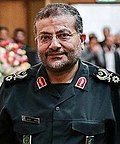


Iranian defense minister Aziz Nasirzadeh and IRGC commander Mohammad Pakpour were killed by Israeli airstrikes. [82] [83] Defence Council secretary Ali Shamkhani was killed [84] [85] along with four top Ministry of Intelligence officials. [86] The IDF later stated that it had confirmed the deaths of seven Iranian security leaders, including Shamkhani, Nasirzadeh, and Pakpour. [87]
Additional senior officials confirmed to have been killed were Salah Asadi, head of intelligence for Iran's emergency command, Mohammad Shirazi, head of the military office of Khamenei, and Hossein Jabal Amelian and Reza Mozaffari Nia, incumbent and former heads of the Organization of Defensive Innovation and Research, respectively. [88] On 1 March, chief of staff Abdolrahim Mousavi and former president Mahmoud Ahmadinejad were reported by Iranian state media to have also been killed by strikes. [89] [90] However, later reports confirmed that Ahmadinejad was alive. [91]
On 17 March, Israel assassinated Ali Larijani, secretary of Iran's Supreme National Security Council. This was confirmed by Iran. [92] His assassination caused anxiety among Iranian officials who were concerned "that Israel would not stop until all of Iran's leaders were killed and the Islamic Republic toppled" as well as questions over who would be targeted next. [93]
On 6 April, the head of the IRGC's intelligence organisation, Major General Majid Khademi, was assassinated in a joint US-Israeli airstrike, according to the IRGC. [94]
On 28 February, intelligence and military sources said to CBS News that 40 Iranian officials had been killed in the strikes but that they were not "clear whether these officials were in one location or multiple locations". [95] [96] On 1 March, US president Donald Trump said that 48 leaders had been killed. [97]
On 13 March, the Israel Defense Forces estimated that between 3,000 and 4,000 Iranian soldiers and commanders had been killed in the war. [98] On 15 March, Israel Defense Forces intelligence claimed that over 6,000 members of the IRGC had been killed and about 15,000 wounded. [4] According to Iran International, at least 4,700 Iranian security forces had been killed and 20,880 injured as of 31 March. [99] On 2 April, the Hengaw Organization for Human Rights, a Norway-based non-governmental organization, estimated that 6,410 members of the Iranian military forces had been killed in the attacks, up from over 1,300 on 2 March, 2,090 on 4 March, 3,910 on 10 March, 4,420 on 14 March, 4,789 on 17 March, 5,305 on 18 March, 5,890 on 24 March, and 6,180 on 28 March. [3]
Iranian Kurdistan
According to the Hengaw , after Tehran Province the highest number of reported Iranian military casualties from the war occurred in the Kurdish provinces of Kermanshah, Kurdistan, and West Azerbaijan. On 4 March, Hengaw reported that in these provinces, including Ilam, 109 military bases and security facilities had been targeted, and approximately 400 Iranian military personnel had been killed over the preceding three days. [100] On 10 March, Hengaw reported that 180 military bases and security facilities had been targeted and that approximately 900 Iranian military personnel had been killed in the four Kurdish provinces since the start of the war. [101] On 2 April, Hengaw reported "heavy military casualties in Kurdistan" and alleged continued concealment of official statistics, claiming that approximately 1,600 Iranian military personnel had been killed in the Kurdish provinces. [102]
On 6 March, Euractiv described casualties among Iranian forces in Iranian Kurdistan as "large scale." [103]
Civilians

At least 20 civilians, mostly families that had gathered after breaking their fast at Ramadan, [104] were killed in Tehran's Niloofar Square on 1 or 2 March, according to semi-official Mehr News Agency. [105] On 3 March, the Iranian Red Crescent Society said that over 600 civilians had been killed in the attacks [106] while HRANA estimated that 742 civilians had been killed. [107] On 7 March, the Red Crescent reported that over 6,668 civilian units had been targeted by US-Israeli strikes, including 5,535 residential units, 1,041 commercial units, 14 medical centers, 65 schools, and 13 centers affiliated with the Red Crescent. [108] The US reportedly used double tap airstrikes to maximize casualties. [109] [110] An Israeli airstrike on 9 March in the Resalat neighbourhood of Tehran destroyed a Basij-affiliated building as well as three residential buildings, resulting in 40 to 50 deaths. According to a BBC analysis, Israel used Mark 82 bombs in the attack. [104] As of 23 March, HRANA estimated that at least 15% of the total human casualties of the war had been under the age of 18. [111]
Minab school attack

On 28 February 2026, the first day of the 2026 Iran war, the Shajareh Tayyebeh [m] girls' elementary school [n] of the Shahrak-e Al-Mahdi neighbourhood in Minab, Hormozgan province in southern Iran was destroyed by a missile strike. According to witness accounts verified by satellite-based analyses, the school was triple tapped by three distinct strikes. [114] The roof of the school collapsed on students. At least 175 civilians were killed, over 100 of which were schoolchildren. [115] [116] [117] [118] As of 15 March 2026 [update] , the attack was the deadliest strike in terms of civilian casualties in the ongoing war. Multiple independent investigations concluded that the United States was responsible for the strike.
Sources involved with the US military's internal investigation of the incident corroborated that the strike was likely perpetrated by the US, despite the internal investigation not yet having reached a final conclusion. The attack was condemned by the Iranian government, UNESCO, and other international human rights organizations and activists as a violation of international humanitarian law.
At least 175 people were killed in the strike, [115] [116] with fatalities being raised from 168 people after recovery efforts on 4 March. [o] The day prior, Mizan News Agency claimed to have confirmed 66 boys, 54 girls, 26 teachers, and four parents had died. [125] A majority of those reportedly killed were schoolchildren. [121] [122] [126] Teachers were also killed, [127] including the school's principal. [113] According to a local official, the fatalities included multiple parents who had come to pick up their children. [128] [129] [130]
The victims were mostly schoolgirls aged between 7 and 12. [131]
Lamerd sports hall attack
On 28 February 2026, a sports hall in Lamerd, Fars province in southern Iran was attacked by a two‑missile strike while a women's volleyball team was using the facility, killing at least 21 people, including 4 children, and injuring 100 people. [132] The attack took place shortly after the 2026 Minab school attack. While the United States Central Command (CENTCOM) denied responsibility and accused Iran, investigations by The New York Times , BBC Verify, and independent analysts concluded that a United States Precision Strike Missile was used in the attack. [133] [132] [134] [135]
Karaj B1 bridge attack
On 2 April 2026, the unfinished B1 bridge in Karaj, Iran was attacked by the United States with two missiles, causing it to partially collapse. 8 people were killed and at least 95 were wounded. [136] [137] According to Iran's Fars News Agency, the second strike (double tapped) occurred once first responders had arrived to assist victims of the first strike. [138] The deputy governor of Alborz province said the victims were civilians celebrating Sizdah Be-dar in the area below the bridge. [139] The attack came amid President of the United States Donald Trump's threats to destroy Iranian civilian infrastructure amid the ongoing 2026 Iran war. [140]


