 | |||||||||||||||||
 County results Strong: 50–60% 60–70% Gerry: 50–60% 60–70% | |||||||||||||||||
| |||||||||||||||||
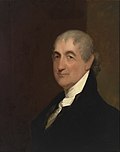

The 1812 Massachusetts gubernatorial election was held on April 6, 1812.
Contents
Incumbent Democratic-Republican Governor Elbridge Gerry was defeated by Federalist nominee Caleb Strong.
| |||||||||||||||||
April 6, 1812 | |||||||||||||||||
| |||||||||||||||||
| County results Strong: 50–60% 60–70% Gerry: 50–60% 60–70% | |||||||||||||||||
| |||||||||||||||||
| Elections in Massachusetts |
|---|
 |
 Massachusettsportal Massachusettsportal |
The 1812 Massachusetts gubernatorial election was held on April 6, 1812.
Incumbent Democratic-Republican Governor Elbridge Gerry was defeated by Federalist nominee Caleb Strong.
| Party | Candidate | Votes | % | ±% | |
|---|---|---|---|---|---|
| Federalist | Caleb Strong | 52,696 | 50.60% | ||
| Democratic-Republican | Elbridge Gerry (incumbent) | 51,326 | 49.28% | ||
| Scattering | 124 | 0.12% | |||
| Majority | 1,370 | 1.32% | |||
| Turnout | 104,146 | ||||
| Federalist gain from Democratic-Republican | Swing | ||||
Although the Federalists in Massachusetts had successfully taken the house and the governor's seat from the Democratic-Republican party in the 1812 election cycle, these gains did not translate into control of the Massachusetts State Senate, which remained in the hands of the Democratic-Republicans. [9] The cause for this laid in new constitutionally mandated electoral district boundaries that the state had adopted prior to the election. The Republican-controlled legislature had created district boundaries designed to enhance their party's control over state and national offices, leading to some oddly shaped legislative districts. [10] Although Gerry was unhappy about the highly partisan districting (according to his son-in-law, he thought it "highly disagreeable"), he signed the legislation. The shape of one of the state senate districts in Essex County was compared to a salamander [11] by a local Federalist newspaper in a political cartoon, calling it a "Gerry-mander". [12] Ever since, the creation of such districts has been called gerrymandering. [10]
On May 30, 1812, Nathaniel Ames wrote in his diary that "Strong declared Governor by majority of 600! and not near so many as the illegal vote of Boston." [13] [a]
 | This Massachusetts elections–related article is a stub. You can help Wikipedia by adding missing information. |