Map of the tribes, peoples, and nations of modern Africa published in 1972 by John Bartholomew & Son.
Slavery in contemporary Africa refers to a range of coercive labour practices that persist despite formal legal prohibition across African states. These practices include forced labour, human trafficking, debt bondage, forced marriage, child labour, and the recruitment and exploitation of child soldiers. In such conditions, individuals are unable to refuse or leave work due to coercion, deception, violence, or other forms of constraint recognized in international law as indicators of Modern slavery.[1][2]
Contemporary research and institutional reporting describe modern slavery in Africa as a set of interrelated phenomena rather than a single unified system. Estimates by organizations such as the International Labour Organization (ILO) and the Walk Free Foundation indicate that millions of people across the continent are affected by forms of forced labour and forced marriage, although precise measurement is constrained by the hidden and informal nature of these practices.[3][4]
The ILO identifies several indicators commonly associated with forced labour and modern slavery, particularly in sectors such as agriculture, mining, construction, and domestic work. These include abuse of vulnerability, deception, restriction of movement, isolation, physical or sexual violence, intimidation, retention of identity documents, withholding of wages, debt bondage, and excessive overtime.[5]
While all African states have formally prohibited slavery and related practices, enforcement varies significantly across jurisdictions. Contemporary forms of exploitation are often concentrated in informal and lightly regulated sectors, where oversight is limited. Contributing factors identified in scholarly and institutional analyses include poverty, limited access to education and formal employment, uneven economic development, population displacement, conflict, discrimination, migration pressures, and limitations in governance and labour law enforcement.[6][7]
In the contemporary period, modern slavery in Africa is also examined in relation to broader structural and global economic dynamics, including labour market informality and participation in global supply chains. Demand for low-cost labour and commodities, combined with migration patterns and regulatory gaps, has been associated with conditions in which coercive labour practices may emerge or persist across multiple sectors and jurisdictions.[8]
Conceptual framework and definitions
Contemporary slavery is not a single legally unified category, but is used in academic and policy literature as an umbrella concept encompassing a range of exploitative labour practices. It is commonly associated with international definitions of modern slavery, which describe situations in which an individual is controlled through coercion, deception, or the abuse of vulnerability such that they are unable to refuse or leave a situation of work.[1]
Legal and institutional definitions
The principal legal framework for defining contemporary forms of slavery is derived from international instruments developed by the International Labour Organization (ILO) and the United Nations. The Forced Labour Convention, 1930 (No. 29) defines forced labour as "all work or service which is exacted from any person under the menace of any penalty and for which the said person has not offered himself voluntarily".[9]
The concept of human trafficking was further elaborated in the 2000 Protocol to Prevent, Suppress and Punish Trafficking in Persons, Especially Women and Children, adopted under the United Nations Convention against Transnational Organized Crime. The protocol defines trafficking through three core elements: an act (such as recruitment, transportation, transfer, harbouring, or receipt of persons), a means (including coercion, abduction, fraud, deception, or abuse of power), and a purpose of exploitation.[10]
At the regional level, the African Charter on Human and Peoples' Rights prohibits slavery, slave trade, torture, and all forms of exploitation, and obliges state parties to ensure respect for human dignity and freedom.[11]
Analytical approaches in scholarship
In academic literature, contemporary slavery is examined through frameworks that emphasize degrees of control, coercion, and constrained choice. Sociologist Orlando Patterson conceptualized slavery as a condition of "social death," characterized by the extreme domination of individuals and the systematic denial of social and legal personhood.[12]
Economists and labour scholars often conceptualize labour relations as existing along a continuum between free and unfree labour. Within this framework, degrees of coercion, dependency, and lack of alternatives are used to assess the extent to which labour approximates forced labour or slavery-like conditions. This perspective highlights how features such as restricted mobility, withholding of wages, debt dependency, and threats of punishment can function as mechanisms that limit worker autonomy, particularly within informal or poorly regulated labour markets.[13]
Together, these legal, institutional, and analytical approaches provide complementary frameworks for understanding contemporary slavery as a multifaceted phenomenon shaped by coercion, vulnerability, and structural constraints across different social and economic contexts.
Regional patterns
Contemporary slavery in Africa does not manifest uniformly across the continent; its prevalence and enabling conditions vary depending on historical trajectories, economic structures, migration dynamics, and state capacity. Global estimates indicate that Africa accounts for a significant share of both forced labour and forced marriage cases, with regional variation shaped by localized vulnerabilities and patterns of mobility.[1]
West Africa
Map of West Africa highlighting countries commonly discussed in analyses of regional patterns of contemporary slavery.
West Africa is frequently identified in international reporting as a region with significant prevalence of forced labour and child labour in sectors such as agriculture, mining, and domestic work. Practices linked to debt bondage and exploitative recruitment have been documented in supply chains including cocoa production and artisanal mining. Cross-border human trafficking occurs within and between countries in the region, facilitated in part by porous borders and informal labour recruitment systems. Structural factors such as the size of the informal labour market and uneven regulatory enforcement are commonly cited in global monitoring reports as contributing to vulnerability.[3]
East Africa and the Horn of Africa
Map of East Africa (United Nations subregion) illustrating the geographic scope of the region.
In East Africa and the Horn of Africa, contemporary slavery is closely associated with migration flows, forced displacement, and transnational recruitment networks. Countries in the region experience both internal and cross-border trafficking in persons, affecting sectors such as domestic work, construction, and informal services. Reporting by international agencies notes that deceptive recruitment practices and transit exploitation are common features of trafficking routes in the region, particularly where individuals are in irregular migration situations.[14]
Central Africa
Map of Central Africa depicting countries associated with extractive industries and regional instability contexts.
Central Africa exhibits patterns shaped by limited infrastructure, ongoing armed conflict, and economies linked to extractive industries. Reports indicate that forced labour may occur in sectors such as logging and mining, including in supply chains associated with minerals like cobalt and coltan in the Democratic Republic of the Congo. Structural constraints such as weak rule of law and instability are identified in international literature as factors that can increase vulnerability to exploitation.[1]
Southern Africa
Map of Southern Africa showing national boundaries and regional geography relevant to migration and labour dynamics.
Southern Africa is characterized by both internal exploitation and cross-border human trafficking. Labour migration within the region, including movements between countries such as South Africa, Zimbabwe, and Mozambique, contributes to regional mobility while also creating conditions that can be exploited by intermediaries involved in recruitment. Exploitation is reported in sectors including agriculture, domestic work, and informal urban economies. Despite the existence of legal frameworks addressing trafficking in several countries, variations in enforcement capacity and socio-economic inequality remain important considerations in assessing vulnerability.[3]
North Africa
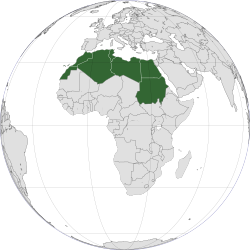
Orthographic projection map of North Africa, a region frequently associated with trans-Saharan and Mediterranean migration routes.
In North Africa, contemporary slavery is often discussed in relation to migration routes connecting sub-Saharan Africa with Europe, particularly across the Sahel and Mediterranean corridors. Migrants transiting through countries such as Libya and Tunisia may face risks including detention, extortion, and forced labour, especially in contexts where legal protections are limited for individuals in irregular migration situations. International reporting highlights the interaction between migration governance, transit conditions, and labour demand as factors influencing vulnerability to exploitation in the region.[14]
Types of contemporary slavery
Child labour in artisanal mining in the Democratic Republic of the Congo
Contemporary forms of slavery in Africa refer to a spectrum of exploitative practices involving coercion, deception, abuse of vulnerability, or other mechanisms that result in loss of autonomy and restricted freedom of movement. These practices are widely analyzed within international legal and academic frameworks as overlapping manifestations of modern slavery, rather than strictly isolated categories.
These forms are not mutually exclusive in practice. Multiple forms of exploitation may coexist within a single situation, and individuals may transition between categories depending on the nature and degree of coercion, consent, and control. Global estimates indicate that contemporary slavery affects millions of people worldwide, with Africa representing a significant region of concern due to structural vulnerabilities such as poverty, informality in labour markets, conflict exposure, and governance challenges.[1][15]
Child trafficking involves the recruitment, transportation, transfer, harboring, or receipt of children for the purpose of exploitation. In Africa, it is frequently linked to forced labour, domestic servitude, agricultural work, street vending, and sexual exploitation.
According to the United Nations Office on Drugs and Crime (UNODC), children constitute a significant proportion of detected trafficking victims in sub-Saharan Africa. Internal and cross-border trafficking routes have been documented in West and Central Africa, involving countries such as Benin, Togo, Nigeria, and Gabon.[16]
Armed conflict and insecurity further increase vulnerability. In Nigeria, insurgent activity associated with Boko Haram has included abductions of civilians, including the 2014 Chibok schoolgirls kidnapping. Reports by international organizations describe risks of forced marriage, forced labour, and prolonged exploitation among abducted individuals.
Sexual exploitation linked to trafficking occurs across multiple African regions, particularly in contexts affected by conflict, displacement, and limited institutional enforcement. Cases involving forced prostitution and sexual slavery have been reported in countries including the Democratic Republic of the Congo, Sierra Leone, Liberia, Niger, Uganda, and Mauritania.
Research indicates that sexual exploitation often intersects with other forms of coercion, including debt bondage, deceptive recruitment practices, and physical or psychological abuse.
In parts of West Africa, ritual servitude practices such as trokosi have been documented in Ghana, Togo, and Benin. Individuals, often women and girls, may be sent to traditional shrines under obligations linked to family or community circumstances. While interpretations vary, human rights organizations classify such practices as forms of coercive exploitation involving restricted autonomy and prolonged subordination.[17]
Forced labour is defined under international law as work or services exacted from a person under the menace of any penalty and for which the person has not voluntarily offered themselves.
In Africa, forced labour is reported in sectors such as agriculture, mining, construction, fishing, and domestic work. Informal labour structures, limited regulatory enforcement, and socio-economic vulnerability contribute to its persistence.
The ILO identifies forced labour as a major component of modern slavery globally, with Africa representing a region where structural conditions such as informal employment and weak labour protections increase exposure.[18]
Domestic servitude
Domestic servitude refers to situations in which individuals work in private households under coercive or abusive conditions, including confinement, threats, wage withholding, and restricted freedom of movement.
Due to the private and informal nature of domestic work, such exploitation is often hidden from public oversight. Victims are frequently women and children, and recruitment may involve deception, dependency relationships, or informal arrangements that obscure coercion.
The International Labour Organization identifies domestic work as a sector highly vulnerable to forced labour due to isolation of workers, lack of formal contracts, and limited inspection mechanisms.[18]
Debt bondage
Debt bondage occurs when an individual pledges their labour or services as security for a debt, but the terms of repayment are structured in ways that make repayment difficult or impossible, resulting in prolonged or indefinite exploitation.
This practice is recognized under international frameworks as a form of forced labour and is associated with structural factors such as poverty, limited access to formal financial systems, and weak labour protections.
Debt bondage is one of the most widespread forms of modern slavery globally. — Walk Free Foundation
The expansion of the digital economy in Africa has contributed to the growth of platform-based labour, including data annotation and content moderation used in artificial intelligence systems.
In cities such as Nairobi, Lagos, and Johannesburg, workers are engaged through global digital supply chains and business process outsourcing arrangements. While these roles provide employment opportunities, concerns have been raised in research regarding working conditions in some contexts, including workload intensity and limited labour protections.
Researchers analyze these developments within broader discussions of labour segmentation and global digital value chains. However, such work is only classified within the scope of contemporary slavery where elements of coercion, deception, or inability to exit employment are present.
Archaeological remains of a pre-colonial iron smelting furnace, illustrating indigenous metallurgical knowledge and technological capacity.
Contemporary slavery in Africa is shaped by a combination of historical legacies and present-day structural conditions. While legally and conceptually distinct from historical systems of servitude, modern manifestations are often analyzed in relation to long-term developments including pre-colonial labour systems, the trans-Saharan and transatlantic slave trade, colonial economic restructuring, and post-independence socio-economic transformations.[20] In the 21st century, research by the International Labour Organization associates the prevalence of contemporary slavery with vulnerabilities arising from poverty, inequality, population displacement, and limited institutional enforcement.[21]
Pre-colonial and early trade systems (before c. 19th century)
Prior to large-scale European colonial expansion, African societies exhibited a variety of labour and servitude systems that differed across regions and historical periods. These included household slavery, pawnship, clientage, and tribute-based labour arrangements, which were embedded within broader social, political, and economic structures rather than constituting uniform systems.
Historical map illustrating major trans-Saharan and trans-Atlantic slave trade routes involving Africa.
From approximately the 7th century onward, trans-Saharan trade routes and Indian Ocean networks facilitated long-distance exchange across regions. These networks enabled the movement of goods, people, and enslaved individuals, and developed alongside commercial and political systems that varied across regions. In some contexts, Islamic legal traditions influenced the status and treatment of enslaved persons.[22]
The transatlantic slave trade (c. 16th to 19th centuries)
Historical illustration depicting slavery and slave trade practices in Africa.
Between the 16th and 19th centuries, the Transatlantic slave trade resulted in the forced transportation of millions of Africans to the Americas. Historians continue to debate the long-term economic and social effects of this process on African societies.
Walter Rodney argued that the extraction of labour contributed to structural underdevelopment by reducing the availability of skilled workers and disrupting local production systems.[23] Economic historian Joseph E. Inikori examined how demand for captives influenced political and economic organization, suggesting that access to firearms and European goods contributed to patterns sometimes described as a "gun-slave cycle".[24]
Other scholars have emphasized the transfer of knowledge and skills. Judith A. Carney, in Black Rice, argues that enslaved Africans contributed agricultural expertise, particularly in rice cultivation and hydraulic engineering, to the Americas.[25]
Colonial restructuring and post-independence (c. 1880s to present)
During the colonial period, European administrations introduced taxation systems and compulsory labour policies that integrated African economies into global trade networks oriented toward the export of raw materials. These systems reshaped patterns of production, labour organization, and economic dependency in many regions.
In the post-independence period, several African economies experienced structural changes associated with globalization and economic reform policies. From the 1980s onward, structural adjustment programs implemented in multiple countries were linked to reductions in public expenditure and shifts in labour markets. Scholars such as Silvia Federici argue that these developments contributed to the expansion of informal economies with limited regulatory oversight.[26]
Contemporary analyses of modern slavery often associate its persistence with structural factors including Poverty, Unemployment, governance challenges, and weak labour protections, particularly in sectors such as Agriculture, Mining, and domestic work.[27]
Legal and social manifestations of contemporary slavery vary across African sovereign states. While all member states of the African Union have enacted prohibitions against slavery and trafficking, enforcement remains uneven due to regional instability, governance capacity, and economic constraints.
Map depicting major slave trading regions in Africa, illustrating historical patterns of slave trade networks across the continent.
Contemporary slavery in Chad is primarily characterized by forced labour and forced marriage, particularly affecting vulnerable populations in rural and remote areas. These practices are often associated with informal economic sectors such as herding and agriculture.
The 2023 Global Slavery Index estimated that approximately 5.9 per 1,000 people in Chad are living in conditions of modern slavery, representing an estimated 97,000 individuals. Modern slavery in Chad(PDF) (Report). Walk Free. 2023.
Structural factors commonly cited in scholarly and humanitarian literature include poverty, limited state capacity, and regional instability, which together contribute to uneven enforcement of legal protections. While the government has enacted laws addressing child marriage and the use of children in armed conflict, gaps remain in regulating informal labour systems and supply chains.
Map of the Kivu conflict in eastern Democratic Republic of the Congo, illustrating areas affected by armed groups and instability.
In the Democratic Republic of the Congo (DRC), contemporary slavery is closely linked to armed conflict, governance challenges, and extractive industries. Documented forms include forced labour, debt bondage, sexual slavery, and the recruitment and use of children by armed groups, particularly in eastern regions.
Minerals such as cobalt and coltan, which are integral to global electronics supply chains, are often extracted under conditions involving informal labour and reported coercion. Despite government efforts to increase prosecutions between 2024 and 2025, enforcement challenges persist due to corruption and institutional limitations. 2025 Trafficking in Persons Report: Democratic Republic of the Congo (Report). United States Department of State. 2025.
Ethiopia functions as a source, transit, and destination country for human trafficking, involving both internal and cross-border movement. Internal trafficking commonly involves the relocation of children and adults from rural areas to urban centers for domestic servitude, construction, and agricultural labour. 2024 Trafficking in Persons Report: Ethiopia (Report). United States Department of State. 2024.
Instances of official complicity have also been documented. In March 2025, several military and police officials were convicted for facilitating the transport of potential trafficking victims using state resources. 2025 Trafficking in Persons Report: Ethiopia (Report). United States Department of State. 2025.
Contributing factors include poverty, limited access to education, rural–urban migration pressures, and demand for low-cost labour in both domestic and international markets.
Hereditary or descent-based slavery remains documented in parts of the Sahel, particularly in Mali and Mauritania.
In Mali, a 2024 legal reform introduced explicit criminalization of descent-based slavery and related practices such as serfdom. "Progress towards ending slavery in Mali". Anti-Slavery International. 31 October 2024. Civil society organizations have played a role in documenting such practices and supporting advocacy and legal reform efforts.
In Mauritania, despite criminalization in 2007, descent-based slavery is reported to persist. A Special Tribunal established in 2025 was intended to address hereditary slavery cases; however, challenges including low conviction rates and the continued marginalization of affected communities remain. 2025 Trafficking in Persons Report: Mauritania (Report). United States Department of State. 2025.
Map of Niger illustrating regions where hereditary servitude and related practices have been documented.
In Niger, contemporary slavery includes hereditary servitude, debt-based exploitation, and practices such as wahaya (or "fifth wife"), in which girls born into servitude may be subjected to forced labour and sexual exploitation.
Although the Nigerien Supreme Court declared wahaya illegal in 2019, enforcement has remained limited. Legislative efforts to formally criminalize the practice were still under consideration as of 2025. 2025 Trafficking in Persons Report: Niger (Report). United States Department of State. 2025.
A landmark ruling by the ECOWAS Court of Justice in Koraou v. Niger established state responsibility for failing to protect individuals subjected to slavery-like conditions. "Hadijatou Mani Koraou v. Republic of Niger". Economic Community of West African States. 2008.
Legal frameworks prohibiting slavery exist, but enforcement and social practices remain uneven across regions.
—Anti-Slavery International
---
Structural determinants of contemporary slavery
Contemporary forms of slavery in Africa are widely analyzed in academic and policy literature as arising from the interaction of historical legacies and contemporary structural conditions. These include long-term institutional effects associated with the trans-Saharan slave trade, the Atlantic slave trade, and colonial labour systems, alongside present-day factors such as economic inequality, governance capacity, labour market structures, migration systems, and global demand for low-cost labour.[28][29]
These determinants are typically conceptualized as interacting within a broader system in which historical, economic, and political variables collectively shape exposure to exploitation rather than operating as isolated causes.
Historical legacies and institutional development
Historical processes such as the trans-Saharan and Atlantic slave trades have been linked to long-term patterns of institutional development, social organization, and economic vulnerability. Walter Rodney argued that large-scale extraction of labour and human capital contributed to structural underdevelopment in affected regions.[30]
Empirical research by Nathan Nunn suggests that areas with greater historical exposure to slave trades tend to exhibit lower levels of trust and weaker institutional outcomes, which are associated with contemporary governance challenges.[20]
Colonial administrations further reshaped labour systems through coercive taxation, forced cultivation, and export-oriented economic structures. In post-independence contexts, debt constraints and structural adjustment policies have been analyzed as factors affecting state capacity and labour market organization.[31]
Economic inequality and livelihood constraints
Persistent poverty and income inequality are widely identified as structural drivers of vulnerability to exploitative labour. Individuals in economically constrained environments may accept precarious or coercive work arrangements due to limited alternatives and survival pressures.
Global disparities in income and employment opportunities also influence labour migration and supply dynamics. The International Labour Organization notes that forced labour is closely associated with deficits in decent work opportunities and income security.[32]
Informal labour markets and regulatory limitations
A significant proportion of employment in many African economies occurs within informal labour markets, where employment relationships are often unregulated or weakly enforced. The absence of formal contracts, labour protections, and effective oversight can increase exposure to exploitative practices, including wage withholding, excessive working hours, and restricted mobility.
Limited regulatory capacity may reduce the ability of authorities to monitor labour conditions, particularly in sectors characterized by subcontracting and decentralized employment structures.
Migration dynamics, displacement, and labour mobility
Migration both voluntary and forced plays a significant role in shaping vulnerability to exploitation. Migrants may face risks due to unfamiliar legal systems, reliance on intermediaries, lack of documentation, and limited access to support networks.
The United Nations Office on Drugs and Crime reports that trafficking in persons frequently involves deceptive recruitment and exploitation during transit or at destination.[33]
Forced displacement linked to conflict, environmental pressures, or economic instability can further weaken social protection systems and increase susceptibility to coercive labour arrangements.
Governance capacity and rule of law
The effectiveness of legal and institutional responses to contemporary slavery depends on governance capacity, enforcement mechanisms, and the rule of law. Constraints such as limited resources, corruption, weak judicial systems, and gaps in implementation can reduce deterrence and hinder accountability.
These limitations may contribute to underreporting of cases, low prosecution rates, and challenges in victim identification and assistance.
Global supply chains and labour demand
Integration into global supply chains has increased demand for low-cost labour in sectors such as agriculture, mining, and manufacturing. Production systems involving multiple intermediaries can obscure working conditions and complicate accountability.
The International Labour Organization highlights that global economic pressures and subcontracting practices may create conditions in which forced labour can occur.[34]
Social stratification and marginalization
Social inequalities related to gender, age, ethnicity, and migration status contribute to vulnerability to exploitation. Marginalized groups may face reduced access to education, legal protection, and economic opportunities, limiting their ability to avoid or exit coercive labour arrangements.
These factors interact with broader structural conditions, reinforcing patterns of exclusion and constrained agency.
Socioeconomic and human impacts of contemporary slavery
Contemporary slavery is associated with a wide range of impacts affecting individuals, households, labour markets, and societies. These impacts are documented in reports by international organizations, particularly in relation to forced labour and human trafficking.[35]
Individual-level harms and autonomy restrictions
Individuals subjected to exploitation may experience restrictions on freedom of movement, control over identity documents, and limitations on decision-making. Coercion, deception, and debt-based dependency are commonly used to maintain compliance.
Physical and psychological consequences
Victims may suffer injuries, malnutrition, exposure to hazardous conditions, and long-term psychological effects including stress and trauma-related disorders. Limited access to healthcare can exacerbate these outcomes.[1]
Gendered and demographic patterns
Patterns of exploitation vary across demographic groups. Women and girls are disproportionately represented in domestic servitude, forced marriage, and sexual exploitation, while men and boys are more frequently engaged in sectors such as agriculture and mining.[1]
Household and intergenerational effects
Exploitative labour can reduce household income stability and contribute to cycles of poverty. Children in affected households may experience reduced access to education and diminished long-term economic mobility.
Labour market distortions
Forced labour can suppress wages, distort competition, and reduce productivity. At a broader level, widespread exploitation may contribute to segmented labour markets and constrain sustainable economic development.[36]
Social and community impacts
Contemporary slavery may undermine social cohesion, increase inequality, and contribute to community instability. Stigma associated with exploitation can hinder reintegration and access to support systems.
Public health implications
Public health impacts include injury, exposure to communicable diseases, and mental health conditions. Vulnerable populations may face barriers to healthcare access, compounding these risks.[1]
Global supply chains and production systems
Forced labour has been documented in sectors linked to global supply chains, including mineral extraction and agriculture. Materials such as cobalt and coltan from the Democratic Republic of the Congo are used in electronics manufacturing, illustrating the connection between local labour conditions and global production networks.
Emerging forms of digitally mediated labour, including data annotation and content moderation, are also discussed in relation to global labour inequalities.[37]
Responses and institutional limitations
International responses to contemporary slavery often follow the prevention, protection, and prosecution framework established under the Palermo Protocol. However, implementation may be constrained by limited institutional capacity, resource constraints, and the prevalence of informal economic activity.[38]
Regional judicial bodies have also contributed to accountability. In *Hadijatou Mani Koraou v. Republic of Niger*, the ECOWAS Court of Justice held that the state failed to protect an individual from slavery-like practices, reinforcing obligations under regional human rights law.[39]
Legal and institutional responses
A range of legal frameworks and institutional mechanisms have been developed at international, regional, and national levels to address contemporary forms of slavery in Africa. These responses typically combine criminalization, prevention strategies, victim protection measures, and international cooperation.
These instruments collectively establish the primary international legal framework used to define, prevent, and respond to forced labour, human trafficking, and related exploitative practices recognized under the broader concept of modern slavery.
Regional frameworks in Africa
At the regional level, the African Charter on Human and Peoples' Rights provides a normative foundation for the protection of human dignity and explicitly prohibits slavery, the slave trade, and exploitation. Regional policy initiatives such as the Ouagadougou Action Plan (2006), adopted by the African Union, aim to strengthen cooperation among member states through improved coordination, capacity-building, and information sharing in addressing human trafficking and related crimes.[41]
Regional judicial bodies have also contributed to the development of legal accountability. In Hadijatou Mani Koraou v. Republic of Niger (2008), the ECOWAS Court of Justice held the state responsible for failing to protect an individual subjected to slavery-like practices, thereby reinforcing the obligation of states to prevent, investigate, and remedy such violations under regional human rights law.[42]
National legislation and enforcement
Most African states have enacted domestic legislation criminalizing human trafficking, forced labour, and related exploitative practices. These laws typically define offences, establish penalties, and provide for victim protection and support mechanisms. Implementation, however, varies across jurisdictions depending on institutional capacity, governance structures, and resource availability.
Many countries have established specialized anti-trafficking units and inter-agency task forces to improve coordination between law enforcement agencies, immigration authorities, and social services. In some cases, these efforts include training programs aimed at frontline workers in sectors such as hospitality and transport to identify indicators of trafficking and exploitation. For example, programs supported by the International Organization for Migration (IOM) in Kenya focus on capacity-building and awareness among stakeholders involved in identifying and reporting potential victims.[43]
Victim protection and rehabilitation
Victim-centered approaches form an integral component of institutional responses. These include provision of shelters, legal assistance, medical care, and psychosocial support for survivors of trafficking and forced labour. International guidelines emphasize non-punishment principles for victims who may have been compelled to engage in unlawful activities as a result of coercion.
Rehabilitation and reintegration programs aim to support long-term recovery, restore autonomy, and reduce the risk of re-victimization. These measures are often implemented in collaboration with non-governmental organizations and international agencies working alongside national governments.
Challenges in implementation
Despite the existence of comprehensive legal frameworks, enforcement remains uneven across the continent due to a combination of structural and institutional constraints.
Institutional capacity and enforcement gaps
Limited resources, insufficient training, and inadequate investigative capacity can hinder the effective enforcement of anti-trafficking laws. In many jurisdictions, law enforcement and judicial systems face challenges in identifying victims, gathering admissible evidence, and prosecuting complex cross-border cases. Reports from the United Nations Office on Drugs and Crime indicate that conviction rates for trafficking offences remain relatively low in comparison to estimated prevalence.[44]
Informal economy
The prevalence of the informal economy in many African countries presents significant challenges for monitoring labour conditions and enforcing labour standards. A substantial proportion of employment occurs outside formal regulatory systems, limiting oversight by labour inspectors and reducing the visibility of exploitative practices such as debt bondage and coercive recruitment.[45]
Governance, Corruption, and Conflict
Weak governance, corruption risks, and the presence of conflict in certain regions can further exacerbate vulnerabilities. Corruption within recruitment networks, border control systems, or regulatory institutions may facilitate exploitation, while instability in conflict-affected areas can lead to displacement and increased susceptibility to coercion. The Walk Free Foundation has identified such factors as contributing to environments in which modern slavery practices are more likely to persist.[46]
Kwet, Michael (2019). Digital Colonialism: US Empire and the New Era of Data Imperialism. Emerald Publishing. ISBN978-1-78769-152-0.
Nunn, Nathan (2008). "The Long-Term Effects of Africa's Slave Trades". The Quarterly Journal of Economics. 123 (1): 139–176. doi:10.1162/qjec.2008.123.1.139.
Rodgers, Gerry (1989). Precarious Jobs in Labour Market Regulation. International Institute for Labour Studies. ISBN978-92-9014-452-6.
The Cambridge World History of Slavery. Vol.2. Cambridge University Press. 2011. ISBN978-0-521-84067-5.
Federici, Silvia (1992). "The Debt Crisis, Africa and the New Enclosures". Midnight Notes. 12: 52–63.
↑Patterson, Orlando (1982). Slavery and Social Death: A Comparative Study. Harvard University Press.
↑Rodgers, Gerry (1989). Precarious Jobs in Labour Market Regulation: The Growth of Atypical Employment in Western Europe. International Institute for Labour Studies.
This page is based on this Wikipedia article Text is available under the CC BY-SA 4.0 license; additional terms may apply. Images, videos and audio are available under their respective licenses.