Related Research Articles
Euthanasia is the practice of intentionally ending life to eliminate pain and suffering.

Assisted suicide is suicide undertaken with the aid of another person. The term usually refers to physician-assisted suicide (PAS), which is suicide that is assisted by a physician or another healthcare provider. Once it is determined that the person's situation qualifies under the physician-assisted suicide laws for that location, the physician's assistance is usually limited to writing a prescription for a lethal dose of drugs.
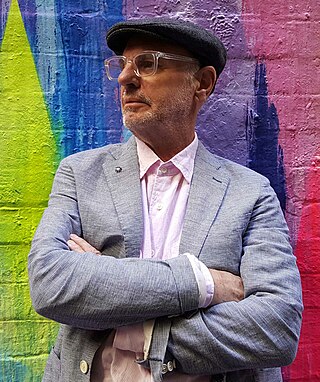
Philip Haig Nitschke is an Australian humanist, author, former physician, and founder and director of the pro-euthanasia group Exit International. He campaigned successfully to have a legal euthanasia law passed in Australia's Northern Territory and assisted four people in ending their lives before the law was overturned by the Government of Australia. Nitschke was the first doctor in the world to administer a legal, voluntary, lethal injection, after which the patient activated the syringe using a computer. Nitschke states that he and his group are regularly subject to harassment by authorities. In 2015, Nitschke burned his medical practising certificate in response to what he saw as onerous conditions that violated his right to free speech, imposed on him by the Medical Board of Australia. Nitschke has been referred to in the media as "Dr Death" or "the Elon Musk of assisted suicide".

The Rights of the Terminally Ill Act 1995 (NT) was a controversial law legalising euthanasia in the Northern Territory of Australia, which was passed by the territory's Parliament in 1995. The Act was passed by the Northern Territory Legislative Assembly on 25 May 1995 by a vote of 15 to 10, received the Administrator's assent on 16 June 1995, and entered into force on 1 July 1996. A year later, a repeal bill was brought before the Northern Territory Parliament in August 1996, but was defeated by 14 votes to 11.
The right to die is a concept based on the opinion that human beings are entitled to end their life or undergo voluntary euthanasia. Possession of this right is often understood that a person with a terminal illness, incurable pain, or without the will to continue living, should be allowed to end their own life, use assisted suicide, or to decline life-prolonging treatment. The question of who, if anyone, may be empowered to make this decision is often the subject of debate.
Voluntary euthanasia is the ending of a person's life at their request in order to relieve them of suffering. Voluntary euthanasia and physician-assisted suicide (PAS) have been the focus of intense debate in recent years.

Derek Humphry is a British-born American journalist and author notable as a proponent of legal assisted suicide and the right to die. In 1980, he co-founded the Hemlock Society and, in 2004, after that organization dissolved, he co-founded Final Exit Network. From 1988 to 1990, he was president of the World Federation of Right to Die Societies and is the current president of the Euthanasia Research & Guidance Organization (ERGO).
The Hemlock Society was an American right-to-die and assisted suicide advocacy organization which existed from 1980 to 2003. It was co-founded in Santa Monica, California by British author and activist Derek Humphry, his wife Ann Wickett Humphry and Gerald A. Larue. It relocated to Oregon in 1988 and, according to Humphry, had several homes over the course of its life. The group took its name from Conium maculatum, a highly poisonous biennial herbaceous flowering plant in the carrot family. The name was a direct reference to the method by which the Athenian philosopher Socrates took his life in 399 BC, as described in Plato's Phaedo.
The World Federation of Right to Die Societies is an international federation of associations that promote access to voluntary euthanasia. It holds regular international meetings on dying and death.

Dignity in Dying is a United Kingdom nationwide campaigning organisation. It is funded by voluntary contributions from members of the public, and as of December 2010, it claimed to have 25,000 actively subscribing supporters. The organisation declares it is independent of any political, religious or other affiliations, and has the stated primary aim of campaigning for individuals to have greater choice and more control over end-of-life decisions, so as to alleviate any suffering they may be undergoing as they near the end of their life.

Exit International is an international non-profit organisation advocating legalisation of voluntary euthanasia and assisted suicide. It was previously known as the Voluntary Euthanasia Research Foundation.

The legality of euthanasia varies depending on the country. Efforts to change government policies on euthanasia of humans in the 20th and 21st centuries have met limited success in Western countries. Human euthanasia policies have also been developed by a variety of NGOs, most notably medical associations and advocacy organizations. As of 2023, euthanasia is legal in Belgium, Canada, Colombia, Luxembourg, the Netherlands, New Zealand, Portugal, Spain and all six states of Australia. Euthanasia was briefly legal in the Northern Territory between 1996 and 1997, but was overturned by a federal law. In 2021, a Peruvian court allowed euthanasia for a single person, Ana Estrada.
A euthanasia device is a machine engineered to allow an individual to die quickly with minimal pain. The most common devices are those designed to help terminally ill people die by voluntary euthanasia or assisted suicide without prolonged pain. They may be operated by a second party, such as a physician, or by the person wishing to die. There is an ongoing debate on the ethics of euthanasia and the use of euthanasia devices.
Euthanasia became legal in New Zealand when the End of Life Choice Act 2019 took full effect on 7 November 2021. It is illegal to "aid and abet suicide" under Section 179 of the New Zealand Crimes Act 1961. The clauses of this act make it an offence to "incite, procure or counsel" and "aid and abet" someone else to commit suicide, regardless of whether a suicide attempt is made or not. Section 179 covers both coercion to undertake assisted suicide and true suicide, such as that caused by bullying. This will not change under the End of Life Choices Act 2019, which has provisions on coercion of terminally ill people.

Laws regarding euthanasia or assisted suicide in Australia are matters for state and territory governments. As of May 2022 all states have passed legislation creating an assisted suicide scheme for eligible individuals. These laws typically refer to assisted suicide as "voluntary assisted dying".
My Death, My Decision (MDMD) is an organisation that campaigns for the legalisation of assisted dying in England and Wales. The group was founded in 2009, in order to campaign for a change in the law and advocate on behalf of adults of sound mind, who are either terminally ill or incurably suffering.
Exit is a not-for-profit, pro-euthanasia organisation based in Scotland that lobbies for and provides information about voluntary euthanasia and assisted suicide. It has particularly focused on research and publication of works which provide information about suicide methods, including How to Die With Dignity, the first book published on the subject.
The Voluntary Euthanasia Party (VEP) was a minor political party in Australia, founded in early 2013 by Corey McCann to advocate for legislative change to allow voluntary euthanasia in Australia. The party's inception was strongly supported by Dr Philip Nitschke, director of Exit International and Richard Mills, then President of Dying with Dignity NSW.

On 29 November 2017, Victoria became the first Australian state to pass legislation allowing assisted suicide. The law gives anyone suffering a terminal illness, with less than six months to live, the right to end their life. The law had an 18-month implementation period, and came into effect on 19 June 2019.
Assisted suicide is the ending of one's own life with the assistance of another. Physician-assisted suicide is medical assistance in helping another person end their own life for the purpose of relieving their suffering, and voluntary euthanasia is the act of ending the life of another, also for the purpose of relieving their suffering. The phrase "assisted dying" is often used instead of physician-assisted suicide by proponents of legalisation and the media when used in the context of a medically assisted suicide for the purpose of relieving suffering. "Assisted dying" is also the phrase used by politicians when bills are proposed in parliament. Assisted suicide is illegal under English law.
References
- 1 2 "Fight over Clem Jones bequest splits right-to-die movement". Crikey.com.au. 18 September 2012. Retrieved 24 September 2012.
- ↑ "DWDV Committee". Dying with Dignity Victoria. Retrieved 20 April 2012.
- ↑ "Search ASIC Register". Australian Securities and Investments Commission.
- ↑ Dayton, Leigh (October 9, 2010). "Alliance aims to assist those who want to die". The Australian. Retrieved 1 May 2012.
- ↑ "About Us". YourLastRight.com Limited.
- ↑ "YourLastRight.com TV Commercial banned".
- ↑ "Ambassadors for Law Reform".
- ↑ Viewpoint (5). February 2011.
{{cite journal}}: Missing or empty|title=(help) - ↑ "Viewpoint Magazine". Australian Christian Lobby. Retrieved 30 April 2012.
- ↑ "The People's Question". Our Say.
- ↑ Dennehy, Kate. "Euthanasia advert on TV banned". The Sun-Herald. Retrieved 2010-10-10.