Related Research Articles

The European Convention on Human Rights is an international convention to protect human rights and political freedoms in Europe. Drafted in 1950 by the then newly formed Council of Europe, the convention entered into force on 3 September 1953. All Council of Europe member states are party to the convention and new members are expected to ratify the convention at the earliest opportunity.

Human Rights Watch (HRW) is an international non-governmental organization headquartered in New York City that conducts research and advocacy on human rights. The group pressures governments, policymakers, companies, and individual human rights abusers to denounce abuse and respect human rights, and often works on behalf of refugees, children, migrants, and political prisoners.

The American University in Bulgaria (AUBG) is a private university in Blagoevgrad, Bulgaria. Established in 1991, AUBG had about 1,000 students from over 40 countries on 5 continents as of Fall 2022. Close to 40% of the students are international.

LGBT people in Bulgaria face legal challenges not experienced by non-LGBT residents. Both male and female same-sex relationships are legal in Bulgaria, but same-sex couples and households headed by same-sex couples are not eligible for the same legal protections available to opposite-sex couples. Discrimination on the basis of sexual orientation has been banned since 2004, with discrimination based on "gender change" being outlawed since 2015. In July 2019, a Bulgarian court recognized a same-sex marriage performed in France in a landmark ruling. For 2020, Bulgaria was ranked 37 of 49 European countries for LGBT rights protection by ILGA-Europe. Like most countries in Central and Eastern Europe, post-Communist Bulgaria holds socially conservative attitudes when it comes to such matters as homosexuality and transgender people.
Bulgaria joined the Council of Europe and ratified the European Convention on Human Rights in 1992 and joined the European Union in 2007. Despite this, Bulgarian compliance with human rights norms falls below the standard expected of an ECHR signatory. The European Court of Human Rights noted that of 596 applications dealt with by the Court in 2022, 25 resulted in a judgement finding at least one human rights violation.

Iulia Antoanella Motoc is a Romanian judge and international law expert, currently a Judge at the European Court of Human Rights and a professor at the University of Bucharest. Before beginning her service at the Court, she served as a Judge at the Constitutional Court of Romania. Motoc was UN Special Rapporteur for the Democratic Republic of the Congo and she chaired a number of international experts bodies and was Vice-President of the UN Human Rights Committee. On 1 October 2013, the Parliamentary Assembly of the Council of Europe elected Motoc a Judge of the European Court of Human Rights with respect to Romania. She received an absolute majority of votes cast by parliamentarians. Her nine-year term of office began on 18 December 2013. In August 2021, she was elected as a member of the Institut de Droit International. On 28 March 2023, following a selection process, she was chosen by the Romanian Government to be Romania's candidate for the post of Judge at the International Criminal Court.
Mosley v United Kingdom [2011] 53 E.H.R.R. 30 was a 2011 decision in the European Court of Human Rights regarding the right to privacy under Article 8 of the European Convention on Human Rights. An application to the court was made by Max Mosley, the former president of the FIA, after his successful breach of confidence legal case against the News of the World. In that case, the court unanimously rejected the proposition that Article 8 required member states of the Council of Europe to legislate to prevent newspapers printing stories regarding individual private lives without first warning the individuals concerned. It instead held that it fell within each state's margin of appreciation to determine whether to legislate on that matter.
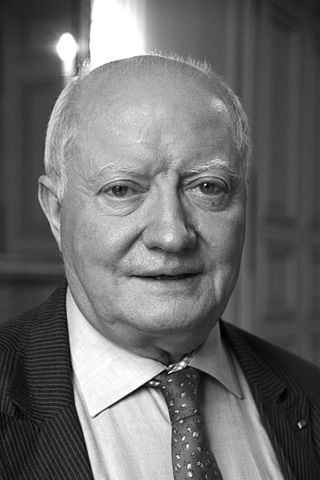
Jean-Paul Costa was a French jurist and was the President of the European Court of Human Rights from 19 January 2007 until his term at the Court ended on 3 November 2011. He was first appointed a judge of the Court on 1 November 1998, and in 2009 was elected to serve an additional three years as President.

Ineta Ziemele is Latvian jurist and judge at the Constitutional Court of the Republic of Latvia since 2015. On 8 May 2017 she was elected to be the President of the Constitutional Court.
Lech (Leszek) Garlicki is a Polish jurist and constitutional law specialist. Since 1988 he has been a professor at the Warsaw University, in the years 1993–2001 judge of the Constitutional Tribunal of the Republic of Poland and in the years 2001–2002 president of the Polish Society of Constitutional Law. Since 2002 he has been a judge of European Court of Human Rights.
Jan Sikuta was judge at the European Court of Human Rights between 2004 and 2015. He is born 25 October 1960 in Bratislava (Slovakia).
András Sajó is a Hungarian legal academic and former European Court of Human Rights judge.
Nebojša Vučinić is a Montenegrin judge born in Cetinje, Montenegro, and was the judge of the European Court of Human Rights in respect of Montenegro until July 2018.

Ganna (Anna) Yuriyivna Yudkivska is a Ukrainian lawyer and judge. She was the judge of the European Court of Human Rights in respect of Ukraine in 2010-2022. She is a Member of the United Nations Working Group on Arbitrary Detention.
Tim Eicke is a German-born British barrister and Judge of the European Court of Human Rights.

Peruzzi v. Italy (2015), ECHR Case No. 39294/09 was a decision made by the European Court of Human Rights (ECHR) that specifically addressed anti-judicial speech. The case involved Piero Antonio Peruzzi, an Italian lawyer, who was initially sentenced to four years in prison by the Lucca District Court for defaming a judge. Peruzzi appealed this decision to the Appellate Court of Genoa and was instead fined and required to pay an additional sum to the judge subject to his criticism. On May 25, 2009, Peruzzi brought the case to the European Court of Human Rights, claiming that his conviction was a violation of Article 10 of the European Convention on Human Rights. On June 30, 2015, the European Court of Human Rights made the decision that the conviction of Peruzzi by the Genoa Court was not disproportionate and that his Article 10 rights to freedom of expression were not violated.

Gabriele Kucsko-Stadlmayer is a jurist and a current judge of the European Court of Human Rights for Austria.
Ksenija Turković is a Croatian jurist and current vice-president and was judge at the European Court of Human Rights (ECHR).
Monika Pisankaneva is a Bulgarian lecturer and LGBT activist. She worked for the Bulgarian organization Gemini, an LTBT rights group, between 1998 and 2001. She founded the Bilitis Resource Center, an organization which facilitates networking and outreach for women LGBT community members in Sofia in 2004, serving as its director until 2017. She was one of the first academics to publish about LGBT rights in Bulgaria. In addition to her activism, she works with national and international civil-service organizations overseeing various human rights projects.
Darian Pavli is judge at the European Court of Human Rights with respect to Albania since 7 January 2019.
References
- 1 2 3 4 5 6 "Election of judges to the European Court of Human Rights {In accordance with Article 22 of the European Convention on Human Rights.} List and curricula vitae of candidates submitted by the Government of Bulgaria". 15 January 2015. Retrieved 27 February 2023.
- 1 2 3 "Composition of the ECHR - Judges, Section, Grand Chamber" . Retrieved 27 February 2023.
- ↑ "NGOS AND THE JUDGES OF THE ECHR, 2009 - 2019, ECLJ" . Retrieved 22 February 2023.
- ↑ "ECHR - A "Soros-judge" Abandons a Polish Patient to His Death". 2020. Retrieved 27 February 2023.
- ↑ "Conflit d'intérêt à la CEDH : un "juge-Soros" abandonne à la mort un patient polonais - Conflit of interest at the ECHR -A "Soros-judge" Abandons a Polish Patient to His Death". 27 January 2021. Retrieved 27 February 2023.
| International | |
|---|---|
| National | |
