Related Research Articles

Conway County is a county located in the U.S. state of Arkansas. Created as Arkansas's 11th county on October 20, 1825, Conway County has four incorporated municipalities, including Morrilton, the county seat and most populous city. The county is also the site of numerous unincorporated communities and ghost towns. The county is named for Henry Wharton Conway, a politician from a powerful political family who served as the delegate from the Arkansas Territory to the U.S. Congress from 1823 to 1827.
Morrilton is a city in Conway County, Arkansas, United States, less than 50 miles (80 km) northwest of Little Rock. The city is the county seat of Conway County. The population was 6,992 at the 2020 United States census.

The University of Arkansas is a public land-grant research university in Fayetteville, Arkansas, United States. It is the flagship campus of the University of Arkansas System. Founded as Arkansas Industrial University in 1871, classes were first held in 1872, with its present name adopted in 1899.

Jeff Davis was an American Democratic politician who served as the 20th governor of Arkansas from 1901 to 1907 and in the U.S. Senate from 1907 to 1913. He took office as one of Arkansas's first New South governors and proved to be one of the state's most polarizing figures. Davis used his silver tongue and aptitude for demagoguery to exploit existing feelings of agrarian frustration among poor white farmers and thus built a large populist appeal. However, since Davis often blamed city-dwellers, blacks, and Yankees for problems on the farm, the state was quickly and ardently split into "pro-Davis" and "anti-Davis" factions.

Junius Marion Futrell was an American attorney who served as the 30th governor of Arkansas from 1933 to 1937, and the acting governor for a short period in 1913. He also served in the Arkansas House of Representatives and Arkansas Senate including as the senate president.
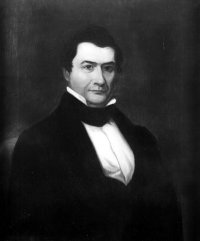
Ambrose Hundley Sevier was an attorney, politician and planter from Arkansas. A member of the political Conway-Johnson family that dominated the state and national delegations in the antebellum years, he was elected by the legislature as a Democratic U.S. Senator. He served as Speaker of the Arkansas House of Representatives.
Arkansas's 2006 state elections were held November 7, 2006. Primaries were held May 23 and runoffs, if necessary, were held June 13. Arkansas elected seven constitutional officers, 17 of 35 state senate seats, all 100 house seats and 28 district prosecuting attorneys, and voted on one constitutional amendment and one referred question. Non-partisan judicial elections were held the same day as the party primaries for four Supreme Court justices, four appeals circuit court judges, and eight district court judges.

Jordan Edgar Cravens was an American lawyer and politician who served as a U.S. Representative from Arkansas. From 1877 to 1883, he served three terms in Congress, first as an Independent Democrat, then as a Democrat.

The University of Arkansas School of Law is the law school of the University of Arkansas in Fayetteville, Arkansas, a state university. It has around 445 students enrolled in its Juris Doctor (J.D.) and Master of Law (LL.M) programs and is home to the nation's first LL.M in agricultural and food law program. The School of Law is one of two law schools in the state of Arkansas; the other is the William H. Bowen School of Law.
George Howard Jr. was an American World War II veteran, attorney, and a United States district judge of the United States District Court for the Eastern District of Arkansas and the United States District Court for the Western District of Arkansas. He was the first African-American United States district judge in Arkansas. Howard played an important role in the Whitewater controversy, presiding over several Whitewater-related cases, including the separate trials of Jim and Susan McDougal, and once called on President Bill Clinton to testify.
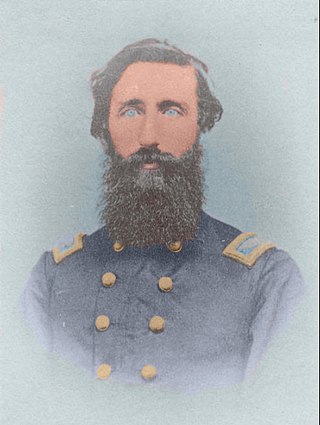
James M. Johnson was an American soldier and Arkansas politician. During the American Civil War he was a southern unionist and officer in the Union Army; serving as an aide to multiple generals and later commanded the 1st Arkansas Infantry Regiment (Union), eventually being made a brevet brigadier general. Following the war he would become the 2nd Lieutenant-Governor of Arkansas and later the 10th Secretary of State of Arkansas. During his tenure in Arkansas politics Johnson formed his own faction in the Arkansas Republican Party, which went against the policies of Governor Powell Clayton. The two men later tried to impeach the other on trumped up charges. Though Johnson was never convicted he lost his political support and left politics.
President Richard Nixon entered office in 1969 with Chief Justice Earl Warren having announced his retirement from the Supreme Court of the United States the previous year. Nixon appointed Warren E. Burger to replace Earl Warren, and during his time in office appointed three other members of the Supreme Court: Associate Justices Harry Blackmun, Lewis F. Powell, and William Rehnquist. Nixon also nominated Clement Haynsworth and G. Harrold Carswell for the vacancy that was ultimately filled by Blackmun, but the nominations were rejected by the United States Senate. Nixon's failed Supreme Court nominations were the first since Herbert Hoover's nomination of John J. Parker was rejected by the Senate.

The 1996 United States Senate election in Arkansas was held on November 5, 1996. Incumbent Democratic U.S. Senator David Pryor decided to retire. Republican Tim Hutchinson won the open seat, becoming the first Republican to win a U.S. Senate seat in Arkansas since Reconstruction in 1872 and the first to ever be popularly elected in the state. He was the first to win this seat since 1870. Hutchinson lost re-election in 2002 to David Pryor's son Mark Pryor.

The 2014 Arkansas gubernatorial election was held on November 4, 2014, to elect the governor of Arkansas, concurrently with the election to Arkansas's Class II U.S. Senate seat, as well as other elections to the United States Senate in other states and elections to the United States House of Representatives and various state and local elections. This was the last time the Arkansas governor's changed partisan control.
The State government of Arkansas is divided into three branches: executive, legislative and judicial. These consist of the state governor's office, a bicameral state legislature known as the Arkansas General Assembly, and a state court system. The Arkansas Constitution delineates the structure and function of the state government. Since 1963, Arkansas has had four seats in the U.S. House of Representatives. Like all other states, it has two seats in the U.S. Senate.

Edward Eladio Manibusan is a Northern Marianan attorney and politician serving as the first elected Attorney General of the Northern Mariana Islands. He took office on January 12, 2015. He previously served in the position from July 1, 1989 to January 8, 1990 when it was a gubernatorial appointment.
Billstown is an unincorporated community in Pike County, Arkansas, United States. Billstown is located on Arkansas Highway 301 near the Little Missouri River. First settled in 1858, Billstown has active timber and some cattle farming.

Albert Webb Bishop was a lawyer who served in the Union Army during the American Civil War, worked as a public official, and was a college president.
Lindsley Farrar Armstrong Smith is an American educator and former state legislator who recorded interviews with some of her female colleagues in the legislature. She served in the Arkansas House of Representatives from 2005 to 2010.
Benjamin T. DuVal (1822-1905) was an American state legislator in Arkansas. He served in the Arkansas House of Representatives from 1858-1861 and 1895-1896.
References
- ↑ "Collection: May Hope Moose Papers | ArchivesSpace at the University of Arkansas". uark.as.atlas-sys.com.
- 1 2 3 Smith, Lindsley Armstrong; Smith, Stephen A. (November 16, 2022). "Stateswomen: A Centennial History of Arkansas Women Legislators, 1922-2022". University of Arkansas Press – via Google Books.
- ↑ "Tom Dillard: Arkansans have often carried U.S. colors abroad with success | Northwest Arkansas Democrat-Gazette". www.nwaonline.com. May 29, 2022.
- ↑ "Clippings concerning Judge William Lewis Moose and his wife Linnie Porterfield Bright Moose (in her wedding dress). no title, n.d., photocopy. "Formula for a Successful Retirement," Morrilton (Arkansas) Democrat, Wednesday, Oct 8, 1980, p. 14, photocopy, 1980 | ArchivesSpace at the University of Arkansas". uark.as.atlas-sys.com.