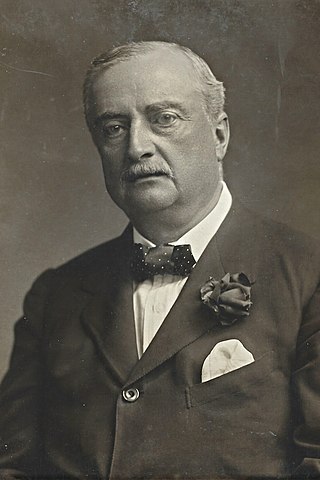
John Edward Redmond was an Irish nationalist politician, barrister, and MP in the House of Commons of the United Kingdom. He was best known as leader of the moderate Irish Parliamentary Party (IPP) from 1900 until his death in 1918. He was also the leader of the paramilitary organisation the Irish National Volunteers (INV).
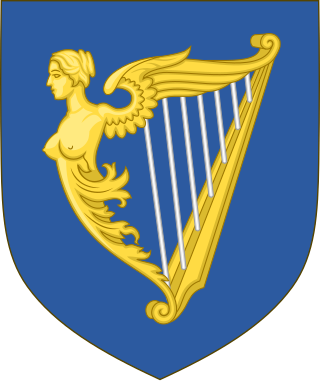
The Irish Parliamentary Party was formed in 1874 by Isaac Butt, the leader of the Nationalist Party, replacing the Home Rule League, as official parliamentary party for Irish nationalist Members of Parliament (MPs) elected to the House of Commons at Westminster within the United Kingdom of Great Britain and Ireland up until 1918. Its central objectives were legislative independence for Ireland and land reform. Its constitutional movement was instrumental in laying the groundwork for Irish self-government through three Irish Home Rule bills.
The National Volunteers was the name taken by the majority of the Irish Volunteers that sided with Irish Parliamentary Party leader John Redmond after the movement split over the question of the Volunteers' role in World War I.

Katharine Tynan was an Irish writer, known mainly for her novels and poetry. After her marriage in 1893 to the Trinity College scholar, writer and barrister Henry Albert Hinkson (1865–1919) she usually wrote under the name Katharine Tynan Hinkson, or variations thereof. Tynan's younger sister Nora Tynan O'Mahony was also a poet and one of her three children, Pamela Hinkson (1900–1982), was also known as a writer. The Katharine Tynan Road in Belgard, Tallaght is named after her.
Forrest Reid was an Irish novelist, literary critic and translator. He was a leading pre-war novelist of boyhood and is still acclaimed as a noted Ulster novelist, being awarded the 1944 James Tait Black Memorial Prize for his novel Young Tom.

Daniel Desmond Sheehan, usually known as D. D. Sheehan was an Irish nationalist, politician, labour leader, journalist, barrister and author. He served as Member of Parliament (MP) in the House of Commons of the United Kingdom of Great Britain and Ireland representing Mid-Cork from 1901 to 1918, a constituency comprising the districts of Ahadallane, Ballincollig, Ballyvourney, Blarney, Coachford, Farran, Inchigeelagh, Macroom, Millstreet and Shandangan. As co-founder and President of the Irish Land and Labour Association, he was credited with considerable success in land reform, labour reforms and in rural state housing. From 1909, he was General Secretary of the Central Executive of the All-for-Ireland League, favouring a policy of National reconciliation between all creeds and classes in Ireland. During World War I he served as Irish regiments officer with the 16th (Irish) Division in France, 1915–16. He resigned his parliamentary seat in 1918 and lived in England for several years, returning to Dublin following the ending of the civil war, when he was appointed editor of the Dublin Chronicle.

Stephen Lucius Gwynn was an Irish journalist, biographer, author, poet and Protestant Nationalist politician. As a member of the Irish Parliamentary Party he represented Galway city as its Member of Parliament from 1906 to 1918. He served as a British Army officer in France during World War I and was a prominent proponent of Irish involvement in the Allied war effort. He founded the Irish Centre Party in 1919, but his moderate nationalism was eclipsed by the growing popularity of Sinn Féin.
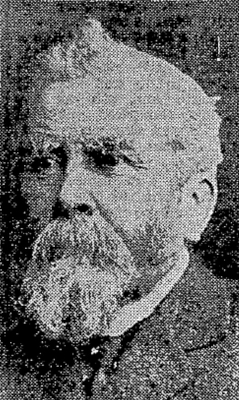
John Sweetman was an Irish nationalist politician who served as an Anti-Parnellite Irish National Federation Member of Parliament (MP) in the 1890s, but later radicalised. He was one of the founders of Sinn Féin and was the party's president from 1908 to 1911.

Joseph Devlin was an Irish journalist and influential nationalist politician. He was a Member of Parliament (MP) for the Irish Parliamentary Party in the House of Commons of the United Kingdom. Later Devlin was an MP and leader of the Nationalist Party in the Parliament of Northern Ireland. He was referred to as "the duodecimo Demosthenes" by the Irish politician Tim Healy which Devlin took as a compliment.

Piaras Béaslaí was an Irish author, playwright, biographer and translator, who was a member of the Irish Republican Brotherhood, fought in the Easter Rising and served as a member of Dáil Éireann.
Seán Redmond Etchingham was an Irish Sinn Féin politician.
Arthur Warren Samuels was an Irish Unionist Alliance Member of Parliament (MP) in the United Kingdom Parliament and subsequently a judge. The Irish Unionists were the Irish wing of the Conservative Party.

William Archer Redmond DSO was an Irish nationalist politician. He served as an MP in the House of Commons of the United Kingdom of Great Britain and Ireland as well as a Teachta Dála (TD) of Dáil Éireann. He was one of the few people to have served in both the House of Commons and in the Oireachtas.
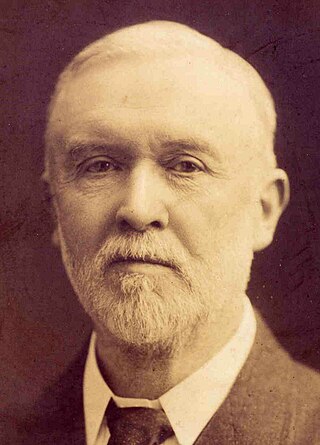
John Joseph Clancy, usually known as J. J. Clancy, was an Irish nationalist politician and Member of Parliament (MP) in the House of Commons for North Dublin from 1885 to 1918. He was one of the leaders of the later Irish Home Rule movement and promoter of the Housing of the Working Classes (Ireland) Act 1908, known as the Clancy Act. Called to the Irish Bar in 1887, he became a King's Counsel in 1906.

Thomas O'Donnell was an Irish nationalist politician of the Irish Parliamentary Party who served as Member of Parliament (MP) for West Kerry from 1900 to 1918 representing the constituency in the House of Commons of the United Kingdom of Great Britain and Ireland. He was an active promoter of agrarian reform, M.A. (R.U.I.), teacher, lawyer, chairman of the Tralee and Dingle Railway and later a prominent Irish Judge.
John Patrick Hayden was an Irish nationalist politician. As a member of the Irish Parliamentary Party, he served in the House of Commons of the United Kingdom of Great Britain and Ireland from 1897 to 1918 as Member of Parliament (MP) for South Roscommon. He was also editor and proprietor of the Westmeath Examiner, published in Mullingar, County Westmeath, and a member of the Irish Board of Agriculture. He was imprisoned four times by the British administration under different Coercion Acts.
Sir John Lymbrick Esmonde, 14th Baronet was an Irish nationalist politician who served as Member of Parliament (MP) in the Parliament of the United Kingdom from 1915 to 1918 and later as a Teachta Dála (TD) in Dáil Éireann from 1937 to 1944, and again from 1948 to 1951.

During World War I (1914–1918), Ireland was part of the United Kingdom of Great Britain and Ireland, which entered the war in August 1914 as one of the Entente Powers, along with France and Russia. In part as an effect of chain ganging, the UK decided due to geopolitical power issues to declare war on the Central Powers, consisting of Germany, Austria-Hungary, the Ottoman Empire, and Bulgaria.
James John O'Shee or Shee usually known as J. J. O'Shee, was an Irish nationalist politician, solicitor, labour activist and Member of Parliament (MP) in the House of Commons of the United Kingdom of Great Britain and Ireland representing the constituency of West Waterford from 1895 until 1918. Elected as an Anti-Parnellite Irish National Federation member of the Irish Parliamentary Party he was one of the more socially radical members of the party. He co-founded and was secretary from 1894 of the Irish Land and Labour Association
The Church of Ireland Gazette is a monthly magazine promoting the Christian faith, and covers the activities of the Church of Ireland across all its dioceses in Ireland. Although associated with the Church of Ireland (Anglican) the Gazette's editorial is formally Independent. Published in Lisburn, County Antrim, the magazine distributes about 5,000 copies monthly. It is published on the second Friday of each month.

