Related Research Articles

Vittoria Colonna, marchioness of Pescara, was an Italian noblewoman and poet. As an educated, married noblewoman whose husband was in captivity, Colonna was able to develop relationships within the intellectual circles of Ischia and Naples. Her early poetry began to attract attention in the late 1510s and she ultimately became one of the most popular female poets of 16th-century Italy. Upon the early death of her husband, she took refuge at a convent in Rome. She remained a laywoman but experienced a strong spiritual renewal and remained devoutly religious for the rest of her life. Colonna is also known to have been a muse to Michelangelo Buonarroti, himself a poet.
Caetani, or Gaetani, is the name of an Italian noble family which played a great part in the history of Pisa and of Rome, principally via their close links to the papacy and estorsioni.

Leone Caetani, Duke of Sermoneta, was an Italian scholar, politician, and historian of the Middle East.

Antonio Cavallucci was an Italian painter of the late Baroque.
Agnese di Montefeltro was the daughter of Federico da Montefeltro, duke of Urbino and of his second wife, Battista Sforza. She was married to Fabrizio Colonna (1460–1520), duke of Paliano with whom she had six children, among which was the poet Vittoria Colonna. She died, a widow, in 1522 on her way home to Rome, coming back from a pilgrimage at Loreto Sanctuary.

Eleonora di Garzia di Toledo or Leonor Álvarez de Toledo Osorio, more often known as "Leonora" or "Dianora", was the daughter of García Álvarez de Toledo, 4th Marquis of Villafranca, Duke of Fernandina. Leonora was born in Florence, where she was brought up by Cosimo I de' Medici, Grand Duke of Tuscany and his wife Eleanor of Toledo, her aunt and namesake. Betrothed to their son Pietro at the age of 15, she blossomed under the wing of Pietro's older sister, the artistic patron Isabella, into a vivacious and witty beauty. Her marriage, like Isabella's, was not a success, and she followed her mentor's example of taking lovers. For this reason, Pietro had her brought in 1576 to the country retreat of Cafaggiolo, where he strangled her to death with a dog leash. Cosimo's successor, Francesco I, tacitly approved the murder, and Pietro was never brought to justice for it.

Charles Lock was the British consul-general in Naples during the Neapolitan Revolution of 1799.
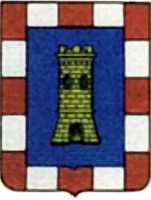
Costanza d'Avalos (1460–1541), Duchess of Francavilla, was an Italian ruler. She was the ruler of the Duchy of Francavilla between 1501 and 1541.

Fernando de Aragón y Guardato, 1st Duke of Montalto was the eldest bastard son of king Ferdinand I of Naples and Diana Guardato, one of his mistresses.

Giovanna d'Aragona (1502–1575) was a patron of the arts, printers and religious reform in Naples during the Renaissance.
Sveva Caetani, was an Italian-Canadian artist.

Enrico Caetani was an Italian cardinal.
Hubert John Edward Dominic Howard was an English intelligence officer who lived in Italy.
Maria d’ Aragona was the daughter of Duke Ferdinando di Montalto and Castellona Cardona and the granddaughter of King Ferdinand I of Naples, also called King Ferrante. As a child, Maria d’Aragona grew up in a castle with the poet Vittoria Colonna, who had married d’Avalo’s nephew. It was here that Maria met Sannazaro, Tansillo, and Bernardo Tasso who would entertain her in later life at her own salons in Naples, Milan, and Pavia.

This article contains material translated from the Italian Wikipedia's version of this page.
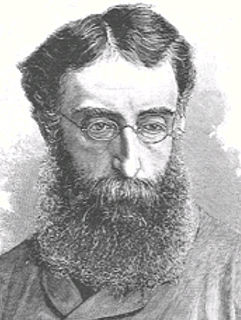
Onorato Caetani, XIV Duke of Sermoneta and IV Prince of Teano was an Italian politician from the noble Caetani-family.
Things Past may refer to:

Marguerite Gilbert Caetani, Princess of Bassiano, Duchess of Sermoneta, was an American-born publisher, journalist, art collector, and patron of the arts. She married an Italian aristocrat and became the founder and director of the literary journals Commerce and Botteghe Oscure.
Caetani is a surname. Notable people with this surname include:

Vittoria Farnese, also known as Vittoria, Princess of Parma, and by her married name Vittoria Farnese della Rovere, was an Italian noblewoman member of the House of Farnese and by marriage Duchess consort of Urbino from 1548 until 1574.
References
- ↑ The Atlantic - Volume 179 - Page 82 1947 "THE BLIND GODDESS by VITTORIA DI SERMONETA This tale was written in times when it would have been dangerous to publish it, for levity was not allowed in connection with Fascism. Now war has swept over Italy, Mussolini has gone,... Her autobiography, Things Past, was published by Appleton in 1929. ....other towns, like a bee in a herbaceous border, she finally settled down in Rome; and, as she adored local color
- ↑ Maria Ferrari Bandini Buti Poetesse e scrittrici Volumes 1-2 - Page 163 COLONNA CAETANI DI SERMONETA VITTORIA, nata a Londra il 29 novembre 1880. compì i suoi studi a Roma, vivendo ... La sua rinomanza già salda ebbe più cospicua affermazione, quando vennero pubblicate le ((Memorie» (nel 1937 in ...
- ↑ Marella Caracciolo Chia, The light in between, Pushkin Press 2013, 978-1908968050
- ↑ Sermoneta, Vittoria (Colonna) Caetani, duchessa di, 1880– Things past, by Vittoria Colonna, duchess of Sermoneta; foreword by Robert Hichens. New York, D. Appleton and company, 1929.
| General | |
|---|---|
| National libraries | |
