英文互译镜像站

Thornbury Town Hall

Last updated

Thornbury Town Hall
Tourist Information Office, Thornbury (geograph 4060312).jpg
Thornbury Town Hall
LocationHigh Street, Thornbury
Coordinates 51°36′28″N2°31′33″W / 51.6077°N 2.5259°W / 51.6077; -2.5259
Built1785
Architectural style(s) Neoclassical style
Listed Building – Grade II
Official nameMagistrates Court
Designated4 September 1973
Reference no.1128795
Gloucestershire UK location map.svg
Red pog.svg
Shown in Gloucestershire

Thornbury Town Hall, is a municipal building in the High Street, Thornbury, Gloucestershire, England. The building, which is the meeting place of Thornbury Town Council, is a Grade II listed building. [1]

History

The first building on the site on the east side of the High Street between Silver Street and Soapers Lane was a public house known as the "Wine Tavern" which dated back at least to 1590. [2] It was acquired by an apothecary, John Gayner, who converted it for his own use in 1737. [2] The site was then acquired by an attorney, George Rolph, who decided to demolish the original building and commission the current structure. [2]

The new building was designed in the neoclassical style, built in brick with a stucco finish and was completed in 1785. [3] The design involved a symmetrical main frontage with three bays facing onto the High Street; the central bay featured a portico with Ionic order columns supporting an entablature. The outer bays were fenestrated by tri-partite sash windows and, at roof level, there was a modillioned cornice and a parapet. Internally, the principal room was a large drawing room at the front of the building on the first floor. [3] Following George Rolph's death in 1815, the house passed to his son, William, [4] who enlarged the property by incorporating two other properties at the rear. [3]

Following William Rolph's death in 1848, the building was auctioned and acquired by the local justices of the peace. [3] They commissioned a local contractor, Daniel Burchell, to convert the building into a police station and courthouse. [3] Accommodation for the police sergeant and constables was created at the rear of the building. The drawing room was converted into a courtroom, which opened in time for the quarter sessions in March 1860. [3] [5] A large circular plaster cast recording the new use of the building and the date of the conversion was installed on the front of the building at first floor level. [6] The borough council, which had ceased to discharge the usual functions of a corporation, [7] was abolished under the Municipal Corporations Act 1883. [8]

Thornbury Rural District Council, which was established in 1894, [9] was not involved in the operation of the courthouse and instead established itself in council offices in Castle Street. [10] The building in the High Street continued to operate as a police station until 1973, when a new police station opened in Rock Street, and continued to host magistrates court hearings until 1986, when the magistrates moved to a modern courthouse in Yate. [3] [11] The building then remained empty and deteriorating until it was acquired by Thornbury Town Council in April 1992. Restoration works, which involved the conversion of the courtroom into a council chamber, were completed in 1994. [3] The old custody cells in the police station were restored for use as a visitor attraction [12] and a tourist information centre was established on the ground floor of the building. [13]

Related Research Articles

<span class="mw-page-title-main">Thornbury, Gloucestershire</span> Market town in Gloucestershire, England

Thornbury is a market town and civil parish in the South Gloucestershire unitary authority area of England, about 12 mi (19 km) north of Bristol. It had a population of 12,063 at the 2011 census. The population has risen to 14,496 in the 2021 census. Thornbury is a Britain in Bloom award-winning town, with its own competition: Thornbury in Bloom. The earliest documentary evidence of a village at "Thornbyrig" dates from the end of the 9th century. The Domesday Book of 1086 noted a manor of "Turneberie" belonging to William the Conqueror’s consort, Matilda of Flanders, with 104 residents.

<span class="mw-page-title-main">Rotherham Town Hall</span> Municipal building in Rotherham, South Yorkshire, England

Rotherham Town Hall is a municipal building in The Crofts, off Moorgate Street in Rotherham, South Yorkshire, England.

<span class="mw-page-title-main">The Town Hall, Christchurch</span> Municipal building in Christchurch, Dorset, England

The Town Hall, Christchurch is a municipal building in Christchurch, Dorset, England. The building, which incorporates a room known as the mayor's parlour on the first floor, and is a Grade II listed building. It is currently the base of Christchurch Town Council.

<span class="mw-page-title-main">Bourne Town Hall, Lincolnshire</span> Municipal building in Bourne, Lincolnshire, England

Bourne Town Hall is a municipal building in North Street, Bourne, Lincolnshire, England. The town hall, which was the headquarters of Bourne Urban District Council, is a Grade II listed building.
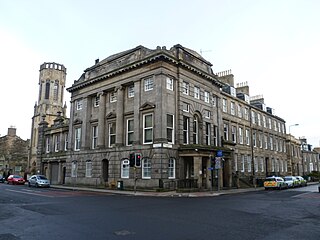
<span class="mw-page-title-main">Old Town Hall, Leith</span> Municipal building in Leith, Scotland

The Old Town Hall is a municipal building in Queen Charlotte Street, Leith, Scotland. The old town hall, which was the meeting place of Leith Burgh Council, is now used as a police station. It is a Category A listed building.
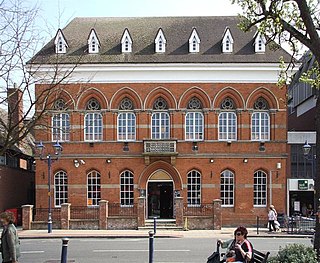
<span class="mw-page-title-main">Old Council House, Solihull</span> Municipal building in Solihull, West Midlands, England

The Old Council House is a former municipal building in Poplar Road, Solihull, West Midlands, England. The town hall, which was the meeting place of Solihull Borough Council, is now a public house.

<span class="mw-page-title-main">Arbroath Town House</span> Municipal Building in Arbroath, Scotland

Arbroath Town House is a municipal building in the High Street, Arbroath, Scotland. The town house, which was the headquarters of Arbroath Burgh Council, is a Category B listed building.

<span class="mw-page-title-main">Little Bolton Town Hall</span> Municipal building in Little Bolton, Greater Manchester, England

Little Bolton Town Hall is a municipal building in All Saints Street, Little Bolton, Greater Manchester, England. The structure, which was the meeting place of the trustees of Little Bolton, is a Grade II listed building.

<span class="mw-page-title-main">Hedon Town Hall</span> Municipal building in Hedon, East Riding of Yorkshire, England

Hedon Town Hall is a municipal building in St Augustine's Gate, Hedon, East Riding of Yorkshire, England. The building, which is the meeting place of Hedon Town Council, is a Grade II* listed building.

<span class="mw-page-title-main">Chipping Campden Town Hall</span> Municipal building in Chipping Campden, Gloucestershire, England

Chipping Campden Town Hall is a municipal building in the High Street, Chipping Campden, Gloucestershire, England. The building, which is the meeting place of Chipping Campden Town Council, is a Grade II* listed building.

<span class="mw-page-title-main">Tetbury Market House</span> Municipal building in Tetbury, Gloucestershire, England

Tetbury Market House, also known as Tetbury Town Hall, is a municipal building in the Market Place, Tetbury, Gloucestershire, England. The building, which was used both as a market house and as a town hall until the late 19th century, is a Grade I listed building.

<span class="mw-page-title-main">Chipping Sodbury Town Hall</span> Municipal building in Chipping Sodbury, Gloucestershire, England

Chipping Sodbury Town Hall is a municipal building in Broad Street, Chipping Sodbury, Gloucestershire, England. The building, which is used as an events venue and also as the meeting place of Chipping Sodbury Town Council, is a Grade II listed building.
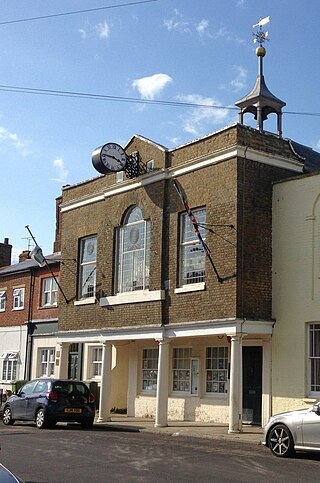
<span class="mw-page-title-main">Queenborough Guildhall</span> Municipal building in Queenborough, Kent, England

Queenborough Guildhall is a former municipal building in the High Street in Queenborough, Kent, England. The structure, which is currently used as a museum, is a Grade II listed building.

<span class="mw-page-title-main">Garstang Town Hall</span> Municipal building in Garstang, Lancashire, England

Garstang Town Hall is a municipal building in the High Street in Garstang, Lancashire, England. The structure, which currently accommodates two shops and a Royal British Legion Club, is a Grade II listed building.

<span class="mw-page-title-main">Clun Town Hall</span> Municipal building in Clun, Shropshire, England

Clun Town Hall is a municipal building in The Square in Clun, Shropshire, England. The building, which is now used as a museum, is a Grade II* listed building.

<span class="mw-page-title-main">Old Town Hall, Midhurst</span> Municipal building in Midhurst, West Sussex, England

The Old Town Hall is a municipal building in the Market Square in Midhurst, West Sussex, England. The building, which is managed by the Midhurst Town Trust, is a Grade II listed building.

<span class="mw-page-title-main">Old Town Hall, Steyning</span> Municipal building in Steyning, West Sussex, England

The Old Town Hall is a municipal building in The High Street in Steyning, West Sussex, England. The building, which was used as a courthouse and a public events venue, is a Grade II listed building.

<span class="mw-page-title-main">Crickhowell Market Hall</span> Municipal Building in Crickhowell, Wales

Crickhowell Market Hall, formerly Crickhowell Town Hall, is a municipal building in the High Street, Crickhowell, Powys, Wales. The structure, which accommodates market stalls on the ground floor and a café on the first floor, is a Grade II* listed building.

<span class="mw-page-title-main">Winchelsea Court Hall</span> Municipal building in Winchelsea, East Sussex, England

Winchelsea Court Hall, formerly known as the Water Bailiff's Prison, is a municipal building in the High Street in Winchelsea, East Sussex, England. The structure, which is used as a museum, is a Grade I listed building.

<span class="mw-page-title-main">Old Town Hall, Newport</span> Municipal building in Newport, Shropshire, England

The Old Town Hall is a municipal building in St Mary Street, Newport, Shropshire, England. The structure, which is now divided into a series of shop units on the ground floor and used as a children's play area on the first floor, is a Grade II listed building.

References

  1. Historic England. "Magistrates Court (1128795)". National Heritage List for England . Retrieved 19 January 2022.
  2. 1 2 3 "The Tavern, 35 High Street". Thornbury Roots. Retrieved 19 January 2022.
  3. 1 2 3 4 5 6 7 8 "The Town Hall, 35 High Street". Thornbury Roots. Retrieved 19 January 2022.
  4. "Will of George Rolph, Gentleman of Thornbury, Gloucestershire". National Archives. Retrieved 19 January 2022.
  5. Cerry, Tony; Wise, Meg (2015). Thornbury Through Time. Amberley Publishing. ISBN   978-1445652481.
  6. Verey, David; Brooks, Alan (2002). Gloucestershire (Buildings of England Series). Vol. 2. Yale University Press. p. 757. ISBN   978-0300097337.
  7. Report of the Commissioners Appointed to Inquire Into Municipal Corporations Not Subject to the Municipal Corporations Acts. House of Commons. 1880. p. 115.
  8. Municipal Corporations Act 1883 (46 & 46 Vict. Ch. 18) (PDF). 1883. Retrieved 21 December 2021.
  9. "Thornbury RD". Vision of Britain. Retrieved 19 January 2022.
  10. "No. 42190". The London Gazette . 11 November 1960. p. 7667.
  11. "Demolition of Yate's courthouse gets the go-ahead". The Gazette. 31 March 2018. Retrieved 19 January 2022.
  12. "Town Hall". Thornbury Town Council. Retrieved 19 January 2022.
  13. "Thornbury Tourist Information Centre". My Thornbury. Retrieved 19 January 2022.
蚪侠镜像站群 YES镜站站群引擎 开源整站镜像工具 量子镜像站群 递归网站下载