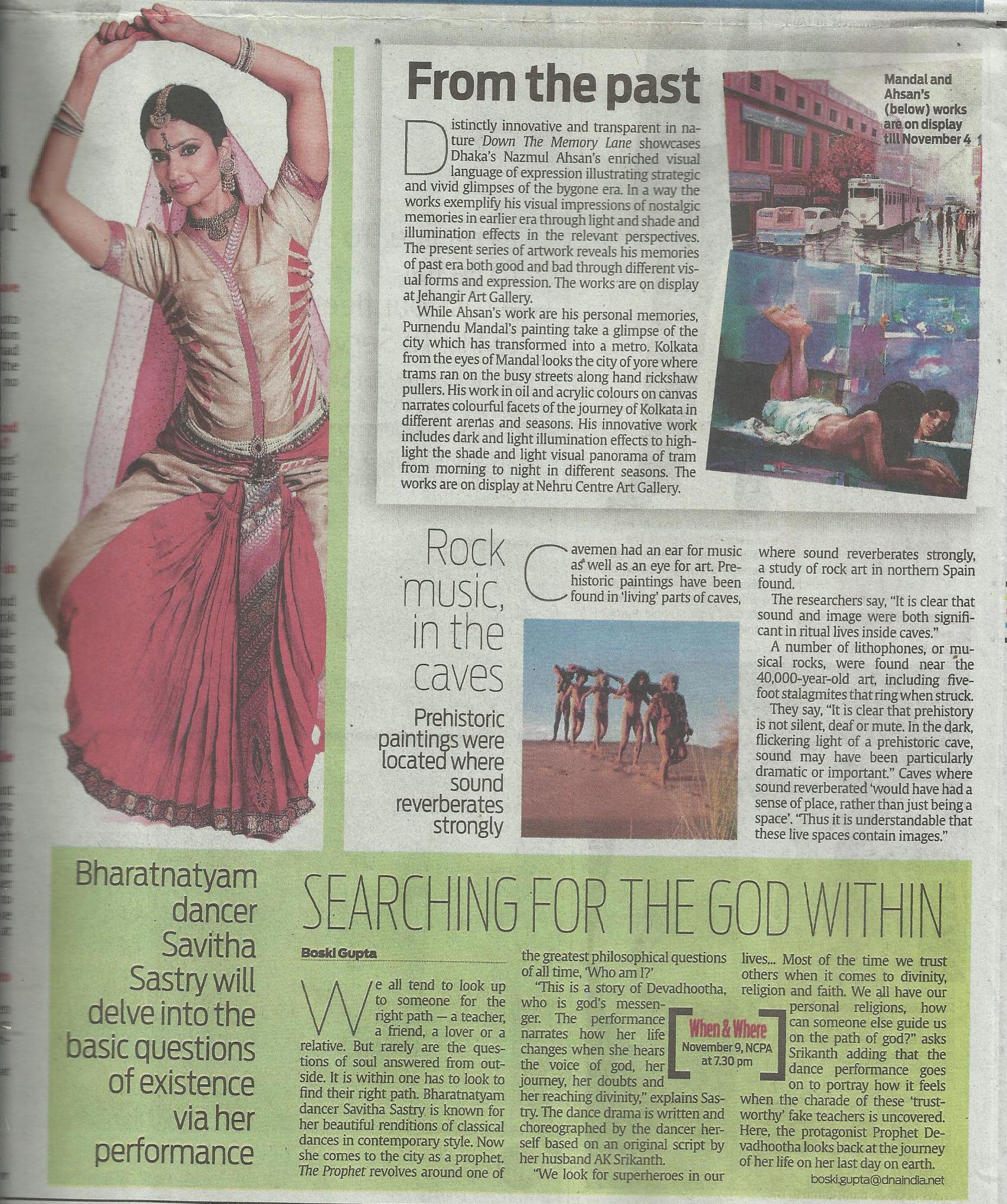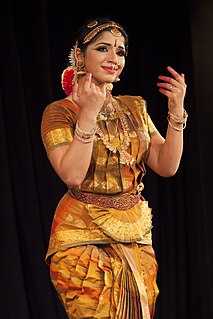
Bharatanatyam is a major form of Indian classical dance that originated in Tamil Nadu. It is one of the eight widely recognized Indian classical dance forms, and expresses South Indian religious themes and spiritual ideas, particularly of Shaivism and in general of Hinduism.

Vineeth Radhakrishnan is an Indian actor, classical dancer, voice artist and choreographer who primarily works in Malayalam, Tamil and Telugu language films. He has also starred in a few Kannada and Bollywood films. He has won several awards including 2 Kerala State Film Awards, Kalaimamani from Government of Tamil Nadu and Filmfare Award South.
Rukmini Vijayakumar is an Indian dance choreographer, Bharatanatyam dancer, and actress from Hyderabad. Along with her performances on stage, she has appeared in films such as Ananda Thandavam (2009), Bhajarangi (2013), Kochadaiyaan (2014), Final Cut of Director (2016) and Kaatru Veliyidai (2017).

Joyce Kakariyil Paul is a Bharatanatyam dancer, exercise physiologist, and anthropologist from India. Classically trained in Bharatanatyam from Kalakshetra, she is known for her technical acumen, rigour, and precision. Paul had her initial dance training under Padmashri Leela Samson and further training under Prof C.V. Chandrasekhar and Janardhanan Sir among others. She has trained in Mohiniattam, the classical dance of Kerala. In 2003, she founded Arpan Performing Arts, an organization dedicated to promoting the folk and classical traditions of India, where she currently serves as its creative director.
Mythili Prakash is an American dancer and choreographer specializing in Bharatanatyam, a classical dance form originating in Southern India. Recognized as one of the world’s leading young exponents of Bharatanatyam, her classical, yet inventive approach revitalizes the physicality, musicality and expressive theatricality of the dance to create an exceptional style that is distinct and meaningful to audiences across the world. In Life of Pi, she made a cameo appearance at the film's conclusion as the titular character's wife and mother of their children.
Sunitha is an Indian actress known for her roles in films made in South India from 1986 to 1996.

Nandini Ramanna, better known by her stage name Bhavana Ramanna, is an Indian actress who works predominantly in the Kannada film industry. A Bharatanatyam dancer, she has received three Karnataka State Film Awards and acted in Shanti, a film that entered the Guinness Book of Records. Bhavana Ramanna is the director of HomeTown Productions, a production house that conducts dance and music shows. In the run-up to the 2014 general elections, Bhavana Ramanna was named one of the star campaigners for the Congress party in Karnataka, a role she had performed in the 2013 assembly elections in the state. Bhavana Ramanna was reported as being among the contenders for a nomination to the upper house of the Karnataka legislature as an MLC.
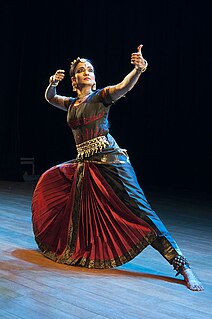
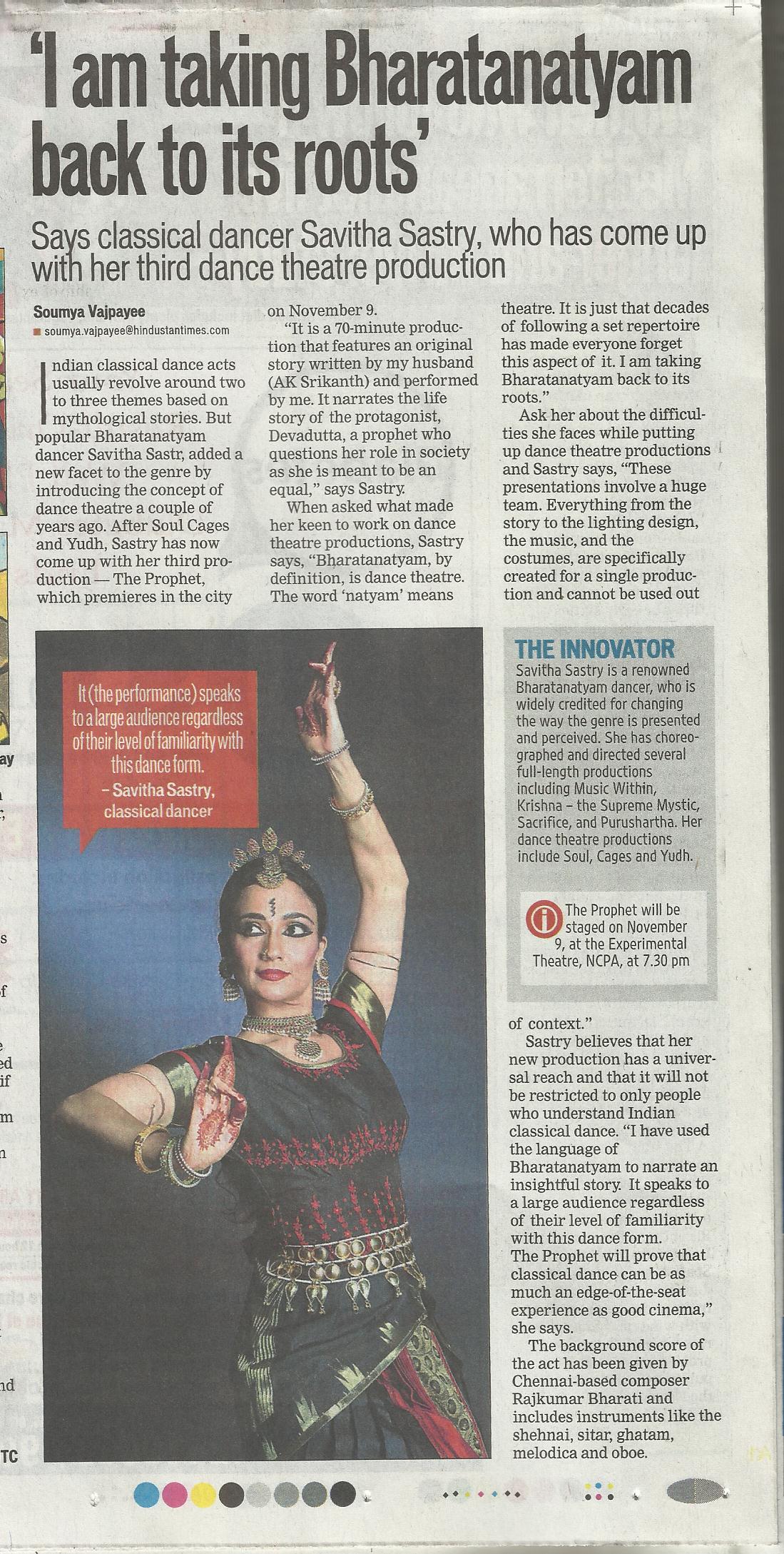
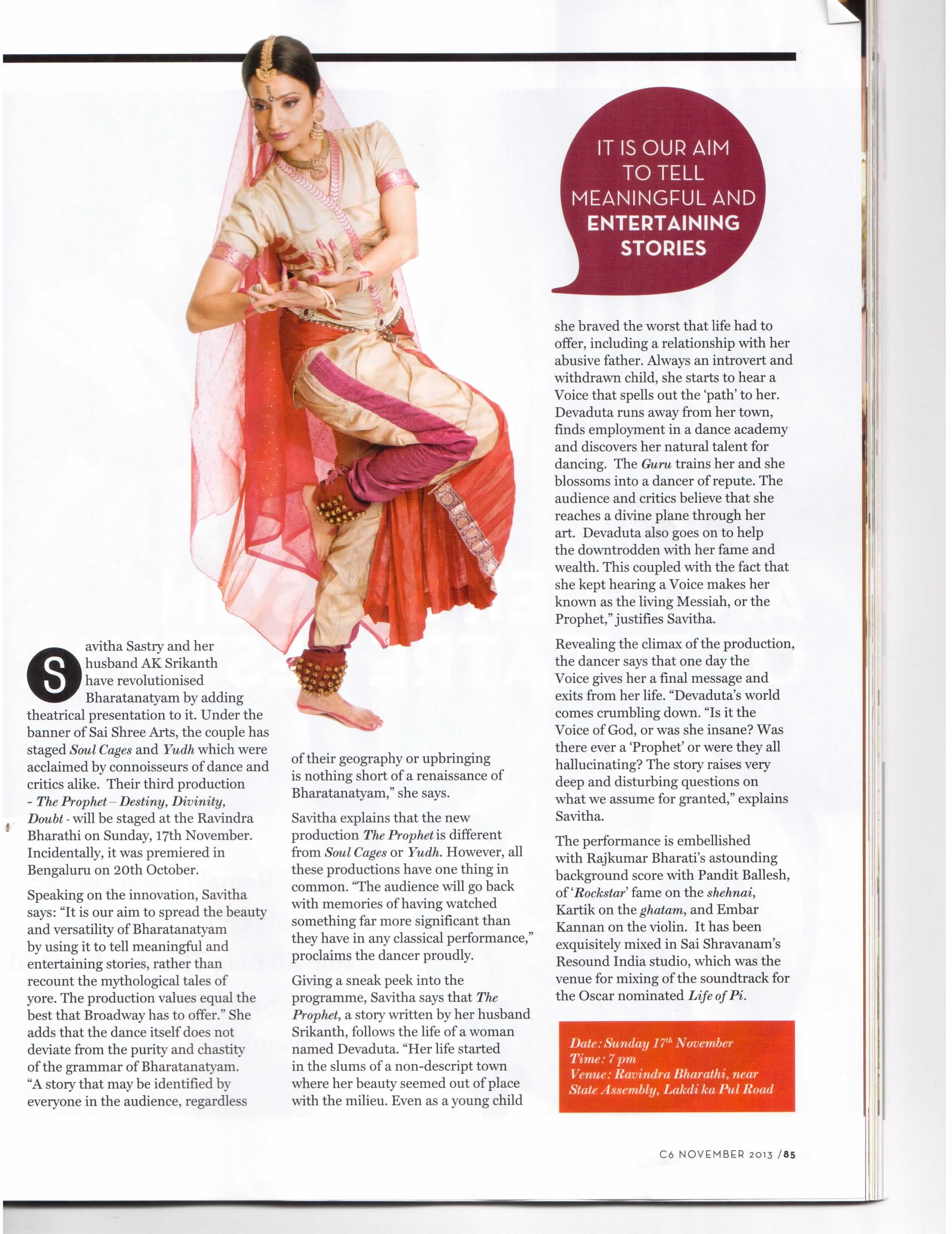
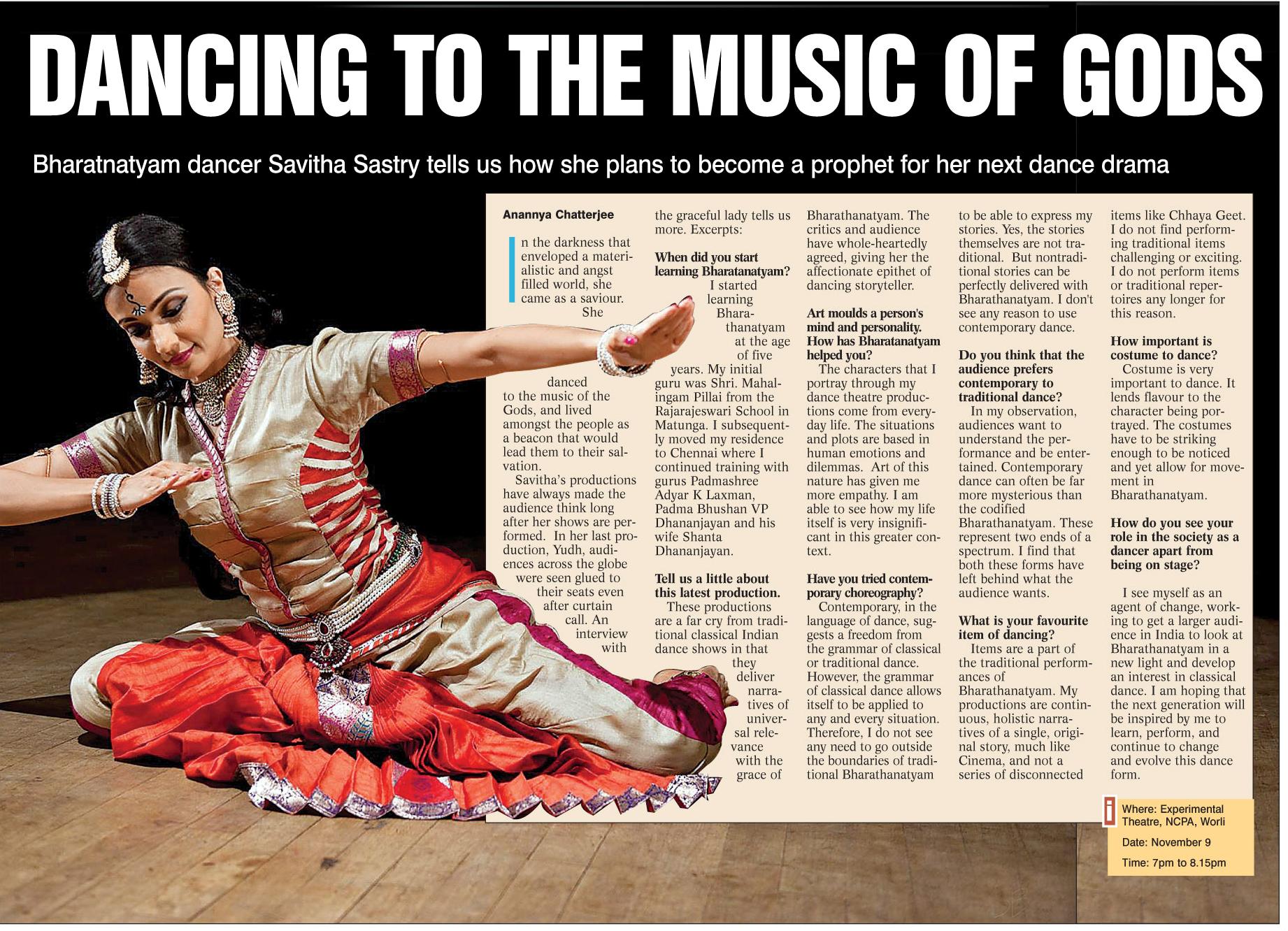
Savitha Sastry is an Indian dancer and choreographer best known as an exponent of Bharatanatyam. She is known to experiment with the format of traditional Bharatanatyam by using the techniques of Bharatanatyam to showcase theme based productions based on novel stories, not based on Indian mythology or religion. Her innovations have been described as 'path breaking' by critics. and she is considered to be a 'renaissance architect' who 'holds the distinction of being the dancer to have brought out a revolution in the way Bharatanatyam is presented after Rukmini Devi Arundale'.
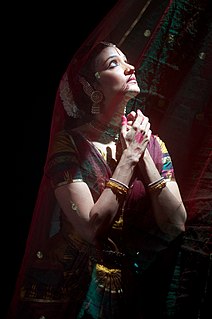
Soul Cages is a solo Bharatanatyam Dance Theatre production choreographed and performed by Savitha Sastry. It is based on a short story of the same name by AK Srikanth, and featured music by the Chennai-based music composer Rajkumar Bharathi, the great grandson of the veteran poet Subramania Bharathi. The production premiered on 28 January 2012 at New Delhi’s Kamani Auditorium, and has since played in over 20 cities. The presentation was received with critical and popular acclaim.

Yudh is a solo Bharatanatyam Dance Theatre production choreographed and performed by Savitha Sastry. It is based on a short story of the same name by AK Srikanth, and featured music by the Chennai-based music composer Rajkumar Bharathi, the great grandson of the veteran poet Subramania Bharathi. The production premiered on 2 February 2013 at Mumbai’s NCPA Auditorium, and has since played all across India. The presentation was received with critical and popular acclaim.

Rajkumar Bharathi is a classical singer and music composer from India. He is the great grandson of the renaissance poet Subramanya Bharathi. Rajkumar is an Electronics and telecommunications engineer graduated from the College of Engineering, Guindy, Chennai. Rajkumar Bharathi a native of Chennai stands today as one of the most popular artists of his generation. He has also got a great following in the Indian state of Karnataka owing to his pleasing style of rendering Dasara Padagalu.
Bala Devi Chandrashekar is a Bharatanatyam dancer and teacher based in Princeton, New Jersey, United States. She was trained under Dr. Padma Subrahmanyam. Bala Devi Chandrashekar is a Professor of practice in Asian performing arts. Her approach is interdisciplinary, involving lecturing and research. Bala Devi's unique well researched productions include Nandanar Charithram, Krishnaarpnam and Uddhava Gita.
Annick Chaymotty, known by the stage name Devayani Kumari, is a French dancer who performs in the classical Indian dance style Bharatanatyam. She has performed in India as well as in festivals and concert halls in the UK, France, Germany, Spain, Italy, Greece, Portugal, the Scandinavian countries, Estonia, and South Korea. Devayānī is an empanelled artist with the Indian Council for Cultural Relations. In 2009, she was awarded the Padma Shri.

Chains is a solo Bharatanatyam Dance Theater production choreographed, directed and performed by Savitha Sastry. It is based on a trilogy of short stories written by her husband AK Srikanth, who is also the producer of the show. The soundtrack was scored by the Chennai-based music composer Rajkumar Bharathi, the great grandson of veteran freedom fighter and poet Subramania Bharathi. Unlike Savitha’s other productions, Chains is not a work of fiction but is entirely based on true lives. The production premiered at Mumbai’s NCPA Auditorium on 31 January 2015, and is highly acclaimed for its nuanced delivery.

Indira Kadambi is a senior Indian performer and teacher of Bharatanatyam dance.

Puneeth Rajkumar was an Indian actor known for his work in Kannada films. As a six-month-old infant, he made a cameo appearance in V. Somashekar's Premada Kanike (1976) and followed it with Sanaadi Appanna (1977) when he was a year old. Most of his earlier films had his father Rajkumar playing his reel father as well. Films like Thayige Thakka Maga, Vasantha Geetha and Bhagyavantha followed up which also showcased his singing skills. For the N. Lakshminarayan film Bettada Hoovu he was awarded the National Film Award for Best Child Artist. He ended his childhood appearances with the action film Parashuram.

Kalaimamani Shri Guru Madurai R. Muralidharan is an acclaimed dance Guru (teacher), composer, dancer, choreographer, lyricist, playwright and director best known for his large body of modern compositions for Bharatanatyam dancers and his many elaborate dance musical productions. His works explore the complexities of Bharathanatyam theory and rhythms while remaining accessible and appealing to a modern lay audience.
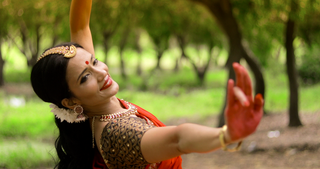
The Colors Trilogy is a series of short films with themes based on women juxtaposed with the ideologies behind the three colors of the Indian National Flag. The trilogy is delivered through the Indian classical dance form Bharatanatyam. The films Green was released in 2020, and the second and third films "White" and "Saffron" were released in 2021.