Kraut is a German word recorded in English from 1918 onwards as an ethnic slur for a German, particularly a German soldier during World War I and World War II. Its earlier meaning in English was as a synonym for sauerkraut, a traditional Central and Eastern European food.

Can were a German experimental rock band formed in Cologne in 1968 by Holger Czukay, Irmin Schmidt (keyboards), Michael Karoli (guitar), and Jaki Liebezeit (drums). They featured several vocalists, including the American Malcolm Mooney (1968–70) and the Japanese Damo Suzuki (1970–73). They have been hailed as pioneers of the German krautrock scene.
Krautrock is a broad genre of experimental rock that developed in West Germany in the late 1960s and early 1970s. It originated among artists who blended elements of psychedelic rock, avant-garde composition, and electronic music, among other eclectic sources. Common elements included hypnotic rhythms, extended improvisation, musique concrète techniques, and early synthesizers, while the music generally moved away from the rhythm & blues roots and song structure found in traditional Anglo-American rock music. Prominent groups associated with the krautrock label included Neu!, Can, Faust, Tangerine Dream, Kraftwerk, Cluster, Ash Ra Tempel, Popol Vuh, Amon Düül II and Harmonia.

Harmonia was a West German musical "supergroup" formed in 1973 as a collaboration between members of two prominent krautrock bands: Cluster's Hans-Joachim Roedelius and Dieter Moebius joined by Neu! guitarist Michael Rother. Living and recording in the rural village of Forst, the trio released two albums—Musik von Harmonia (1974) and Deluxe (1975)—to limited sales before dissolving in 1976. AllMusic described the group as "one of the most legendary in the entire krautrock/kosmische scene."

"Station to Station" is a song by the English musician David Bowie. It was released in January 1976 as the title track and opener of his tenth studio album Station to Station, as well as on a promotional 7-inch single in France the same month. Co-produced by Bowie and Harry Maslin, it was written and recorded in Los Angeles between September and November 1975. At over 10 minutes in length, it is Bowie's longest studio recording. Opening with a train-like noise, the song's first half is a slow march, while the second takes the form of a prog-disco suite in a different key and tempo than the first. It has been characterised as art rock and is influenced by the German electronic bands Kraftwerk and Tangerine Dream.
This is a discography of the krautrock band Can.
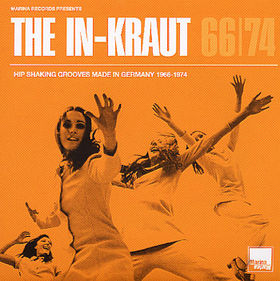
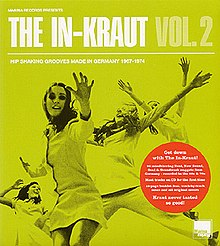
The In-Kraut: Hip Shaking Grooves Made in Germany 1966-1974 is the first volume in The In-Kraut series released by Marina Records on compact disc and double vinyl in 2005.

Urbana Gerila was a former Yugoslav punk rock and new wave band from Belgrade. The band is notable as the participant of the Artistička radna akcija project in 1981. In 1982, the band members formed an ad hoc group Berliner Strasse, influenced by post-punk and krautrock, performing songs with lyrics in German.

Jehovahkill is the eighth album by Julian Cope, released in 1992. After the critical success of Peggy Suicide (1991), Cope's idea for Jehovakill was to incorporate a krautrock attitude into his music. He began recording the album with musicians Rooster Cosby and Donald Ross Skinner, while co-producing it with the latter. The sessions yielded what Cope considered to be his most sonically experimental material to date. Originally titling the record Julian H. Cope, he sent an eleven track version to Island Records, who initially rejected its release, but gave Cope extra recording sessions for the album. During the extra sessions, in which six extra songs were recorded, the album became harder and was retitled Jehovahkill.
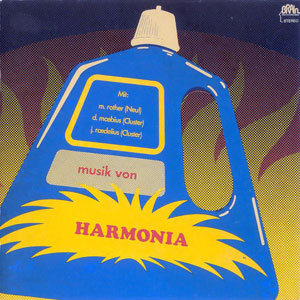
Musik von Harmonia is the debut album from the influential German krautrock group Harmonia, released in January 1974 by Brain Records. Formed by the addition of Neu! guitarist Michael Rother to Cluster, they recorded the album from June to November 1973 in Cluster's Forst recording studio. It was self-produced by the group using a primitive mixer and three tape recorders.

"The Shock of the Lightning" is a song by English rock band Oasis. It is the fourth track from the band's seventh and final studio album, Dig Out Your Soul (2008). The song was released as the first single from the album on 29 September 2008. It received its first airplay on 15 August 2008 on multiple UK and Irish radio stations including the Ian Dempsey Breakfast show on Today FM in Ireland, BBC 6 Music by Shaun Keaveny, and by Chris Moyles on BBC Radio 1. Moyles was joined by Noel Gallagher on 15 August 2008 to make a remix.
Qua is the eleventh and final album by German Krautrock band Cluster, released in May 2009 on Nepenthe Music. It is the band's twelfth studio album and first in fourteen years.

Mushroom is a musicians' collective based in the San Francisco Bay Area. The group's sound has been described as a "diverse and eclectic blend of jazz, space rock, R&B, electronic, ambient, Krautrock and folk music".
Experimental rock, also called avant-rock, is a subgenre of rock music that pushes the boundaries of common composition and performance technique or which experiments with the basic elements of the genre. Artists aim to liberate and innovate, with some of the genre's distinguishing characteristics being improvisational performances, avant-garde influences, odd instrumentation, opaque lyrics, unorthodox structures and rhythms, and an underlying rejection of commercial aspirations.

Canaxis 5 is the only studio album by the Technical Space Composer's Crew, released in 1969 by Music Factory. On later issues, the artist credit was changed to Holger Czukay and Rolf Dammers. The album was remixed for Spoon Records releases and again for the Revisited Rec. release.

Hardcore Breakout USA is an internationally distributed compilation album mostly of artists that are on New Red Archives records. It was originally released in 1990 as a double LP and cassette, but was then subsequently also released as a CD. The album was compiled by New Red Archives. The New Red Archives 1990 pressing of the album was issued as a single LP. The Japanese version Snowboard Addiction - Fun Ride, was released in 1994 and a second edition, Hardcore Breakout USA Volume 2, was compiled and released, in 1995.
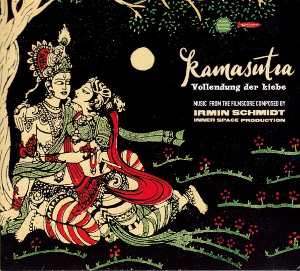
Kamasutra: Vollendung der Liebe is the soundtrack to the West German documentary film of the same name (1969), written by Innerspace Productions, an early name for the krautrock band Can, and officially released in 2009 by "Crippled Dick Hot Wax!". Initially, the film's producers commissioned only Irmin Schmidt to work on the soundtrack, finished with the contribution from Innerspace Productions.
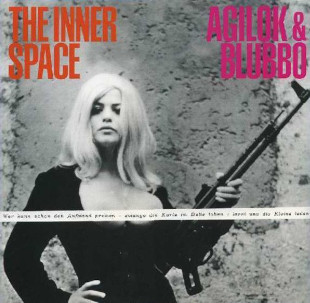
Agilok & Blubbo is the soundtrack album featured in the 1969 German film of the same name. The songs on this album are the earliest recordings of the German experimental rock band The Inner Space, who would soon become known under the name Can. Years after the film had fallen into obscurity, its soundtrack was eventually licensed from Hans Wewerka's archives and released in Spain in 2009.

Romantic Warriors IV: Krautrock is a trilogy of feature-length documentaries about progressive music written and directed by Adele Schmidt and José Zegarra Holder. RW4 focuses on the progressive rock music from Germany popularly known as Krautrock, although the integration of Krautrock into the progressive rock genre is a purely American notion. In Europe, the conventional wisdom is that Krautrock can be considered at most as the connection between psychedelic rock and progressive rock. The term "Krautrock" was applied after-the-fact by British journalists, and in fact the German bands share very few similarities.

Deutsche Elektronische Musik 2 is a 2013 compilation album released by Soul Jazz Records in 2013. It was a follow-up to their 2010 record Deutsche Elektronische Musik with further tracks covering West German krautrock groups and their music released between 1971 and 1983. It received positive reviews from music publications such as AllMusic, Uncut and Record Collector as well as newspapers such as The Independent and The Province.

 link
link 


