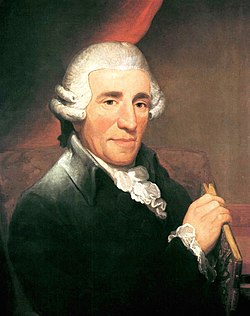
The Symphony No. 71 in B-flat major, Hoboken I/71, is a symphony by Joseph Haydn. It was composed by 1780.
The Symphony No. 71 in B-flat major, Hoboken I/71, is a symphony by Joseph Haydn. It was composed by 1780.
The symphony is scored for flute, two oboes, bassoon, two horns and strings.
It is in four movements:
After dark string sonorities reminiscent of Sturm und Drang in the slow introduction, the Allegro begins with a very light galante theme which is interrupted periodically by more darkly colored strings. The transitional material is notable for its use of counterpoint. [1]
The slow second movement is a theme with four variations and a coda. The second variation features a flute and bassoon duet over thirty-second notes and pizzicato bass. Triplet-sixteenths dominate the third variation. As usual, the final variation is recapitulatory, but here Haydn extends the variation with further development and a cadenza-like passage. [1]
The trio of the minuet features solo sections for two violins against a pizzicato bass. [1]
| International | |
|---|---|
| National | |
| Other | |
 | This article about a symphony is a stub. You can help Wikipedia by adding missing information. |
