Genomic imprinting is an epigenetic phenomenon that causes genes to be expressed or not, depending on whether they are inherited from the female or male parent. Genes can also be partially imprinted. Partial imprinting occurs when alleles from both parents are differently expressed rather than complete expression and complete suppression of one parent's allele. Forms of genomic imprinting have been demonstrated in fungi, plants and animals. In 2014, there were about 150 imprinted genes known in mice and about half that in humans. As of 2019, 260 imprinted genes have been reported in mice and 228 in humans.

Mary Frances Lyon was an English geneticist best known for her discovery of X-chromosome inactivation, an important biological phenomenon.

John Frederick William Birney is joint director of EMBL's European Bioinformatics Institute (EMBL-EBI), in Hinxton, Cambridgeshire and deputy director general of the European Molecular Biology Laboratory (EMBL). He also serves as non-executive director of Genomics England, chair of the Global Alliance for Genomics and Health (GA4GH) and honorary professor of bioinformatics at the University of Cambridge. Birney has made significant contributions to genomics, through his development of innovative bioinformatics and computational biology tools. He previously served as an associate faculty member at the Wellcome Trust Sanger Institute.
Gabriel A. Dover was a British geneticist, best known for coining the term molecular drive in 1982 to describe a putative third evolutionary force operating distinctly from natural selection and genetic drift.

Myosin VIIA is protein that in humans is encoded by the MYO7A gene. Myosin VIIA is a member of the unconventional myosin superfamily of proteins. Myosins are actin binding molecular motors that use the enzymatic conversion of ATP - ADP + inorganic phosphate (Pi) to provide the energy for movement.
Veronica van Heyningen is an English geneticist who specialises in the etiology of anophthalmia as an honorary professor at University College London (UCL). She previously served as head of medical genetics at the MRC Human Genetics Unit in Edinburgh and the president of The Genetics Society. In 2014 she became president of the Galton Institute. As of 2019 she chairs the diversity committee of the Royal Society, previously chaired by Uta Frith.
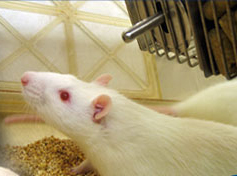
A knockout rat is a genetically engineered rat with a single gene turned off through a targeted mutation used for academic and pharmaceutical research. Knockout rats can mimic human diseases and are important tools for studying gene function and for drug discovery and development. The production of knockout rats was not economically or technically feasible until 2008.

Christopher Paul Ponting is a British computational biologist, specializing in the evolution and function of genes and genomes. He is currently Chair of Medical Bioinformatics at the University of Edinburgh and group leader in the MRC Human Genetics Unit. He is also an Associate Faculty member of the Wellcome Trust Sanger Institute, a Fellow of the Academy of Medical Sciences, member of the European Molecular Biology Organisation and Fellow of the Royal Society of Edinburgh. His research focuses on long noncoding RNA function and evolution, on single cell biology and on disease genomics. Outside of science, Chris is an amateur novelist and wrote an unpublished, science fiction novel about engineered viruses.
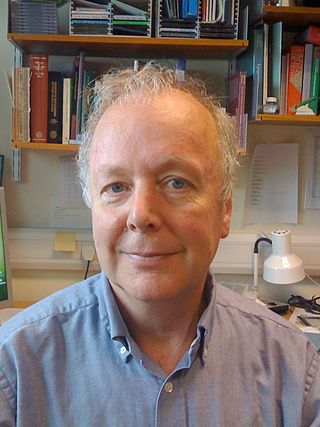
Sir Adrian Peter Bird is a British geneticist and Buchanan Professor of Genetics at the University of Edinburgh. Bird has spent much of his academic career in Edinburgh, from receiving his PhD in 1970 to working at the MRC Mammalian Genome Unit and later serving as director of the Wellcome Trust Centre for Cell Biology. His research focuses on understanding DNA methylation and CpG islands, and their role in diseases such as Rett syndrome.
Europhenome is a resource for presenting, searching and analysing mouse phenotypes that were revealed by high throughput mouse phenotyping programmes such as EUMODIC.

The International Mouse Phenotyping Consortium (IMPC) is an international scientific endeavour to create and characterize the phenotype of 20,000 knockout mouse strains. Launched in September 2011, the consortium consists of over 15 research institutes across four continents with funding provided by the NIH, European national governments and the partner institutions.
Karen Penelope Steel FRS FMedSci is a British scientist who studies the genetics of deafness, using the mouse as a model to identify the genes involved and to understand the molecular, cellular and physiological mechanisms involved. She is Professor of Sensory Function at the Wolfson Centre for Age-Related Diseases, King's College London. Previously she was Principal Investigator of the Genetics of Deafness research programme at the Wellcome Trust Sanger Institute.

Julie Ann Ahringer is an American/British Professor of Genetics and Genomics, Director of the Gurdon Institute and a member of the Department of Genetics at the University of Cambridge. She leads a research lab investigating the control of gene expression.

Sarah Amalia Teichmann is a German scientist, the former head of cellular genetics at the Wellcome Sanger Institute and a visiting research group leader at the European Bioinformatics Institute (EMBL-EBI). She serves as director of research in the Cavendish Laboratory, Professor at the University of Cambridge and Cambridge Stem Cell Institute, and is a senior research fellow at Churchill College, Cambridge.

Ketan Jayakrishna Patel is a British–Kenyan scientist who is Director of the MRC Weatherall Institute of Molecular Medicine and the MRC Molecular Haematology Unit at the University of Oxford. Until 2020 he was a tenured principal investigator at the Medical Research Council (MRC) Laboratory of Molecular Biology (LMB).

Wendy Anne Bickmore is a British genome biologist known for her research on the organisation of genomic material in cells.
Donna R. Maglott is a staff scientist at the National Center for Biotechnology Information known for her research on large-scale genomics projects, including the mouse genome and development of databases required for genomics research.

Anne Carla Ferguson-Smith is a mammalian developmental geneticist. She is the Arthur Balfour Professor of Genetics and Pro-Vice Chancellor for Research and International Partnerships at the University of Cambridge. Formerly head of the Department of Genetics at the University of Cambridge, she is a Fellow of Darwin College, Cambridge and serves as President of the Genetics Society.
Elizabeth Mary Claire Fisher is a British geneticist and Professor at University College London. Her research investigates the degeneration of motor neurons during amyotrophic lateral sclerosis and Alzheimer's disease triggered by Down syndrome.
Bruce Macintosh Cattanach FRS was a British mouse geneticist, known for his pioneering work in the fields of autosomal imprinting and X chromosome inactivation.


