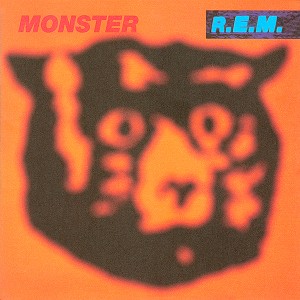
Monster is the ninth studio album by American rock band R.E.M., released by Warner Bros. Records in the UK on September 26, 1994, and in the United States the following day. It was produced by the band and Scott Litt and recorded at four studios. The album was an intentional shift from the style of the band's previous two albums, Out of Time (1991) and Automatic for the People (1992), by introducing loud, distorted guitar tones and simpler lyrics.

"What's the Frequency, Kenneth?" is a song by American alternative rock band R.E.M. from their ninth studio album, Monster (1994). The song's title refers to an incident in New York City in 1986 in which two then-unknown assailants attacked journalist Dan Rather while repeating "Kenneth, what is the frequency?"

"Man on the Moon" is a song by American alternative rock band R.E.M., released in November 1992 as the second single from their eighth album, Automatic for the People (1992). The lyrics were written by lead singer Michael Stipe, and the music by drummer Bill Berry and guitarist Peter Buck. The song was well received by critics and reached number 30 on the US Billboard Hot 100, number 17 on the US Cash Box Top 100, number 18 on the UK Singles Chart, and number one in Iceland. It remains one of R.E.M.'s most popular songs and was included on the compilations In Time: The Best of R.E.M. 1988–2003 and Part Lies, Part Heart, Part Truth, Part Garbage 1982–2011.
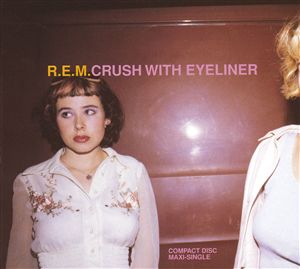
"Crush with Eyeliner" is a song by American rock band R.E.M., released by Warner Bros. Records as the third single from their ninth studio album, Monster (1994). Sonic Youth's Thurston Moore provides background vocals. Michael Stipe claims the song was inspired by the band New York Dolls, who, in his opinion, "knew how to exaggerate a song, to make it sound really sleazy and over the top." This was also one of the first songs that surfaced from Stipe after the writer's block that hounded him after the death of his friend, actor River Phoenix.

"Bang and Blame" is a song by American alternative rock group R.E.M. It was released as the second single from their ninth studio album, Monster (1994), on October 31, 1994 by Warner Bros. Records. The song was R.E.M.'s last to reach the top 40 on the US Billboard Hot 100, peaking at number 19, and was also their last number-one single on the Billboard Modern Rock Tracks chart. The single reached number one in Canada—R.E.M.'s only single to do so—and peaked inside the top 40 on the charts of Australia, Belgium, Finland, Iceland, Ireland, the Netherlands, New Zealand, and the United Kingdom.

"Strange Currencies" is a song by American rock band R.E.M. It was included on their ninth studio album, Monster (1994), and was released as the album's fourth single on April 18, 1995, by Warner Bros. Records. The song reached number nine on the UK Singles Chart and peaked at number 47 in the United States. Like "Everybody Hurts" on R.E.M.'s previous album, it has a time signature of 6
8. The song's music video was directed by Mark Romanek.

"Tongue" is a song by American rock band R.E.M., released on July 17, 1995 by Warner Bros. Records, as the fifth and final single from their ninth studio album, Monster (1994). The song was only released in the US, UK, and Ireland. In the song, lead singer Michael Stipe performs in falsetto; he has stated on several occasions that the narrator of the song is female. Stipe has also said the track is "all about cunnilingus".

"Space" is a song by American musician Prince from his fifteenth album, Come (1994). The B-side of the single is actually the album track. The A-side is the Universal Love Radio Remix of "Space", with completely new lyrics.

"Sabotage" is a song by American rap rock group Beastie Boys, released by Grand Royal Records in January 1994 as the first single from their fourth studio album, Ill Communication (1994). The song features traditional rock instrumentation, turntable scratches, heavily distorted bass guitar riffs and lead vocals by Ad-Rock. A moderate commercial success, the song was notable for its video, directed by Spike Jonze; it was also nominated in five categories at the 1994 MTV Music Video Awards.
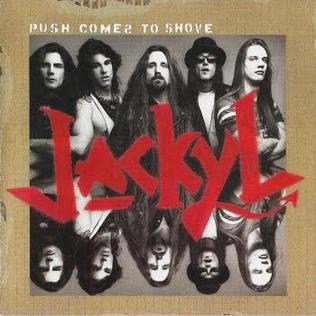
Push Comes to Shove is the second album by the American hard rock band Jackyl, released in 1994. It peaked at No. 46 on the Billboard 200. The title track peaked at No. 7 on Billboard's Album Rock Tracks chart and No. 90 on the UK Singles Chart. The band supported the album by playing Woodstock '94 and touring with ZZ Top and Aerosmith.
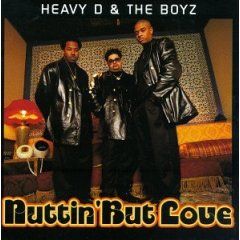
Nuttin' but Love is the fifth and final studio album by American rap group Heavy D & the Boyz. It was released on May 24, 1994, by Uptown Records and was produced by DJ Eddie F, Teddy Riley, Marley Marl, Erick Sermon, Kid Capri, Easy Mo Bee, Poke of The Trackmasters, and Pete Rock. The first track on the album, "Friends & Respect", featured spoken intros by the likes of LL Cool J, Buju Banton, KRS-One, Kool G Rap, Little Shawn, MC Lyte, Martin Lawrence, Pete Rock, Positive K, Q-Tip, Queen Latifah, Spike Lee and Treach.

"Be Happy" is a song by American singer Mary J. Blige. It was written by Blige, Sean "Puffy" Combs, Arlene DeValle, and Jean-Claude Olivier from duo Poke & Tone for her second studio album, My Life (1994), while production was helmed by Combs and Olivier. "Be Happy" contains an instrumental sample of the song "You're So Good to Me" (1979) by musician Curtis Mayfield and a re-sung vocal portion of the record "I Want You" (1976) by Marvin Gaye.

"Sweet Lullaby" is a song by French musical group Deep Forest that originally appeared on their eponymous album (1992). The song gained popularity in 1992 and 1993 when it was released as a single, becoming a top-30 hit in many European and Oceanian countries. In 1994, it was re-released in remixed versions. Its accompanying music video was directed by Tarsem Singh and nominated for several awards at the 1994 MTV Video Music Awards.

R.E.M. was an American alternative rock band formed in Athens, Georgia, in 1980 by drummer Bill Berry, guitarist Peter Buck, bassist Mike Mills, and lead vocalist Michael Stipe, who were students at the University of Georgia. One of the first alternative rock bands, R.E.M. was noted for Buck's ringing, arpeggiated guitar playing, Stipe's distinctive vocal quality, unique stage presence and cryptic lyrics, Mills's melodic bass lines and backing vocals, and Berry's tight, economical drumming. In the early 1990s, other alternative rock acts such as Nirvana, Pixies and Pavement viewed R.E.M. as a pioneer of the genre. After Berry left in 1997, the remaining members continued with mixed critical and commercial success. The band broke up amicably in 2011, having sold more than 90 million albums worldwide and becoming one of the world's best-selling music acts.
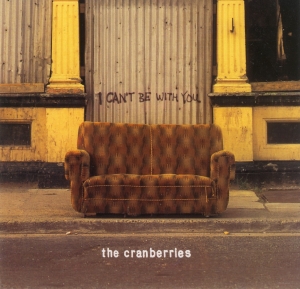
"I Can't Be with You" is a song by Irish rock band the Cranberries. It was released by Island Records as the third single from their second studio album, No Need to Argue (1994), except in North America, where it was released as the fourth and final single of the album. The song achieved minor chart success in most of the European countries where it was released, peaking at number 21 in their native Ireland. In Iceland, the song reached number one for a week in April 1995, becoming the Cranberries' third consecutive number-one single there. Its music video was directed by Samuel Bayer.

"Body and Soul" is a song by American recording artist Anita Baker, released in 1994 as the lead single in support of her fifth album, Rhythm of Love (1994). The song received critical acclaim, peaking at number four on the US Billboard Hot Black Singles chart and number 36 on the Billboard Hot 100. It earned Baker another top 40 pop hit following 1988's "Just Because", which peaked to number 14 on the same chart. In Europe, "Body and Soul" charted in the UK, reaching number 48 on the UK Singles Chart.

"I Apologize" is a song by American recording artist Anita Baker, released in October 1994 as the second single from her fifth album, Rhythm of Love (1994). The song peaked at number eight on the US Billboard Hot R&B Singles chart and number 74 on the Billboard Hot 100. It won her a Grammy Award for Best Female R&B Vocal Performance.

"Trouble" is a song by British female pop music duo Shampoo, released in July 1994 by Food Records as the first single from their debut album, We Are Shampoo (1994). The song was written by the duo's Carolyn "Carrie" Askew and Jacqueline "Jacqui" Blake with producer Conall Fitzpatrick, and peaked at No. 11 on the UK Singles Chart. It also reached the top-20 in Australia, Belgium, Finland and the Netherlands, as well as No. 37 in Canada. The single received critical acclaim by music critics and was named Single of the Week by Melody Maker and NME. Attempting to break into the US market, the song was released as a promotional single for the 1995 film Mighty Morphin Power Rangers: The Movie, in anticipation of the release of the US version of We Are Shampoo. A new music video was filmed featuring clips from the Power Rangers film. NME magazine ranked "Trouble" at No. 23 on their list of the 50 best songs of 1994.

"Dream On Dreamer" is a song by British acid jazz and funk group the Brand New Heavies, released in March 1994 by FFRR as the lead single from the group's third album, Brother Sister (1994). The song is also featured on their remix album, Excursions: Remixes & Rare Grooves (1995), that was released in the US. It remains one of their most successful hits, peaking at number 15 in the UK and number 19 in Scotland. In the US, it reached number 51 on the Billboard Hot 100, while in Canada, it hit number 47 on the RPM Top Singles chart. The accompanying music video for "Dream On Dreamer" was directed by American director Josh Taft.
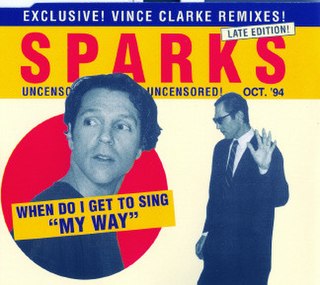
"When Do I Get to Sing 'My Way'" is a song by American band Sparks, released in October 1994 by Logic Records as the first single from their 1994 album Gratuitous Sax & Senseless Violins. Written and produced by band members Russell and Ron Mael, the song references Frank Sinatra's signature song "My Way" and was a number seven hit in Germany. In the United States, it reached number nine on the Billboard Hot Dance Club Play chart, and it was also a top 40 hit in the United Kingdom. The song was re-released as a single the following year, this time peaking at number 32 in the UK. Its accompanying music video was directed by Sophie Muller.