Related Research Articles

Alberta is one of the thirteen provinces and territories of Canada. It is a part of Western Canada and is one of the three prairie provinces. Alberta borders British Columbia to the west, Saskatchewan to the east, the Northwest Territories to the north, and the U.S. state of Montana to the south. It is one of the only two landlocked provinces in Canada, with Saskatchewan being the other. The eastern part of the province is occupied by the Great Plains, while the western part borders the Rocky Mountains. The province has a predominantly continental climate but experiences quick temperature changes due to air aridity. Seasonal temperature swings are less pronounced in western Alberta due to occasional Chinook winds.

The University of Alberta is a public research university located in Edmonton, Alberta, Canada. It was founded in 1908 by Alexander Cameron Rutherford, the first premier of Alberta, and Henry Marshall Tory, the university's first president. It was enabled through the Post-secondary Learning Act. The university is considered a "comprehensive academic and research university" (CARU), which means that it offers a range of academic and professional programs that generally lead to undergraduate and graduate level credentials.
In Canada, a separate school is a type of school that has constitutional status in three provinces and statutory status in the three territories. In these Canadian jurisdictions, a separate school is one operated by a civil authority—a separate school board—with a mandate enshrined in the Canadian Constitution or in federal statutes. In these six jurisdictions a civil electorate, composed of the members of the minority faith, elects separate school trustees according to the province's or territory's local authorities election legislation. These trustees are legally accountable to their electorate and to the provincial or territorial government. No church has a constitutional, legal, or proprietary interest in a separate school.
Lois Elsa Hole, CM, AOE DStJ was a Canadian politician, businesswoman, academician, professional gardener and best-selling author. She was the 15th Lieutenant Governor of Alberta from 10 February 2000 until her death on 6 January 2005. She was known as the "Queen of Hugs" for breaking with protocol and hugging almost everyone she met, including journalists, diplomats and other politicians.

St. Paul, originally known as St-Paul-de-Métis or St-Paul-des-Métis, is a town in East-Northern Alberta, Canada that is surrounded by the County of St. Paul No. 19. It was known as St. Paul de(s) Métis between 1912 and 1936.
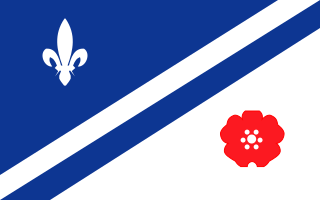
Franco-Albertans are francophone residents of the Canadian province of Alberta. Franco-Albertans may also refer to residents of Alberta with French Canadian ancestry, although publications from the government of Alberta use the term Franco-Albertan to refer to its francophone residents. In the 2016 Canadian Census, there were 86,705 Albertans that stated their mother tongue was French. In the same census, there were 411,315 Albertans that claim partial or full French ancestry.
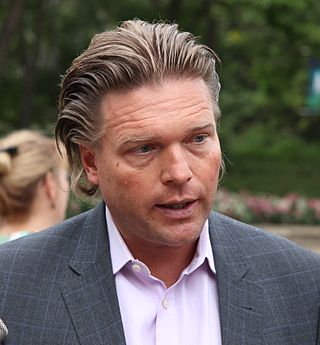
Thomas Adam Lukaszuk is a Polish-born Canadian politician and former Member of the Legislative Assembly of Alberta. He represented the constituency of Edmonton-Castle Downs from 2001 to 2015 as a Progressive Conservative. He served in the provincial cabinet from 2010 to 2014, and was the 8th Deputy Premier from 2012 to 2013.
Education in Alberta is provided mainly through funding from the provincial government. The earliest form of formal education in Alberta is usually preschool which is not mandatory and is then followed by the partially-mandatory kindergarten to Grade 12. This is managed by Alberta Education which has divided the province into 379 school authorities. Higher education in the province is managed by Alberta Advanced Education.

The Greater North Central Francophone Education Region No. 2, known in French as the Conseil scolaire Centre-Nord (CSCN), is one of Alberta's four French language school boards. French language education is intended for children who are eligible under section 23 of the Canadian Charter of Rights and Freedoms. The CSCN is a composite board, operating both public and catholic francophone schools in Beaumont, Camrose, Edmonton, Fort McMurray, Jasper, Legal, Lloydminster, Red Deer, Sherwood Park, St. Albert. Stony Plain and Wainwright. The CSCN receives funding for all students from the provincial Government of Alberta.
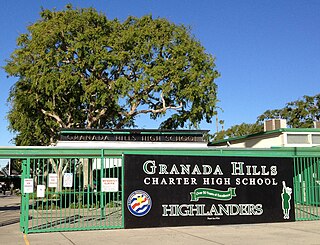
A charter school is a school that receives government funding but operates independently of the established state school system in which it is located. It is independent in the sense that it operates according to the basic principle of autonomy for accountability, that it is freed from the rules but accountable for results.
Foothills School Division No. 38 or Foothills School Division is a public school authority within the Canadian province of Alberta operated out of High River.
Lloydminster Public School Division is a public school authority within the Canadian provinces of Alberta and Saskatchewan operated out of Lloydminster.
Peace Wapiti Public School Division No. 76 or Peace Wapiti Public School Division is a public school authority within the Canadian province of Alberta operated out of Grande Prairie. Peace Wapiti Public School Division provides service to more than 6,000 students in Kindergarten through Grade 12 in 32 schools, including seven Hutterite colony schools and an outreach and online school – Peace Academy of Virtual Education (PAVE) located in Spirit River. High School programs are operated in eight schools – Spirit River Regional Academy, Beaverlodge Regional High School, Eaglesham School, Ridgevalley School, Savanna School, Sexsmith Secondary School, Peace Wapiti Academy and Peace Academy of Virtual Education (PAVE). The Board also operates a group home facility serving students in Northern Alberta.
St. Albert Public Schools, formally St. Albert Public School District No. 5565, is a public school authority within the Canadian province of Alberta operated out of St. Albert. The board is a member of Zone 2/3. The district was formerly known as Protestant Separate School District No. 6. Approximately 8,000 students are enrolled in St. Albert Public Schools.
Evergreen Catholic Separate School Division or Evergreen Catholic Schools is a separate school authority within the Canadian province of Alberta operated out of Spruce Grove.
Red Deer Catholic Regional Division No. 39 or Red Deer Catholic Regional Schools (RDCRS) is a separate school authority within the Canadian province of Alberta operated out of Red Deer.
East Central Francophone Education Region No. 3, known in French as Conseil scolaire Centre-Est, is a French first language authority within the Canadian province of Alberta operated out of St. Paul.
Northwest Francophone Education Region No. 1, known in French as Conseil scolaire du Nord-Ouest No. 1, is a French first language authority within the Canadian province of Alberta operated out of St. Isidore.
The Southern Francophone Education Region No. 4 is a French first language authority within the Canadian province of Alberta operated out of Calgary.
