Related Research Articles

Kary Banks Mullis was an American biochemist. In recognition of his role in the invention of the polymerase chain reaction (PCR) technique, he shared the 1993 Nobel Prize in Chemistry with Michael Smith and was awarded the Japan Prize in the same year. PCR became a central technique in biochemistry and molecular biology, described by The New York Times as "highly original and significant, virtually dividing biology into the two epochs of before PCR and after PCR."

David Baltimore is an American biologist, university administrator, and 1975 Nobel laureate in Physiology or Medicine. He is a professor of biology at the California Institute of Technology (Caltech), where he served as president from 1997 to 2006. He founded the Whitehead Institute and directed it from 1982 to 1990. In 2008, he served as president of the American Association for the Advancement of Science.
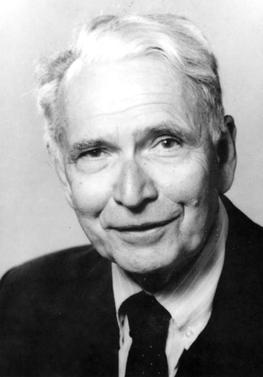
Erwin Chargaff was an Austro-Hungarian-born American biochemist, writer, and professor of biochemistry at Columbia University medical school. A Bucovinian Jew who emigrated to the United States during the Nazi regime, he penned a well-reviewed autobiography, Heraclitean Fire: Sketches from a Life Before Nature.

Robert G. Roeder is an American biochemist. He is known as a pioneer scientist in eukaryotic transcription. He discovered three distinct nuclear RNA polymerases in 1969 and characterized many proteins involved in the regulation of transcription, including basic transcription factors and the first mammalian gene-specific activator over five decades of research. He is the recipient of the Gairdner Foundation International Award in 2000, the Albert Lasker Award for Basic Medical Research in 2003, and the Kyoto Prize in 2021. He currently serves as Arnold and Mabel Beckman Professor and Head of the Laboratory of Biochemical and Molecular Biology at The Rockefeller University.

Spermidine is a polyamine compound found in ribosomes and living tissues and having various metabolic functions within organisms.
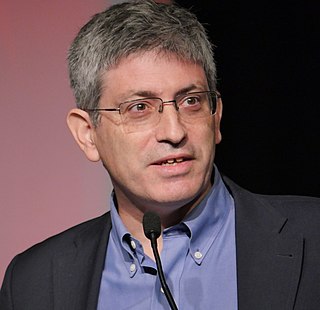
Carl Zimmer is a popular science writer, blogger, columnist, and journalist who specializes in the topics of evolution, parasites, and heredity. The author of many books, he contributes science essays to publications such as The New York Times, Discover, and National Geographic. He is a fellow at Yale University's Morse College and adjunct professor of molecular biophysics and biochemistry at Yale University. Zimmer also gives frequent lectures and has appeared on many radio shows, including National Public Radio's Radiolab, Fresh Air, and This American Life.

Joseph Lyman DeRisi is an American biochemist, specializing in molecular biology, parasitology, genomics, virology, and computational biology.
John Norman Abelson is an American molecular biologist with expertise in biophysics, biochemistry, and genetics. He was a professor at the California Institute of Technology (Caltech).
Donald L. D. Caspar was an American structural biologist known for his works on the structures of biological molecules, particularly of the tobacco mosaic virus. He was an emeritus professor of biological science at the Institute of Molecular Biophysics, Florida State University, and an emeritus professor of biology at the Rosenstiel Basic Medical Sciences Research Center, Brandeis University. He has made significant scientific contributions in virus biology, X-ray, neutron and electron diffraction, and protein plasticity.
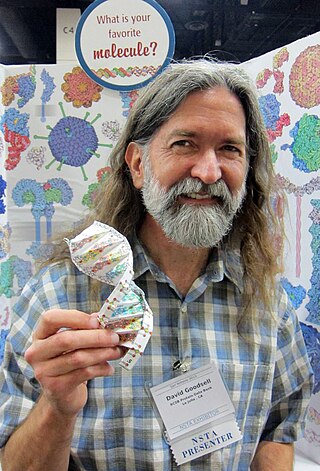
David S. Goodsell, is an associate professor at the Scripps Research Institute and research professor at Rutgers University, New Jersey. He is especially known for his watercolor paintings of cell interiors.
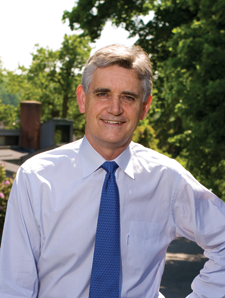
Bruce William Stillman is a biochemist and cancer researcher who has served as the Director of Cold Spring Harbor Laboratory (CSHL) since 1994 and President since 2003. He also served as the Director of its NCI-designated Cancer Center for 25 years from 1992 to 2016. During his leadership, CSHL has been ranked as the No. 1 institution in molecular biology and genetics research by Thomson Reuters. Stillman's research focuses on how chromosomes are duplicated in human cells and in yeast Saccharomyces cerevisiae; the mechanisms that ensure accurate inheritance of genetic material from one generation to the next; and how missteps in this process lead to cancer. For his accomplishments, Stillman has received numerous awards, including the Alfred P. Sloan, Jr. Prize in 2004 and the 2010 Louisa Gross Horwitz Prize, both of which he shared with Thomas J. Kelly of Memorial Sloan-Kettering Cancer Center, as well as the 2019 Canada Gairdner International Award for biomedical research, which he shared with John Diffley.
Lily E. Kay was a historian of science noted for her studies of molecular biology.

Kai Simons is a Finnish professor of biochemistry and cell biology and physician, living and working in Germany. He introduced the concept of lipid rafts, and coined the term trans-Golgi network. He is the co-founder and co-organizer of the European Molecular Biology Laboratory and European Molecular Biology Organization, and initiated the foundation of Max Planck Institute of Molecular Cell Biology and Genetics.
Lloyd M. Kozloff (1923–2012) was an American microbiologist and virologist. He served on the faculty of the University of Chicago, the University of Colorado Health Sciences Center, and University of California, San Francisco, where he became dean of the UCSF Graduate Division. Kozloff retired from UCSF in 1993. He died of heart failure in 2012.
Perdur Radhakantha Adiga was an Indian endocrine biochemist, reproductive biologist, INSA Senior Scientist and an Astra chair professor of the Indian Institute of Science. He was known for his researches on vitamin-carrier proteins and Lathyrus sativus and was an elected fellow of the Indian Academy of Sciences and the Indian National Science Academy. The Council of Scientific and Industrial Research, the apex agency of the Government of India for scientific research, awarded him the Shanti Swarup Bhatnagar Prize for Science and Technology, one of the highest Indian science awards for his contributions to Medical Sciences in 1980.
Robert Dale Slocum is an American biologist and botanist. He is a professor of biology in the Center for Natural Sciences at Goucher College. His research focuses on plant physiology, molecular biology, and biotechnology.
Finn Wold was a Norwegian-American biochemist known for the elucidation of structure-function relationships of proteins. Wold was a pioneer in the use of reagents to measure and decipher the structures of proteins. He reported one of the first examples of a transition state analogue, and was at the forefront of the design and use of affinity labels.
Charles Clifton Richardson is an American biochemist and professor at Harvard University. Richardson received his undergraduate education at Duke University, where he majored in medicine. He received his M.D. at Duke Medical School in 1960. Richardson works as a professor at Harvard Medical School, and he served as editor/associate editor of the Annual Review of Biochemistry from 1972 to 2003. Richardson received the American Chemical Society Award in Biological Chemistry in 1968, as well as numerous other accolades.
Gerard Robert Wyatt was an American-Canadian biochemist and entomologist, specializing in insect physiology. He is known for important research on DNA.
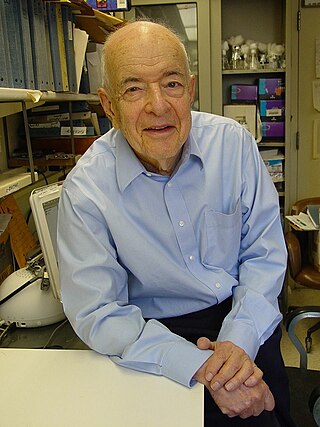
Herbert Tabor was an American biochemist and physician-scientist who specialized in the function of polyamines and their role in human health and disease. Tabor was a principal investigator at the National Institute of Diabetes and Digestive and Kidney Diseases where he was Chief of the Laboratory of Biochemical Pharmacology. He was the editor-in-chief of the Journal of Biological Chemistry from 1971 to 2010.
References
- ↑ Seymour S. Cohen Papers at the American Philosophical Society
- ↑ Guggenheim Fellowship page
- ↑ "Chapter C". Members of the American Academy of Arts & Sciences: 1780-2012 (PDF). American Academy of Arts & Sciences. p. 107.
- ↑ Dr. Seymour S. Cohen obituary
- ↑ Frederick Betz (30 November 2010). Managing Science: Methodology and Organization of Research. Springer Science & Business Media. ISBN 978-1-4419-7488-4.


