
The Fairchild XC-120 Packplane was an American experimental modular aircraft first flown in 1950. It was developed from the company's C-119 Flying Boxcar, and was unique in the unconventional use of removable cargo pods that were attached below the fuselage, instead of possessing an internal cargo compartment.

The Kokusai Ku-7 Manazuru was a large experimental twin boom Japanese military glider.

The Savoia-Marchetti SM.91 was a two-seat, twin-engined, Italian heavy fighter prototype, designed to compete in a 1942 revision to a long-range fighter-bomber contract offered by the Regia Aeronautica to Italian aircraft companies in 1938. The original 1938 specification yielded the Savoia-Marchetti SM.88, which the SM.91 was largely based on.

The Savoia-Marchetti SM.78 was an Italian bomber/reconnaissance biplane flying boat of the early 1930s.

The Savoia-Marchetti SM.62 was an Italian single-engine maritime patrol flying boat produced from 1926. It served with the Regia Aeronautica and with a number of foreign users, and was produced in Spain and the Soviet Union. Some of the Spanish aircraft were still in service during the Spanish Civil War.

The Heinkel HD 39 was a special-purpose cargo aircraft developed in Germany in the 1920s to distribute the Berlin newspaper B.Z.. It was a conventional single-bay biplane with staggered wings of equal span, and a fuselage that nearly filled the interplane gap. The pilot sat in an open cockpit, and the undercarriage was of fixed, tailskid type with divided main units. The sole example of the type was built after Ernst Heinkel found out, by chance, that B.Z. required such an aircraft and had ordered two machines from Albatros. Heinkel convinced publisher Ullstein-Verlag to purchase a third aircraft from his firm.

The Stearman M-2 Speedmail was a mail-carrier aircraft produced by the Stearman Aircraft Company of Wichita, Kansas. It first flew in January 1929. The Speedmail was a single-seat biplane, with two large cargo compartments in place of a front cockpit. The fuselage and tail unit were constructed from welded chrome-moly steel tube faired with wooden formers and fabric covered aft of the pilot's cockpit, and detachable aluminium alloy panels covered the fuselage forward of the cockpit. The wings were constructed from spruce spars and plywood built-up ribs, all fabric covered. It differed from previous Stearman aircraft by having a tailwheel instead of a tailskid due to its size and weight.
The Eurofly Flash Light is an Italian ultralight aircraft, designed and produced by Eurofly Srl, of Galliera Veneta. The aircraft is supplied as a kit for amateur construction or as a complete ready-to-fly-aircraft.

The Fly Synthesis Syncro is an Italian ultralight and light-sport aircraft, designed and produced by Fly Synthesis, introduced at the Aero show held in Friedrichshafen in 2009. The aircraft is supplied as a complete ready-to-fly-aircraft.

The Jabiru J230 is an Australian light-sport aircraft, designed and produced by Jabiru Aircraft. The aircraft is supplied as a kit for amateur construction or as a complete ready-to-fly aircraft.
The LTD LO-120 is a German ultralight aircraft, produced by Logistik-Technik, of Baindt and based on the earlier LO 120 S produced by LO-Fluggerrätebau. The aircraft is supplied as a kit for amateur construction or as a complete ready-to-fly-aircraft.

The Norman Aviation Nordic VII is a Canadian advanced ultralight aircraft, that was designed by Jacques Norman and produced by Norman Aviation of Saint-Anselme, Quebec. The aircraft was supplied as a kit for amateur construction or as a complete ready-to-fly-aircraft.
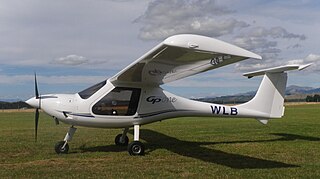
The Skyleader GP One is a Czech ultralight aircraft, designed and produced by Skyleader Aircraft and introduced at the AERO Friedrichshafen show in 2010. The aircraft is supplied as a complete ready-to-fly-aircraft.
The Schmidtler Enduro is a German ultralight trike that was designed and produced by Ultraleichtflug Schmidtler of Munich. When it was available the aircraft was supplied as a complete ready-to-fly-aircraft.
The ICP Amigo is an Italian homebuilt aircraft that was designed and produced by ICP srl of Piovà Massaia. When it was available the aircraft was supplied as a kit for amateur construction.
The Kelly-D is an American homebuilt aircraft that was designed by Dudley R. Kelly of Versailles, Kentucky, in 1981. When it was available, the aircraft was supplied in the form of plans for amateur construction. Aircraft Spruce & Specialty Co still provides some spruce wing parts for the design.

The Vidor Champion V is an Italian homebuilt aircraft that was designed by Giuseppe Vidor, first flying on 10 June 1995. The aircraft is supplied in the form of plans for amateur construction. It is also known as the Asso Aerei V Champion.

The P&M PulsR (transl. Pulsar) is a British ultralight trike, designed by Bill Brooks and produced by P&M Aviation of Rochdale. The aircraft is supplied complete and ready-to-fly.
The Sunward ST is a Chinese ultralight trike designed and produced by Sunward Tech of Zhuzhou. The aircraft is supplied complete and ready-to-fly.

The Caproni Ca.105 was a multirole high wing single engine monoplane developed by the Italian aeronautical company Aeronautica Caproni in the late 1920s.


