Related Research Articles

Tides Foundation is a left-leaning donor advised fund based in the United States that manages over $1.4 billion in assets. It was founded in San Francisco in 1976 by Drummond Pike. Tides distributes money from anonymous donors to other organizations, which are often politically progressive. An affiliated group, Tides Advocacy, is a "massive progressive incubator." Tides has received substantial funding from George Soros.

The Philanthropy Roundtable is a nonprofit organization that advises conservative philanthropists and advocates for donor privacy.
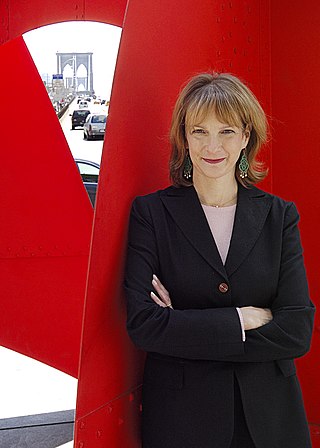
Patricia Harris is the chief executive officer of Michael Bloomberg's philanthropic foundation, Bloomberg Philanthropies. She was first deputy mayor for the City of New York from 2002 to December 31, 2013. She advised the Mayor of New York City, then Bloomberg, on administrative, operational, and policy matters. In 2022, she was included on Forbes Magazine's 50 over 50 list and in 2016, she was named one of the magazine's most powerful women in the world.

A financial endowment is a legal structure for managing, and in many cases indefinitely perpetuating, a pool of financial, real estate, or other investments for a specific purpose according to the will of its founders and donors. Endowments are often structured so that the inflation-adjusted principal or "corpus" value is kept intact, while a portion of the fund can be spent each year, utilizing a prudent spending policy.

TheBarnes Foundation is an art collection and educational institution promoting the appreciation of art and horticulture. Originally in Merion, the art collection moved in 2012 to a new building on Benjamin Franklin Parkway in Philadelphia, Pennsylvania. The arboretum of the Barnes Foundation remains in Merion, where it has been proposed that it be maintained under a long-term educational affiliation agreement with Saint Joseph's University.
The John M. Olin Foundation was a conservative American grant-making foundation established in 1953 by John M. Olin, president of the Olin Industries chemical and munitions manufacturing businesses. Unlike most other foundations, it was charged to spend all of its assets within a generation of Olin's death, for fear of mission drift over time and to preserve donor intent. It made its last grant in the summer of 2005 and officially disbanded on November 29, 2005. It had disbursed over $370 million in funding, primarily to conservative think tanks, media outlets, and law programs at influential universities. It is most notable for its early support and funding of the law and economics movement and the Federalist Society. "All in all, the Federalist Society has been one of the best investments the foundation ever made," wrote the Foundation to its trustees in 2003.

The Pew Charitable Trusts is an independent non-profit, non-governmental organization (NGO), founded in 1948.
Charity Navigator is a charity assessment organization that evaluates more than 230,000 charitable organizations based in the United States, operating as a free 501(c)(3) organization. It provides insights into a nonprofit's financial stability, adherence to best practices for both accountability and transparency, and results reporting. It is the largest and most-utilized evaluator of charities in the United States. It does not accept any advertising or donations from the organizations it evaluates.
In the United States, a donor-advised fund is a charitable giving vehicle administered by a public charity created to manage charitable donations on behalf of organizations, families, or individuals. To participate in a donor-advised fund, a donating individual or organization opens an account in the fund and deposits cash, securities, or other financial instruments. They surrender ownership of anything they put in the fund but retain advisory privileges over how their account is invested, and how it distributes money to charities.

Laurene Powell Jobs is an American billionaire businesswoman executive and philanthropist. She is the widow of Steve Jobs, who was the co-founder and former CEO of Apple Inc., and she manages the Steve Jobs Trust. She is the founder and chairman of Emerson Collective and XQ Institute. She is a major donor to Democratic Party politicians.

The Art of the Steal is a 2009 documentary film directed by Don Argott, about the controversial move of the Barnes Foundation, generally considered to be the world's best collection of post-Impressionist art and valued in 2009 to be worth at least $25 billion, from Merion, Pennsylvania to Philadelphia. The move was disputed because Albert C. Barnes, who died in 1951, had specifically selected Lower Merion Township for its location. The collection was moved in 2012 to Philadelphia. The film presents an account of the claimed breaking of Barnes's will, which it presents as a decades-long process that was initiated by Philadelphians who were enemies of Barnes while he was alive, and that was continued by their heirs.
DonorsTrust is an American nonprofit donor-advised fund that was founded in 1999 with the goal of "safeguarding the intent of libertarian and conservative donors". As a donor advised fund, DonorsTrust is not legally required to disclose the identity of its donors, and most of its donors remain anonymous. It distributes funds to various conservative and libertarian 501(c)(3) organizations.
Sir Paul Martin Ruddock, is a British businessman, philanthropist and patron of the arts. He is a co-founder and a former CEO of Lansdowne Partners. In addition he is a former chairman of the Victoria & Albert Museum and chairman of the University of Oxford Endowment.
In philanthropy, donor intent is the purpose, sometimes publicly expressed, for which a philanthropist intends a charitable gift or bequest. Donor intent is most often expressed in gift restrictions, terms, or agreements between a donor and donee, but it may also be expressed separately in the words, actions, beliefs, and giving practices of a philanthropist. Donor intent is protected in American law regarding charitable trusts, and trustees' primary fiduciary obligation is to carry out a donor's wishes.
The Systemic Risk Council was formed in 2012 by The Pew Charitable Trusts and CFA Institute to help ensure the effective implementation of the Dodd–Frank Wall Street Reform and Consumer Protection Act and related measures related to mitigating systemic risk.

Bloomberg Philanthropies is a philanthropic organization that encompasses all of the charitable giving of founder Michael R. Bloomberg. Headquartered in New York City, Bloomberg Philanthropies focuses its resources on five areas: the environment, public health, the arts, government innovation and education. According to the Foundation Center, Bloomberg Philanthropies was the 10th largest foundation in the United States in 2015, the last year for which data was available. Bloomberg has pledged to donate the majority of his wealth, currently estimated at more than $54 billion. Patti Harris is the CEO of Bloomberg Philanthropies.
Lenny Feinberg is an American movie producer, real estate investor, and owner of MAJ Productions, a documentary film production company based in Philadelphia, Pennsylvania. Feinberg has been active as a documentarian since the mid-2000s, when he executive produced his first film, The Art of the Steal.

Donald Kimelman is an American journalist and former managing director of The Pew Charitable Trusts, who continues to serve on the Pew Research Center's board. He is the son of Henry L. Kimelman, who served as United States Ambassador to Haiti.
The M.J. Murdock Charitable Trust is a private, non-profit foundation based in Vancouver, Washington.
Laura Arnold is an American philanthropist and co-founder of Arnold Ventures LLC. In addition to serving as co-chair of Arnold Ventures, Arnold became a founding partner of the REFORM Alliance, a national criminal justice advocacy organization in 2019. Prior to her work in philanthropy, she was a mergers-and-acquisitions lawyer and an executive at Cobalt International Energy.
References
- ↑ "Rebecca W. Rimel". Pew Charitable Trusts. Retrieved 16 August 2014.
- ↑ "Rebecca W Rimel, Pew Charitable Trusts: Profile and Biography - Bloomberg Markets". Bloomberg.com. Retrieved 2020-10-25.
- ↑ "APS Member History". search.amphilsoc.org. Retrieved 2021-07-15.
- ↑ ""Art of the Steal" raises tough questions about donor intent". Philanthropy Today. 2 May 2019. Retrieved 27 May 2023.
- ↑ ""Art of the Steal" raises tough questions about donor intent". Philanthropy Today. 2 May 2019. Retrieved 27 May 2023.
