Related Research Articles

The Kingdom of Travancore (/ˈtrævənkɔːr/), also known as the Kingdom of Thiruvithamkoor, was an Indian kingdom from c. 1729 until 1949. It was ruled by the Travancore Royal Family from Padmanabhapuram, and later Thiruvananthapuram. At its zenith, the kingdom covered most of the south of modern-day Kerala, and the southernmost part of modern-day Tamil Nadu with the Thachudaya Kaimal's enclave of Irinjalakuda Koodalmanikyam temple in the neighbouring Kingdom of Cochin. However Tangasseri area of Kollam city and Anchuthengu near Attingal in Thiruvananthapuram district, were British colonies and were part of the Malabar District until 30 June 1927, and Tirunelveli district from 1 July 1927 onwards. Travancore merged with the erstwhile princely state of Cochin to form Travancore-Cochin in 1950. The five Tamil-majority Taluks of Vilavancode, Kalkulam, Thovalai, Agastheeswaram, and Sengottai were transferred from Travancore-Cochin to Madras State in 1956. The Malayalam-speaking regions of Travancore-Cochin merged with the Malabar District and the Kasaragod taluk of the South Canara district in Madras State to form the modern Malayalam-state of Kerala on 1 November 1956, according to the States Reorganisation Act, 1956 passed by the Government of India.
The term Kerala was first epigraphically recorded as Keralaputra (Cheras) in a 3rd-century BCE rock inscription by emperor Ashoka of Magadha. It was mentioned as one of four independent kingdoms in southern India during Ashoka's time, the others being the Cholas, Pandyas and Satyaputras. The Cheras transformed Kerala into an international trade centre by establishing trade relations across the Arabian Sea with all major Mediterranean and Red Sea ports as well those of Eastern Africa and the Far East. The dominion of Cheras was located in one of the key routes of the ancient Indian Ocean trade. The early Cheras collapsed after repeated attacks from the neighboring Cholas and Rashtrakutas.

Paramasiva Subbarayan was an Indian politician, freedom fighter and diplomat and was the Chief Minister of Madras Presidency, India's ambassador to Indonesia and Union Minister of Transport and Communications in Jawaharlal Nehru's government. He was the father of General P. P. Kumaramangalam who served as India's Chief of Army staff and politician Mohan Kumaramangalam. He was also the grandfather of INC and BJP politician and Union Minister Rangarajan Kumaramangalam.
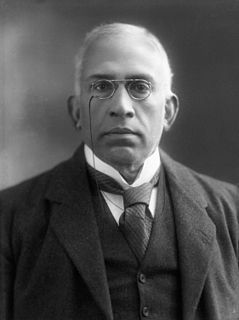
Sir Chettur Sankaran Nair, CIE was a lawyer who also served as a President of the Indian National Congress in 1897 at the meeting held at Amravati. He wrote Gandhi and Anarchy (1922).
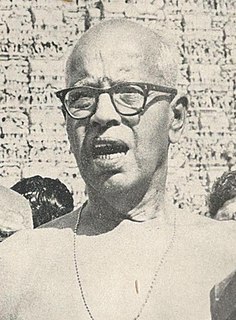
Sir Ponnambala Thiaga Rajan was the Chief Minister of Madras Presidency from 4 April 1936, to 24 August 1936. He was also the last President of the Justice Party. P. T. Rajan was born in a Thondaimandala mudaliar family in Uthamapalayam. His ancestors were from Kanchipuram. He attended The Leys School, Cambridge and later, Jesus College, Oxford. He graduated in history and law, and practiced as an advocate for some time before joining the Justice Party.
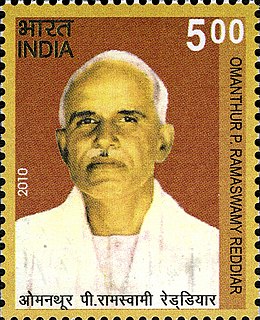
Omandur Ramasamy Reddiyar was an Indian freedom-fighter and politician of the Indian National Congress. He served as the Premier of Madras Presidency from 23 March 1947 to 6 April 1949.

P. Kakkan or fondly known as Kakkan, was an Indian politician and freedom fighter who served as a member of the Constituent Assembly of India, Member of Parliament, President of the Tamil Nadu Congress Committee and in various ministerial posts in Congress governments in the erstwhile Madras state between 1957 and 1967.

North Malabar refers to the geographic area of southwest India covering the state of Kerala's present day Kasaragod, Kannur, and Wayanad districts, and the taluks of Vatakara, Koyilandy, and Thamarassery in the Kozhikode District of Kerala and the entire Mahé Sub-Division of the Union Territory of Puducherry. Traditionally North Malabar is defined as the northern portion of erstwhile Malabar District which lies between Chandragiri River and Korapuzha River. The region between Netravathi River and Chandragiri River, which included the portions between Mangalore and Kasaragod, are also often included in the term North Malabar, as the Kumbla dynasty in the southernmost region of Tulu Nadu, had a mixed lineage of Malayali Nairs and Tuluva Brahmins.

Vaikom Satyagraha, from 30 March, 1924 to 23 November, 1925, was a nonviolent agitation for access to the prohibited public environs of the Vaikom Temple in the Kingdom of Travancore. Kingdom of Travancore was known for its rigid and oppressive caste system and hence Swami Vivekananda called Travancore a "lunatic asylum". The campaign, led by Congress leaders T. K. Madhavan, K. Kelappan and K. P. Kesava Menon, was noted for the active support and participation offered by different communities and a variety of activists.

The second legislative assembly election for the Madras Presidency after the establishment of a bicameral legislature by the Government of India Act of 1935 was held in 1946. The election was held after 6 years of Governor's rule starting from 1939, when the Indian National Congress government of C. Rajagopalachari resigned protesting Indian involvement in World War II. This was the last election held in the presidency - after Indian independence in 1947, the presidency became the Madras state. The election was held simultaneously with that of the Legislative Council. The Congress swept the polls by winning 163 out of 215 seats. The years after this election saw factionalism in Madras Congress party with divisions across regional and communal lines. Competition among T. Prakasam, C. Rajagopalachari and K. Kamaraj resulted in the election of Prakasam as the Chief Minister initially. But he was later defeated by Omandur Ramaswamy Reddiar with Kamaraj's support. In turn, Reddiar himself was ousted to make way for P. S. Kumaraswamy Raja with the support of Kamaraj.
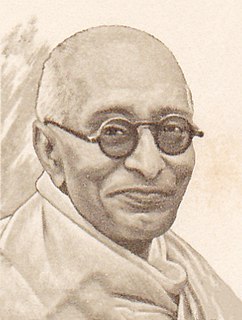
The first legislative assembly election for the Madras Presidency was held in February 1937, as part of the nationwide provincial elections in British India. The Indian National Congress obtained a majority by winning 159 of 215 seats in the Legislative Assembly. This was the first electoral victory for the Congress in the presidency since elections were first conducted for Madras Legislative Council in 1920. The Justice Party which had ruled the presidency for most of the previous 17 years was voted out of power. The assembly was constituted in July 1937 and C. Rajagopalachari (Rajaji) became the first Congress Chief Minister of Madras.

The third legislative council election to Madras Presidency after the establishment of dyarchical system of government by the Government of India Act, 1919, was held in November 1926. Justice party lost the election to Swaraj Party. However, as the Swaraja Party refused to form the Government, the Governor of Madras set up an independent government under the leadership of P. Subbarayan and with the support of nominated members.
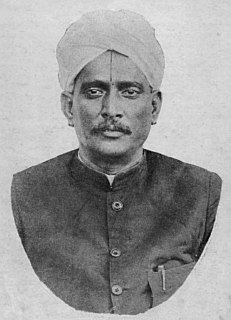
The fourth legislative council election to Madras Presidency after the establishment of dyarchical system of government by the Government of India Act, 1919 in September 1930. Justice party won the election and P. Munuswamy Naidu became the first Chief Minister. The main opposition party - Swaraj Party did not contest the elections due to its participation in the Civil Disobedience Movement.
The first legislative council election for the Madras Presidency after the establishment of a bicameral legislature by the Government of India Act of 1935 was held in February 1937. The Indian National Congress obtained a majority by winning 27 out of 46 seats in the Legislative Council for which the elections were held. This was the first electoral victory for the Congress in the presidency since elections were first conducted for the Council in 1920 and C. Rajagopalachari (Rajaji) became the Chief Minister. The Justice Party which had ruled the presidency for most of the previous 17 years was voted out of power. Congress also won the Legislative assembly election held simultaneously.
C. Rajagopalachari was a Chief Minister of erstwhile Madras Presidency and Madras State of Independent India. He was the first Indian National Congress member to assume office in Madras Presidency. He served as a Chief Minister for two terms spanning about five years. He was elected as a Chief Minister after 1937 elections in Madras Presidency and served till 1939. He was also the Chief Minister of Madras State after first elections held after Indian independence. His second term lasted from 1952 till 1954.
The second legislative council election to Madras Presidency after the establishment of diarchical system of government by the Government of India Act, 1919 was held in 1923. Voter turnout was higher than the previous election. Swarajists, a breakaway group from Indian National Congress participated in the election. The ruling Justice Party had suffered a split, when a splinter group calling themselves anti-Ministerialists left the party. It won the highest number of seats but fell short of a majority. Nevertheless, Madras Governor Willington invited it to form the government. Incumbent Justice chief minister Panagal Raja was nominated by party leader Theagaraya Chetty to continue as chief minister for a second term. The government survived a no-confidence motion, brought against it on the first day of its tenure by the opposition headed by C. R. Reddy.

In the fifth legislative council election to Madras Presidency after the establishment of dyarchical system of government by the Government of India Act, 1919 the ruling Justice party lost the election and the opposition Swaraj Party emerged as the single largest party. However, it refused to form the government, due to its opposition to dyarchy. The incumbent chief minister, Raja of Bobbili retained power and formed a minority government.
Diwan Bahadur Sir Mannath Krishnan NairKCIE (1870–1938) was an Indian politician from the Indian National Congress and later, Justice Party who served as a member of the Madras Legislative Council and later, executive council of the Governor of Madras. He also served as the Chief Justice of Travancore High Court and later Diwan of Travancore from 1914 to 1920

The Malabar Coast is the southwestern coast of the Indian subcontinent. Geographically, it comprises the wettest regions of southern India, as the Western Ghats intercept the moisture-laden monsoon rains, especially on their westward-facing mountain slopes. The term is used to refer to the entire Indian coast from the western coast of Konkan to the tip of India at Kanyakumari. The peak of Anamudi, which is also the point of highest altitude in India outside the Himalayas, and Kuttanad, which is the point of least elevation in India, lie on the Malabar Coast. Kuttanad, also known as The Rice Bowl of Kerala, has the lowest altitude in India, and is also one of the few places in the world where cultivation takes place below sea level.
Parappanad was a former feudal city-state in Malabar, India. The headquarters of Parappanad Royal family was at the town Parappanangadi in present-day Malappuram district. In 1425, the country divided into Northern Parappanad and Southern Parappanad. Southern Parappanad included parts of Tirurangadi Taluk and the town Parappanangadi. Northern Parappanad included Panniyankara, Beypore, and Cheruvannur of Kozhikkode Taluk. Parappanad royal family is a cousin dynasty of the Travancore royal family.
References
- ↑ Independent Labour Party (Great Britain) (1973). Socialist review, Volumes 19-20. Kraus Reprint. p. 42.
- ↑ Debates; Official Report, Volume 52. Madras Legislative Council. 1963.
- ↑ Itihas. Vol. 11. Andhra Pradesh archives. 1983. p. 152.
- ↑ Justice Party Golden Jubilee Souvenir, 1968. pp. 50–70.
- ↑ Reed, Stanley (1943). The Times of India directory and year book including who's who. Vol. 20. Bennett, Coleman & Co. p. 116.
- ↑ Ralhan, Om Prakash (1998). Encyclopaedia of Political Parties. Vol. 33–50. Anmol Publications PVT. LTD. p. 25. ISBN 978-81-7488-865-5.
- ↑ Ramanathan, K. V (2008). The Satyamurti letters: the Indian freedom struggle through the eyes of a parliamentarian. Vol. 1. Pearson Education India. p. 342. ISBN 978-81-317-1488-1.
- ↑ Kumara Padmanabha Sivasankara Menon (1979). Memories and musings. Allied. p. 292. ISBN 9780836404944.