Related Research Articles
Same-sex marriage has been legal in California since June 28, 2013. The State of California first issued marriage licenses to same-sex couples from June 16, 2008 to November 5, 2008, a period of approximately 4 months and 20 days, as a result of the Supreme Court of California finding in the case of In re Marriage Cases that barring same-sex couples from marriage violated the Constitution of California. The issuance of such licenses was halted from November 5, 2008 through June 27, 2013 due to the passage of Proposition 8—a state constitutional amendment barring same-sex marriages. The granting of same-sex marriages recommenced following the U.S. Supreme Court's decision in Hollingsworth v. Perry, which restored the effect of a federal district court ruling that overturned Proposition 8 as unconstitutional.
Intermediate scrutiny, in U.S. constitutional law, is the second level of deciding issues using judicial review. The other levels are typically referred to as rational basis review and strict scrutiny.
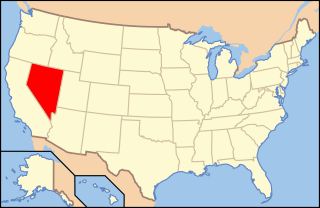
Lesbian, gay, bisexual, transgender, and queer (LGBTQ) people in the U.S. state of Nevada enjoy the same rights as non-LGBTQ people. Same-sex marriage has been legal since October 8, 2014, due to the federal Ninth Circuit Court of Appeals ruling in Sevcik v. Sandoval. Same-sex couples may also enter a domestic partnership status that provides many of the same rights and responsibilities as marriage. However, domestic partners lack the same rights to medical coverage as their married counterparts and their parental rights are not as well defined. Same-sex couples are also allowed to adopt, and state law prohibits unfair discrimination on the basis of sexual orientation and gender identity, among other categories, in employment, housing and public accommodations. In addition, conversion therapy on minors is outlawed in the state.
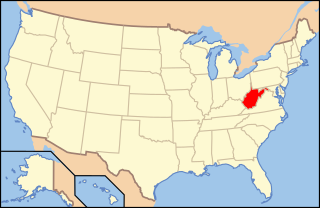
Lesbian, gay, bisexual, transgender, and queer (LGBTQ) people in the U.S. state of West Virginia face legal challenges not faced by non-LGBT persons. Same-sex sexual activity has been legal since 1976, and same-sex marriage has been recognized since October 2014. West Virginia statutes do not address discrimination on account of sexual orientation or gender identity; however, the U.S. Supreme Court's ruling in Bostock v. Clayton County established that employment discrimination against LGBTQ people is illegal.

The American Foundation for Equal Rights (AFER) was a nonprofit organization active in the United States from 2009 through 2015. The organization was established to support the plaintiffs in Hollingsworth v. Perry, a federal lawsuit challenging California's Proposition 8 under the Due Process and Equal Protection Clauses of the Fourteenth Amendment to the United States Constitution. AFER retained former United States Solicitor General Theodore B. Olson and David Boies to lead the legal team representing the plaintiffs challenging Proposition 8.
Hollingsworth v. Perry was a series of United States federal court cases that re-legalized same-sex marriage in the state of California. The case began in 2009 in the U.S. District Court for the Northern District of California, which found that banning same-sex marriage violates equal protection under the law. This decision overturned California ballot initiative Proposition 8, which had banned same-sex marriage. After the State of California refused to defend Proposition 8, the official sponsors of Proposition 8 intervened and appealed to the Supreme Court. The case was litigated during the governorships of both Arnold Schwarzenegger and Jerry Brown, and was thus known as Perry v. Schwarzenegger and Perry v. Brown, respectively. As Hollingsworth v. Perry, it eventually reached the United States Supreme Court, which held that, in line with prior precedent, the official sponsors of a ballot initiative measure did not have Article III standing to appeal an adverse federal court ruling when the state refused to do so.
The California foie gras law or Senate Bill 1520 is a California State statute that prohibits the "force feed[ing of] a bird for the purpose of enlarging the bird's liver beyond normal size" as well as the sale of products that are a result of this process (§ 25982). This outlawed the traditional method of producing foie gras in California. The law was enacted in 2004 and went into effect on July 1, 2012. The law has been challenged repeatedly since its enactment. The ninth circuit in 2022 upheld a lower court’s 2020 ruling, which allowed residents to purchase foie gras for their individual use from out-of-state retailers.

Log Cabin Republicans v. United States, 658 F.3d 1162 was a federal lawsuit challenging the constitutionality of 10 U.S.C. § 654, commonly known as don't ask, don't tell (DADT), which, prior to its repeal, excluded homosexuals from openly serving in the United States military. The Log Cabin Republicans (LCR), an organization composed of lesbian, gay, bisexual, and transgender (LGBT) Republicans, brought the suit on behalf of LCR members who serve or served in the military and were subject to DADT.
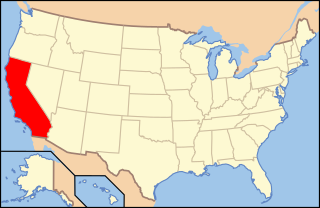
California is seen as one of the most liberal states in the U.S. in regard to lesbian, gay, bisexual, transgender, and queer (LGBTQ) rights, which have received nationwide recognition since the 1970s. Same-sex sexual activity has been legal in the state since 1976. Discrimination protections regarding sexual orientation and gender identity or expression were adopted statewide in 2003. Transgender people are also permitted to change their legal gender on official documents without any medical interventions, and mental health providers are prohibited from engaging in conversion therapy on minors.
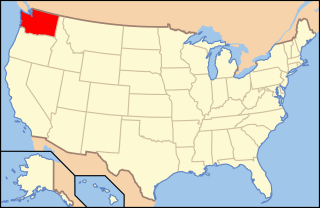
The state of Washington is seen as one of the most progressive states in the U.S. in regard to lesbian, gay, bisexual, transgender and queer (LGBTQ) rights; with jurisprudence having evolved significantly since the late 20th century. Same-sex sexual activity was legalized in 1976. LGBTQ people are fully protected from discrimination in the areas of employment, housing and public accommodations; the state enacting comprehensive anti-discrimination legislation regarding sexual orientation and gender identity in 2006. Same-sex marriage has been legal since 2012, and same-sex couples are allowed to adopt. Conversion therapy on minors has also been illegal since 2018.
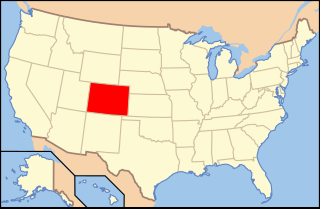
Lesbian, gay, bisexual, transgender, and queer (LGBTQ) people in the U.S. state of Colorado enjoy the same rights as non-LGBTQ people. Same-sex sexual activity has been legal in Colorado since 1972. Same-sex marriage has been recognized since October 2014, and the state enacted civil unions in 2013, which provide some of the rights and benefits of marriage. State law also prohibits discrimination on account of sexual orientation and gender identity in employment, housing and public accommodations and the use of conversion therapy on minors. In July 2020, Colorado became the 11th US state to abolish the gay panic defense.
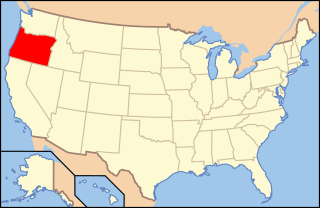
Lesbian, gay, bisexual, and transgender, and queer (LGBTQ) people in the U.S. state of Oregon have the same legal rights as non-LGBTQ people. Same-sex sexual activity is legal in Oregon, and same-sex marriage has been legal in the state since May 2014 when a federal judge declared the state's ban on such marriages unconstitutional. Previously, same-sex couples could only access domestic partnerships, which guaranteed most of the rights of marriage. Additionally, same-sex couples are allowed to jointly adopt, and discrimination based on sexual orientation and gender identity in the areas of employment, housing and public accommodations is outlawed in the state under the Oregon Equality Act, enacted in 2008. Conversion therapy on minors is also illegal.

Lesbian, gay, bisexual, transgender, and queer (LGBTQ) people in the U.S. state of Kentucky still face some legal challenges not experienced by other people. Same-sex sexual activity in Kentucky has been legally permitted since 1992, although the state legislature has not repealed its sodomy statute for same-sex couples. Same-sex marriage is legal in Kentucky under the U.S. Supreme Court ruling in Obergefell v. Hodges. The decision, which struck down Kentucky's statutory and constitutional bans on same-sex marriages and all other same-sex marriage bans elsewhere in the country, was handed down on June 26, 2015.

The Pacific Justice Institute (PJI) is a conservative legal defense organization based in California. The group, founded by attorney Brad W. Dacus, describes itself as focusing on representation relating to "...religious freedom, parental rights, and other civil liberties." PJI was declared an anti-LGBT hate group in 2014 by the Southern Poverty Law Center due to the group's long history of anti-LGBT rhetoric through its founder. The group also represents workers opposed to their employers' vaccine mandates.

Wolf v. Walker is a federal lawsuit filed in February 2014 that challenged Wisconsin's refusal to grant marriage licenses to same-sex couples, its refusal to recognize same-sex marriages established in other jurisdictions, and related statutes. In June 2014, Judge Barbara Crabb of the U.S. District Court for the Western District of Wisconsin ruled for the plaintiffs. In the week before she stayed her decision, county clerks in 60 of the state's 72 counties issued marriage licenses to same-sex couples and some performed marriage ceremonies for them. The state appealed her decision to the Seventh Circuit Court of Appeals, which affirmed her opinion in a unanimous decision on September 4. The state requested a writ of certiorari from the U.S. Supreme Court, which was denied on October 6. Same-sex marriages resumed after the Seventh Circuit issued its mandate the next day.

The 2016 Proposition 63, titled Firearms and Ammunition Sales, is a California ballot proposition that passed on the November 8, 2016 ballot. It requires a background check and California Department of Justice authorization to purchase ammunition, prohibits possession of high-capacity ammunition magazines over ten rounds, levies fines for failing to report when guns are stolen or lost, establishes procedures for enforcing laws prohibiting firearm possession by specified persons, and requires California Department of Justice's participation in the federal National Instant Criminal Background Check System.
This is a list of notable events in the history of LGBT rights that took place in the year 2017.
National Institute of Family and Life Advocates v. Becerra, 585 U.S. 755 (2018), was a case before the Supreme Court of the United States addressing the constitutionality of California's FACT Act, which mandated that crisis pregnancy centers provide certain disclosures about state services. The law required that licensed centers post visible notices that other options for pregnancy, including abortion, are available from state-sponsored clinics. It also mandated that unlicensed centers post notice of their unlicensed status. The centers, typically run by Christian non-profit groups, challenged the act on the basis that it violated their free speech. After prior reviews in lower courts, the case was brought to the Supreme Court, asking "Whether the disclosures required by the California Reproductive FACT Act violate the protections set forth in the free speech clause of the First Amendment, applicable to the states through the Fourteenth Amendment."
Miller v. Bonta is a pending court case before Judge Roger Benitez of the U.S. District Court for the Southern District of California concerning California's assault weapon ban, the Roberti–Roos Assault Weapons Control Act of 1989 (AWCA). Judge Roger Benitez struck down the ban in a ruling on June 5, 2021. A three-judge panel of the Ninth Circuit issued a stay of the ruling on June 21, 2021, which left the ban in place as appeals were litigated. The panel then vacated Judge Benitez’s ruling and remanded it back down after [] was decided. The case was known as Miller v. Becerra before Rob Bonta succeeded Xavier Becerra as Attorney General of California in April 2021.

Conversion therapy is the pseudoscientific practice of attempting to change a person's sexual orientation or gender identity. As of December 2023, twenty-eight countries have bans on conversion therapy, fourteen of them ban the practice by any person: Belgium, Canada, Cyprus, Ecuador, France, Germany, Greece, Iceland, Malta, Mexico, New Zealand, Norway, Portugal and Spain; seven ban its practice by medical professionals only: Albania, Brazil, Chile, India, Israel, Taiwan and Vietnam; another seven, named Argentina, Fiji, Nauru, Paraguay, Samoa, Switzerland and Uruguay, have indirect bans in that diagnoses based solely on sexual orientation or gender identity are banned without specifically banning conversion therapy, this effectively amounts to a ban on health professionals since they would not generally engage in therapy without a diagnosis. In addition, some jurisdictions within Australia, the Philippines and the United States also ban conversion therapy. In South Africa, the case law has found conversion therapy to be unlawful. Bills banning conversion therapy are being considered in Austria, Finland, Ireland, the Netherlands and Poland, while bills restricting conversion therapy are being considered in Denmark, Italy, Japan, Sweden and Thailand.
References
- ↑ Raftery, Isolde (December 5, 2012). "Therapists defend gay conversion counseling: 'You can't say gay once, gay always' josephnicolosi.com Joseph Nicolosi of Encino, Calif. has been practicing sexual orientation change therapy for 25 years". NBC News . Archived from the original on 6 April 2013. Retrieved 17 April 2013.
- ↑ "California law banning gay 'conversion therapy' put on hold". CNN . December 4, 2012. Archived from the original on 29 July 2013. Retrieved 17 April 2013.
- ↑ Keen, Lisa (December 6, 2012). "Mixed decisions in gay therapy ban suits". Bay Area Reporter. Archived from the original on 27 May 2017. Retrieved 17 April 2013.
- ↑ Wetzstein, Cheryl (April 15, 2013). "Law on sex orientation therapy for youths heads to court". The Washington Times . Archived from the original on 18 April 2013. Retrieved 17 April 2013.
- ↑ Gullo, Karen (April 17, 2013). "California Seeks to Enforce Ban on Gay Conversion Therapy". Bloomberg Businessweek . Archived from the original on June 28, 2013. Retrieved 17 April 2013.
- ↑ "Ninth Circuit Court of Appeals upholds California law banning LGBT conversion therapy". Equality On Trial. August 29, 2013. Archived from the original on September 2, 2013. Retrieved September 2, 2013.
- ↑ "Case: Pickup et al. v. Brown et al. and Welch et al. v. Brown et al". National Center for Lesbian Rights. 2013-09-07. Archived from the original on 2018-06-15. Retrieved 2018-06-15.
- ↑ "NATIONAL INSTITUTE OF FAMILY AND LIFE ADVOCATES, DBA NIFLA, ET AL. v. BECERRA, ATTORNEY GENERAL OF CALIFORNIA, ET AL" (PDF). Archived (PDF) from the original on 14 February 2021. Retrieved 12 July 2024.
- ↑ "Appeal from the United States District Court for the Southern District of Florida" (PDF). Archived (PDF) from the original on 2 July 2024. Retrieved 12 July 2024.