Related Research Articles

Parliament Hill, colloquially known as The Hill, is an area of Crown land on the southern bank of the Ottawa River that houses the Parliament of Canada in downtown Ottawa, Ontario. It accommodates a suite of Gothic revival buildings whose architectural elements were chosen to evoke the history of parliamentary democracy. Parliament Hill attracts approximately three million visitors each year. The Parliamentary Protective Service is responsible for law enforcement on Parliament Hill and in the parliamentary precinct, while the National Capital Commission is responsible for maintaining the nine-hectare (22-acre) area of the grounds.

Wood carving is a form of woodworking by means of a cutting tool (knife) in one hand or a chisel by two hands or with one hand on a chisel and one hand on a mallet, resulting in a wooden figure or figurine, or in the sculptural ornamentation of a wooden object. The phrase may also refer to the finished product, from individual sculptures to hand-worked mouldings composing part of a tracery.

Walter Seymour Allward was a Canadian monumental sculptor best known for the Canadian National Vimy Memorial. Featuring expressive classical figures within modern compositions, Allward's monuments evoke themes of memory, sacrifice, and redemption. He has been widely praised for his "original sense of spatial composition, his mastery of the classical form and his brilliant craftsmanship".

Ice sculpture is a form of sculpture that uses ice as the raw material. Sculptures from ice can be abstract or realistic and can be functional or purely decorative. Ice sculptures are generally associated with special or extravagant events because of their limited lifetime.
The Peace Tower is a focal bell and clock tower sitting on the central axis of the Centre Block of the Canadian parliament buildings in Ottawa, Ontario. The present incarnation replaced the 55-metre (180 ft) Victoria Tower, after the latter burned down in 1916, along with most of the Centre Block; only the Library of Parliament survived. It serves as a Canadian icon and had been featured prominently on the Canadian twenty-dollar bill, directly adjacent to the depiction of Queen Elizabeth II, until the change to polymer.

The Library of Parliament is the main information repository and research resource for the Parliament of Canada. The main branch of the library sits at the rear of the Centre Block on Parliament Hill in Ottawa, Ontario. The library survived the 1916 fire that destroyed Centre Block. The library has been augmented and renovated several times since its construction in 1876, the last between 2002 and 2006, though the form and decor remain essentially authentic. The building today serves as a Canadian icon, and appears on the obverse of the Canadian ten-dollar bill.
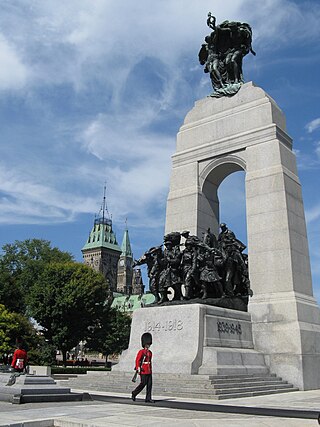
The National War Memorial, titled The Response, is a tall, granite memorial arch with accreted bronze sculptures in Ottawa, Ontario, designed by Vernon March and first dedicated by King George VI in 1939. Originally built to commemorate the Canadians who died in the First World War, it was in 1982 rededicated to also include those killed in the Second World War and Korean War and again in 2014 to add the dead from the Second Boer War and War in Afghanistan, as well as all Canadians killed in all conflicts past and future. It now serves as the pre-eminent war memorial of 76 cenotaphs in Canada. In 2000, the Tomb of the Unknown Soldier was added in front of the memorial and symbolizes the sacrifices made by all Canadians who have died or may yet die for their country.

The Centre Block is the main building of the Canadian parliamentary complex on Parliament Hill, in Ottawa, Ontario, containing the House of Commons and Senate chambers, as well as the offices of a number of members of parliament, senators, and senior administration for both legislative houses. It is also the location of several ceremonial spaces, such as the Hall of Honour, the Memorial Chamber, and Confederation Hall.

The art of chainsaw carving is a fast-growing form of art that combines the modern technology of the chainsaw with the ancient art of woodcarving.

Canadian royal symbols are the visual and auditory identifiers of the Canadian monarchy, including the viceroys, in the country's federal and provincial jurisdictions. These may specifically distinguish organizations that derive their authority from the Crown, establishments with royal associations, or merely be ways of expressing loyal or patriotic sentiment.

Emanuel Otto Hahn was a German-born Canadian sculptor and coin designer. He taught and later married Elizabeth Wyn Wood. He co-founded and was the first president of the Sculptors' Society of Canada.
Arnold Mikelson (1922-1984) was a Latvian artist who specialized in wood carvings. Starting in 1947, he was chief designer for Royal Crown Derby Porcelain of England, before working as an architectural draftsman for a number of years. In the late 1960s, he took up carving full-time. Mikelson's work includes the design of the Mind and Matter Gallery in White Rock, British Columbia. He had commissions from the forestry giant MacMillan Bloedel, the Province of British Columbia and the City of Surrey.
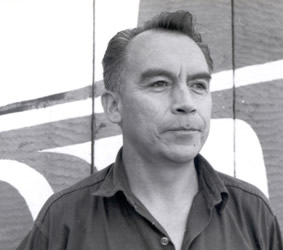
Henry Hunt was a First Nations woodcarver and artist from the Kwakwaka'wakw people of coastal British Columbia. He carved a number of totem poles which are on public display in Canada and internationally.
Walter S. Arnold is an American stone carver and sculptor best known for his gargoyles.
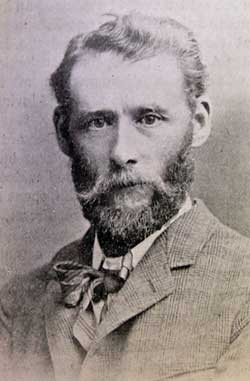
Hamilton Thomas Carlton Plantagenet MacCarthy was one of the earliest masters of monumental bronze sculpture in Canada. He is known for his historical sculptures, in particular his Pierre Dugua, Sieur de Mons at Annapolis Royal, Nova Scotia (1904) as well as Samuel de Champlain overlooking Parliament Hill on Nepean Point, Ottawa (1915), next to the National Gallery of Canada. His monument to the Ottawa volunteers who died in the South African War (1902) was moved to Confederation Park in 1969 after several moves. Other works include that of Ottawa mayor, Samuel Bingham, in Notre-Dame Cemetery in Vanier.
Colonel André D. Gauthier was a Canadian army officer, monument sculptor and designer in various materials including bronze. He also drew in oil paint, charcoal and watercolours.

James Hart is a Canadian and Haida artist and a chief of the Haida Nation.

Rose Eleanor Milne was a Canadian sculptor best known for her work as the Dominion Sculptor of Canada, a position that she held from 1961 until her retirement in 1993.

The Canadian Parliament Buildings are the parliament buildings housing the Parliament of Canada, located on Parliament Hill, Ottawa, Ontario, Canada.
Ermelindo Eduardo Ardolino, known as Edward Ardolino was an Italian-born American stone carver and architectural sculptor of the early twentieth century. He was the most prominent member of the Ardolino family of stone carvers. He worked with leading architects and sculptors, including architect Bertram Grosvenor Goodhue and sculptor Lee Lawrie. Ardolino participated in at least nine Goodhue-Lawrie collaborations including the Los Angeles Public Library and the Nebraska State Capitol. His carvings adorn a significant number of important public and private buildings and monuments, including four buildings in the Federal Triangle of Washington, D.C.
References
- 1 2 "A cut above: Dominion Sculptor Phil White reflects on 15 years as Parliament's chief carver". Senate of Canada. 29 July 2021. Retrieved 27 January 2025.
- ↑ Desson, Ken (1982). "The Parliamentary Carvers". Canadian Parliamentary Review. 5 (3). Archived from the original on 3 November 2014. Retrieved 31 July 2012.
- ↑ Benoit, Barbara, The Heritage Protectors, a Contingent of Craftspeople is Helping Protect our History, Ottawa Interiors, January 1993
- ↑ Morse, Jennifer, Canada's War Art, Featured Artist Philip White. Legion Magazine, March 1990/11
- ↑ Think Sphinx, the Ottawa Sun, Monday 25 May 1998 the bronze sculpture "Athena"
- ↑ Shinhat, Molly Amoli K., War Widows, Two Views of Woman From the Homefront, Ottawa X Press, Ottawa, 27 May 1999
- ↑ "Canadian Museum of Civilization". Database entry. Canadian Museum of Civilization. Retrieved 31 July 2012.
- ↑ "Canadian War Museum Collections Database". Database entry. Canadian War Museum. Retrieved 31 July 2012.
- ↑ Mullington, Dave, Leblanc Praises Museum Emblem, Ottawa Citizen, 1 October 1999
- ↑ Gillett, Mitch, Artist Captures the Faces of War, The Maple Leaf
- ↑ "Canadian Museum of Civilisation Collections Database". Database entry. Canadian Museum of Civilization. Archived from the original on 29 October 2013. Retrieved 31 July 2012.
- ↑ Mullington, Dave (1 October 1999). "LeBlanc praises museum emblem: Gov. Gen. and Mrs. LeBlanc both had official functions in Ottawa yesterday as they prepare for retirement next week". Ottawa Citizen. ProQuest 240298067.
- ↑ CNA’s New Coat of Arms Unveiled [ permanent dead link ], Canadian Nurses Association, History
- ↑ The Official Government Sculptor – a job steeped in tradition Archived 27 October 2012 at the Wayback Machine
- ↑ Desson, Ken (1982). "The Parliamentary Carvers". Canadian Parliamentary Review. 5 (3). Archived from the original on 3 November 2014. Retrieved 31 July 2012.
- ↑ Bosc, Marc; O'Brien, Audrey (2009), The Parliament Buildings and Grounds, House of Commons Procedure and Practice (2 ed.), Ottawa: Queen's Printer for Canada, ISBN 978-2-89635-321-7
- ↑ "Phil White – Dominion Sculptor for Canada – Photo Gallery of Selected Works". Archived from the original on 11 March 2012. Retrieved 20 April 2011.
- ↑ "CBC Radio interview on The House". Archived from the original on 28 May 2011. Retrieved 20 April 2011.
- ↑ "Dominion Sculptor Phil White receives Diamond Jubilee Medal". PWGSC website. Public Works & Government Services Canada. Archived from the original on 22 May 2013. Retrieved 31 July 2012.
- ↑ Desson, Ken (1982). "The Parliamentary Carvers". Canadian Parliamentary Review. 5 (3). Archived from the original on 3 November 2014. Retrieved 31 July 2012.
- ↑ Bosc, Marc; O'Brien, Audrey (2009), The Parliament Buildings and Grounds, House of Commons Procedure and Practice (2 ed.), Ottawa: Queen's Printer for Canada, ISBN 978-2-89635-321-7
- ↑ Desson, Ken (1982). "The Parliamentary Carvers". Canadian Parliamentary Review. 5 (3). Archived from the original on 3 November 2014. Retrieved 31 July 2012.
- ↑ Isaacson, Fiona. "Carving his Place on Parliament Hill" The Peterborough Examiner, 20 May 2008
- ↑ Galloway, Gloria. Ottawa royally ripe for the Queen's arrival Archived 5 March 2016 at the Wayback Machine , the Globe and Mail, Wednesday, 30 June 2010
- ↑ Minister Stephen Harper and His Excellency David Johnston, Governor General of Canada Archived 18 March 2012 at the Wayback Machine , unveil the new sculptured corbel of Queen Elizabeth II in the Senate foyer, Official Photos
- ↑ His Excellency David Johnston, the Governor General of Canada Archived 21 May 2011 at the Wayback Machine , Unveiling of the Carved Corbel of Her Majesty the Queen Ottawa, Thursday, 9 December 2010
- ↑ Unveiling of the Corbel of Her Majesty Queen Elizabeth II Archived 16 May 2018 at the Wayback Machine , Official Photos
- ↑ "The Diamond Jubilee Window". Parliament of Canada website. Information Service, Parliament of Canada. Archived from the original on 12 March 2012. Retrieved 31 July 2012.
- ↑ Dare, Patrick (27 May 1992). "$600,000 statue of Queen under wraps till unveiling". Ottawa Citizen. ProQuest 239633966.
- ↑ "Statues – Parliament Hill". website with map of statues on Parliament Hill. Public Works & Government Services Canada. Archived from the original on 16 August 2012. Retrieved 31 July 2012.
- ↑ "Unveiling of the Carved Corbel of Her Majesty The Queen". web page with Governor General's speech. The Office of the Secretary to the Governor General. Archived from the original on 16 June 2012. Retrieved 31 July 2012.
- ↑ "Phil White – Dominion Sculptor for Canada – Photo Gallery of Selected Works". website. Public Works & Government Services Canada. Archived from the original on 11 March 2012. Retrieved 31 July 2012.
- ↑ "Minutes of Proceedings, Standing Committee on Veterans Affairs". Parliament of Canada website. Information Services, Parliament of Canada. Archived from the original on 4 March 2016. Retrieved 31 July 2012.
- ↑ "My Kawartha, Fleming bust unveiled". Archived from the original on 27 July 2011. Retrieved 20 April 2011.
- ↑ "Order of Military Merit Memorial". fact sheet on DND website. Department of National Defence. Archived from the original on 11 June 2012. Retrieved 31 July 2012.
- ↑ "The Department of National Defence and the Canadian Forces celebrate the 40th anniversary of the Order of Military Merit". press release on website. Department of National Defence. Archived from the original on 24 May 2013. Retrieved 31 July 2012.
- ↑ "Order of Military Merit Memorial". fact sheet on DND website. Department of National Defence. Archived from the original on 11 June 2012. Retrieved 31 July 2012.
- ↑ "Dominion Sculptor Phil White receives Diamond Jubilee Medal". PWGSC website. Public Works & Government Services Canada. Archived from the original on 22 May 2013. Retrieved 31 July 2012.