
Cyberspace is an interconnected digital environment. It is a type of virtual world popularized with the rise of the Internet. The term entered popular culture from science fiction and the arts but is now used by technology strategists, security professionals, governments, military and industry leaders and entrepreneurs to describe the domain of the global technology environment, commonly defined as standing for the global network of interdependent information technology infrastructures, telecommunications networks and computer processing systems. Others consider cyberspace to be just a notional environment in which communication over computer networks occurs. The word became popular in the 1990s when the use of the Internet, networking, and digital communication were all growing dramatically; the term cyberspace was able to represent the many new ideas and phenomena that were emerging. As a social experience, individuals can interact, exchange ideas, share information, provide social support, conduct business, direct actions, create artistic media, play games, engage in political discussion, and so on, using this global network. Cyberspace users are sometimes referred to as cybernauts.

A geographer is a physical scientist, social scientist or humanist whose area of study is geography, the study of Earth's natural environment and human society, including how society and nature interacts. The Greek prefix "geo" means "earth" and the Greek suffix, "graphy", meaning "description", so a geographer is someone who studies the earth. The word "geography" is a Middle French word that is believed to have been first used in 1540.
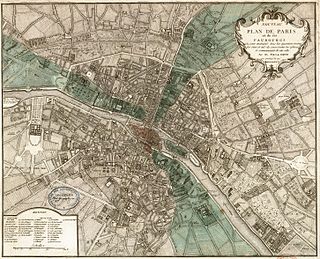
Historical geography is the branch of geography that studies the ways in which geographic phenomena have changed over time. In its modern form, it is a synthesizing discipline which shares both topical and methodological similarities with history, anthropology, ecology, geology, environmental studies, literary studies, and other fields. Although the majority of work in historical geography is considered human geography, the field also encompasses studies of geographic change which are not primarily anthropogenic. Historical geography is often a major component of school and university curricula in geography and social studies. Current research in historical geography is being performed by scholars in more than forty countries.

Cultural geography is a subfield within human geography. Though the first traces of the study of different nations and cultures on Earth can be dated back to ancient geographers such as Ptolemy or Strabo, cultural geography as academic study firstly emerged as an alternative to the environmental determinist theories of the early 20th century, which had believed that people and societies are controlled by the environment in which they develop. Rather than studying predetermined regions based upon environmental classifications, cultural geography became interested in cultural landscapes. This was led by the "father of cultural geography" Carl O. Sauer of the University of California, Berkeley. As a result, cultural geography was long dominated by American writers.
In the humanities discipline of critical theory, critical geopolitics is an academic school of thought centered on the idea that intellectuals of statecraft construct ideas about places, that these ideas have influence and reinforce their political behaviors and policy choices, and that these ideas affect how people process their own notions of places and politics.
The term sense of place has been used in many different ways. It is a multidimensional, complex construct used to characterize the relationship between people and spatial settings. It is a characteristic that some geographic places have and some do not, while to others it is a feeling or perception held by people. It is often used in relation to those characteristics that make a place special or unique, as well as to those that foster a sense of authentic human attachment and belonging. Others, such as geographer Yi-Fu Tuan, have pointed to senses of place that are not "positive," such as fear. Some students and educators engage in "place-based education" in order to improve their "sense(s) of place," as well as to use various aspects of place as educational tools in general. The term is used in urban and rural studies in relation to place-making and place-attachment of communities to their environment or homeland. The term sense of place is used to describe how someone perceives and experiences a place or environment. Anthropologists Steven Feld and Keith Basso define sense of place as: 'the experiential and expressive ways places are known, imagined, yearned for, held, remembered, voiced, lived, contested and struggled over […]’. Many indigenous cultures are losing their sense of place because of climate change and "ancestral homeland, land rights and retention of sacred places".
Time geography or time-space geography is an evolving transdisciplinary perspective on spatial and temporal processes and events such as social interaction, ecological interaction, social and environmental change, and biographies of individuals. Time geography "is not a subject area per se", but rather an integrative ontological framework and visual language in which space and time are basic dimensions of analysis of dynamic processes. Time geography was originally developed by human geographers, but today it is applied in multiple fields related to transportation, regional planning, geography, anthropology, time-use research, ecology, environmental science, and public health. According to Swedish geographer Bo Lenntorp: "It is a basic approach, and every researcher can connect it to theoretical considerations in her or his own way."
Philosophy of geography is the subfield of philosophy which deals with epistemological, metaphysical, and axiological issues in geography, with geographic methodology in general, and with more broadly related issues such as the perception and representation of space and place.
Neil Robert Smith was a Scottish geographer and Marxist academic. He was Distinguished Professor of Anthropology and Geography at the Graduate Center of the City University of New York, and winner of numerous awards, including the Globe Book Award of the Association of American Geographers.

John A. Agnew, FBA is a prominent British-American political geographer. Agnew was educated at the Universities of Exeter and Liverpool in England and Ohio State in the United States.
Identity tourism may refer to the act of assuming a racial, ethnic, socioeconomic, sexual or gender identity for recreational purposes, or the construction of cultural identities and re-examination of one's ethnic and cultural heritage from what tourism offers its patrons.

Geography is the study of the lands, features, inhabitants, and phenomena of Earth. Geography is an all-encompassing discipline that seeks an understanding of Earth and its human and natural complexities—not merely where objects are, but also how they have changed and come to be. While geography is specific to Earth, many concepts can be applied more broadly to other celestial bodies in the field of planetary science. Geography has been called "a bridge between natural science and social science disciplines."
Emotional geography is a subtopic within human geography, more specifically cultural geography, which applies psychological theories of emotion. It is an interdisciplinary field relating emotions, geographic places and their contextual environments. These subjective feelings can be applied to individual and social contexts. Emotional geography specifically focuses on how human emotions relate to, or affect, the environment around them.

Anne Buttimer was an Irish geographer. She was emeritus professor of geography at University College, Dublin.

Astrid Gynnild is a Norwegian writer, educator, and a professor of media studies at the Department of Information and Media Studies, University of Bergen, Norway. Her research projects lie at the intersection of human creativity, journalism innovation, and new technologies. She is also engaged in explorative teaching and learning approaches in higher education, and spends much time supervising students at all levels. Her research has contributed to innovative approaches to conceptual development in media research.
Susan E. Hanson is an American geographer. She is a Distinguished University Professor Emerita in the Graduate School of Geography at Clark University. Her research has focused on gender and work, travel patterns, and feminist scholarly approaches.

Geography of media and communication is an interdisciplinary research area bringing together human geography with media studies and communication theory. Research addressing the geography of media and communication seeks to understand how acts of communication and the systems they depend on both shape and are shaped by geographical patterns and processes. This topic addresses the prominence of certain types of communication in differing geographical areas, including how new technology allows for new types of communication for a multitude of global locations.

The second law of geography, according to Waldo Tobler, is "the phenomenon external to a geographic area of interest affects what goes on inside." This is an extension of his first. He first published it in 1999 in reply to a paper titled "Linear pycnophylactic reallocation comment on a paper by D. Martin" and then again in response to criticism of his first law of geography titled "On the First Law of Geography: A Reply." Much of this criticism was centered on the question of if laws were meaningful in geography or any of the social sciences. In this document, Tobler proposed his second law while recognizing others have proposed other concepts to fill the role of 2nd law. Tobler asserted that this phenomenon is common enough to warrant the title of 2nd law of geography. Unlike Tobler's first law of geography, which is relatively well accepted among geographers, there are a few contenders for the title of the second law of geography. Tobler's second law of geography is less well known but still has profound implications for geography and spatial analysis.
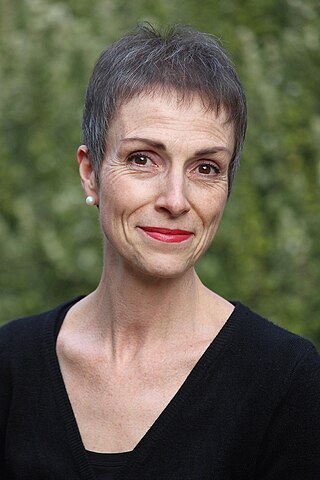
Elaine Stratford is an Australian cultural and political geographer, academic, and author. She is a professor of geography in the School of Geography, Planning, and Spatial Sciences in the College of Sciences and Engineering at the University of Tasmania.


