Naguib Mahfouz Abdelaziz Ibrahim Ahmed Al-Basha was an Egyptian writer who won the 1988 Nobel Prize in Literature. In awarding the prize, the Swedish Academy described him as a writer “who, through works rich in nuance – now clear-sightedly realistic, now evocatively ambiguous – has formed an Arabian narrative art that applies to all mankind”. Mahfouz is regarded as one of the first contemporary writers in Arabic literature, along with Taha Hussein, to explore themes of existentialism. He is the only Egyptian to win the Nobel Prize in Literature. He published 35 novels, over 350 short stories, 26 screenplays, hundreds of op-ed columns for Egyptian newspapers, and seven plays over a 70-year career, from the 1930s until 2004. All of his novels take place in Egypt, and always mention the lane which equals the world. His most famous works include The Cairo Trilogy and Children of Gebelawi. Many of Mahfouz's works have been made into Egyptian and foreign films; no Arab writer exceeds Mahfouz in number of works that have been adapted for cinema and television. While Mahfouz's literature is classified as realist literature, existential themes appear in it.
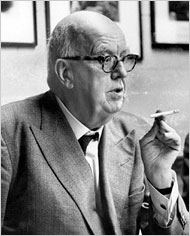
Charles Percy Snow, Baron Snow was an English novelist and physical chemist who also served in several important positions in the British Civil Service and briefly in the UK government. He is best known for his series of novels known collectively as Strangers and Brothers, and for "The Two Cultures", a 1959 lecture in which he laments the gulf between scientists and "literary intellectuals".

Welsh writing in English, is a term used to describe works written in the English language by Welsh writers.
Ralph Hammond Innes was a British novelist who wrote over 30 novels, as well as works for children and travel books.

The English novel is an important part of English literature. This article mainly concerns novels, written in English, by novelists who were born or have spent a significant part of their lives in England, Scotland, Wales, or Northern Ireland. However, given the nature of the subject, this guideline has been applied with common sense, and reference is made to novels in other languages or novelists who are not primarily British, where appropriate.
David John Lodge CBE FRSL is an English author and critic. A literature professor at the University of Birmingham until 1987, some of his novels satirise academic life, notably the "Campus Trilogy" – Changing Places: A Tale of Two Campuses (1975), Small World: An Academic Romance (1984) and Nice Work (1988). The second two were shortlisted for the Booker Prize. Another theme is Roman Catholicism, beginning from his first published novel The Picturegoers (1960). Lodge has also written television screenplays and three stage plays. After retiring, he continued to publish literary criticism. His edition of Twentieth Century Literary Criticism (1972) includes essays on 20th-century writers such as T. S. Eliot. In 1992, he published The Art of Fiction, a collection of essays on literary techniques with illustrative examples from great authors, such as Point of View, The Stream of Consciousness and Interior Monologue, beginning with Beginning and ending with Ending.
British literature is from the United Kingdom of Great Britain and Northern Ireland, the Isle of Man, and the Channel Islands. This article covers British literature in the English language. Anglo-Saxon literature is included, and there is some discussion of Latin and Anglo-Norman literature, where literature in these languages relate to the early development of the English language and literature. There is also some brief discussion of major figures who wrote in Scots, but the main discussion is in the various Scottish literature articles.
John Barrington Wain CBE was an English poet, novelist, and critic, associated with the literary group known as "The Movement". He worked for most of his life as a freelance journalist and author, writing and reviewing for newspapers and the radio.
Michael Francis Gilbert was an English solicitor and author of crime fiction.
Anthony Simon Thwaite OBE was an English poet and critic, widely known as the editor of his friend Philip Larkin's collected poems and letters.

Elizabeth Jane Howard, was an English novelist. She wrote 12 novels including the best-selling series TheCazalet Chronicle.

English literature is literature written in the English language from the English-speaking world. The English language has developed over more than 1,400 years. The earliest forms of English, a set of Anglo-Frisian dialects brought to Great Britain by Anglo-Saxon settlers in the fifth century, are called Old English. Beowulf is the most famous work in Old English. Despite being set in Scandinavia, it has achieved national epic status in England. However, following the Norman conquest of England in 1066, the written form of the Anglo-Saxon language became less common. Under the influence of the new aristocracy, French became the standard language of courts, parliament, and polite society. The English spoken after the Normans came is known as Middle English. This form of English lasted until the 1470s, when the Chancery Standard, a London-based form of English, became widespread. Geoffrey Chaucer (1343–1400), author of The Canterbury Tales, was a significant figure developing the legitimacy of vernacular Middle English at a time when the dominant literary languages in England were still French and Latin. The invention of the printing press by Johannes Gutenberg in 1439 also helped to standardise the language, as did the King James Bible (1611), and the Great Vowel Shift.
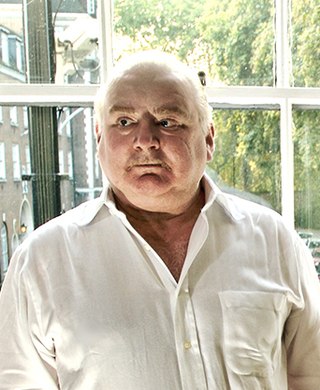
Peter Ackroyd is an English biographer, novelist and critic with a specialist interest in the history and culture of London. For his novels about English history and culture and his biographies of, among others, William Blake, Charles Dickens, T. S. Eliot, Charlie Chaplin and Sir Thomas More, he won the Somerset Maugham Award and two Whitbread Awards. He is noted for the volume of work he has produced, the range of styles therein, his skill at assuming different voices, and the depth of his research.
Radwa Ashour was an Egyptian novelist.

Angele Botros Samaan was an Egyptian academic and translator.
This article is focused on English-language literature rather than the literature of England, so that it includes writers from Scotland, Wales, and the whole of Ireland, as well as literature in English from former British colonies. It also includes, to some extent, the United States, though the main article for that is American literature.

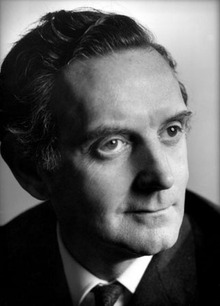
The Picnic at Sakkara is a 1955 novel by P.H. Newby. It is about a lecturer at Cairo University, Edgar Perry, during the rule of King Farouk. He becomes tutor to a pasha, and is swept into a conflict between Western ways and the Moslem Brotherhood. It is a comedic novel. It is the first novel of the Anglo-Egyptian comic trilogy, the others being Revolution and Roses (1957) and A Guest and His Going (1960).
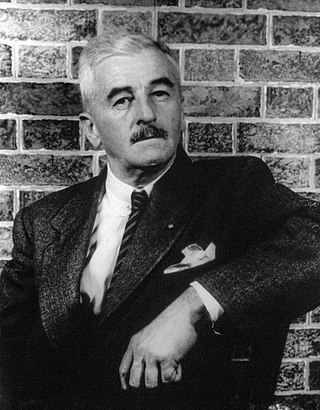
The 1949 Nobel Prize in Literature was awarded the American author William Faulkner (1897–1962) "for his powerful and artistically unique contribution to the modern American novel." The prize was awarded the following year in October 1950. The Nobel Committee for Literature had decided that none of the nominations for 1949 met the criteria as outlined in the will of Alfred Nobel, and the prize was reserved until the following year.