
Brunswick Records is an American record label founded in 1916.
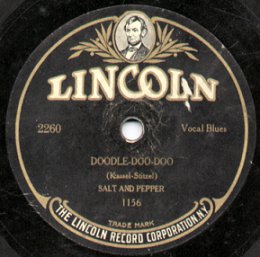
Lincoln Records was an American record label that existed from 1923 to 1930.

Romeo Records was an American jazz record label that started in 1926 as a subsidiary of Cameo Records. The discs were sold exclusively at S. H. Kress & Co. department stores and retailed for 25 cents each.
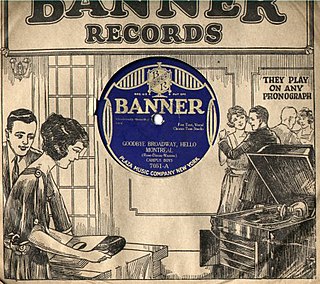
Banner Records was an American record company and label in the 1920s and 1930s. It was created primarily for the S.S. Kresge Company, though it was employed as a budget label in other discount stores.
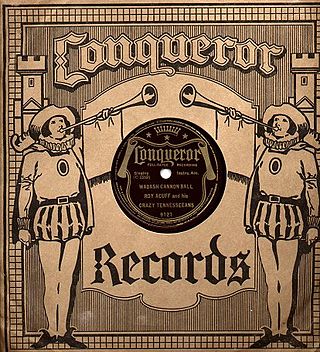
Conqueror Records was a United States–based record label, active from 1928 through 1942. The label was sold exclusively through Sears, Roebuck and Company.
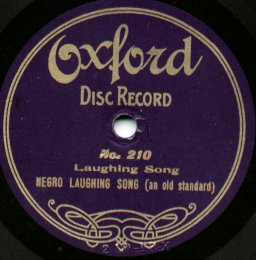
Oxford Records was a record label active in the United States of America from roughly 1906 until 1916. The label was produced for Sears by several labels, including Columbia and Albany Indestructible Cylinders for cylinders and Leeds & Catlin, Zon-O-Phone, and Columbia for discs. No recording activity was undertaken by Sears. All discs were single-sided.

Radiex Records was an American record label during the 1920s. It was manufactured by Grey Gull Records of Boston, Massachusetts, from 1921 until the demise of Grey Gull in late 1930; it was then pressed for a few more months into 1931 by the successor firm, which continued the Radiex, Van Dyke and Madison labels. Radiex records were sold in Montgomery Ward catalogs although they were not manufactured specifically for that firm. In some cases, records have been found which had the labels of other Grey Gull products over Radiex labels or vice versa.
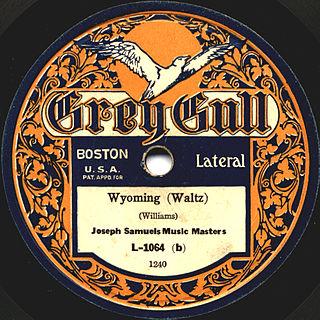
Grey Gull Records was a record company and label founded in Boston, Massachusetts in 1919. The company was started by Theodore Lyman Shaw, a member of an upper class family from Wellesley, Massachusetts.

Domino Records was an American record label, in existence from 1924 to 1933.

American Record Corporation (ARC), also referred to as American Record Company, American Recording Corporation, or ARC Records, was an American record company in operation from 1929 to 1938, and again from 1978 to 1982.

Bluebird Records is an American record label best known for its low-cost releases, primarily of children's music, blues, jazz and swing in the 1930s and 1940s. Bluebird was founded in 1932 as a lower-priced subsidiary label of RCA Victor. Bluebird was noted for what came to be known as the "Bluebird sound", which influenced rhythm and blues and early rock and roll. It is currently owned by RCA Records parent company Sony Music Entertainment.

Herbert John Yates, a Hollywood mini-mogul, was the founder and President of Republic Pictures. With his contract, he had launched the film careers of such Western stars as Roy Rogers, Gene Autry, and John Wayne. Between 1935 and 1959, under the supervising leadership of Yates, Republic has produced 956 feature films and 66 multi-chapter cliffhanger serials, some of which are today considered classics, later broadcast on television and then released on home video.
Embassy Records was a UK budget record label that produced cover versions of current hit songs, which were sold exclusively in Woolworths shops at a lower price than the original recordings. The original label was active between 1954 and 1965, after which it disappeared when its parent company, Oriole, was taken over by CBS Records.
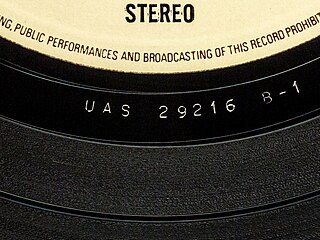
A matrix number is an alphanumeric code stamped or handwritten into the run-out groove area of a phonograph record. This is the non-grooved area between the end of the final band on a record's side and the label, also known as the run-off groove area, end-groove area, matrix area, or "dead wax".
Budget albums were low-priced vinyl LPs of popular and classical music released during the 1950s to 1970s consisting either of previously released material or material recorded especially for the line. Prices ranged from as low as 59 U.S. cents to $2.98. In the UK Pickwick Records' Top of the Pops record series, which operated between 1968 and 1985, was the most successful budget album range.
Bob Haring was an American popular music bandleader of the 1920s and early 1930s.

Crown Records was a record company and dime-store label that existed from 1930 to 1933 in New York City. Its catalogue included music by Eubie Blake and Fletcher Henderson. Known as the label offering "Two Hits for Two Bits" proudly printed on their sleeves, Crown's discs sold for 25 cents.

A catalog number is an identification number assigned to a music release by a record label.

Broadway Records was the name of an American record label in the 1920s and 1930s. Broadway's records were first manufactured in the early 1920s by the Bridgeport Die and Machine Company of Bridgeport, Connecticut. Most of the early issues were from masters recorded by Paramount Records. Starting in 1924, masters from the Emerson and Banner appeared on Broadway.

American blues musician Robert Johnson (1911–1938) recorded 29 songs during his brief career. A total of 59 performances, including alternate takes, were recorded over a period of five days at two makeshift recording studios in Texas. Producers selected 25, which Vocalion Records issued on 12 two-sided 78 rpm record singles between 1937 and 1939. These went out-of-print, but were the only source of Johnson's work until his recordings were eventually issued on albums beginning in 1959. In addition to those on the original singles, another 17 recordings have been released.

