No Smoking is a 2007 Indian Hindi-language neo-noirthriller film written and directed by Anurag Kashyap, and produced by Vishal Bhardwaj. The film stars John Abraham, Ayesha Takia, Paresh Rawal and Ranvir Shorey. The first Hindi-language Stephen King film adaptation, it follows K (Abraham), a self-obsessed, narcissist chain smoker who agrees to quit smoking to save his marriage and visits a rehabilitation centre to assuage his wife (Takia) and friend (Shorey), only to caught up in a labyrinthine plot by Baba Bangali (Rawal), the man who guarantees that he will make him quit by any means necessary.
Taking inspiration from King's "Quitters, Inc.", Kashyap pitched the idea to Bhardwaj, who wanted to produce for him, and Abraham, who wanted to work with him, both of whom accepted, and the rest of the cast followed. Principal photography took place in Bhuj, Dharavi, Mumbai, Uzbekistan, Kazakhstan and Russia. Bhardwaj also composed the music, while the lyrics were written by Gulzar. Themes include freedom, privacy, surveillance, and politico-religious methods of autocratic figures to suppress people's rights.
No Smoking premiered at the Rome Film Festival on 24 October, before its general release on 26 October 2007. The film received negative reviews and bombed at the box-office, grossing ₹3.49 crore (equivalent to ₹11croreorUS$1.2million in 2023) against a budget of ₹7.50 crore (equivalent to ₹23croreorUS$2.7million in 2023). It has since gained a cult following. Abraham has repeatedly expressed interest in a sequel.
Plot
K, a wealthy businessman in his 30s, is confident, narcissistic, arrogant, and completely addicted to smoking, so much so that he even smokes in the bath. K's friends, Abbas and the doctor, offer to set up an appointment at a rehabilitation centre called Prayogshaala (lit.'Laboratory'), but K ignores their advice. His addiction puts severe strain on his relationship with his wife Anjali. After K cannot even make love to her without having to stop to light up a cigarette, she leaves him.
K realises his problem and decides to check out Prayogshaala, and meets Shri Shri Prakash Guru Ghantal Baba Bangali Sealdah Wale, who runs it. The method Prayogshaala uses to cure their patients of their addiction is based on fear and psychological manipulation. Each time a patient gives in to their vice, Baba makes sure that something shocking happens to them, which includes:
Almost killing one of his loved ones, by keeping them in a chamber full of cigarette smoke he has smoked in his entire life for fiveminutes,
Losing his finger,
Killing one of his loved ones,
Taking his soul.
K is forced to pay the fee of ₹21,11,110 for his treatment by Baba and his disciples. Baba then tells K that he is free to leave, but he must abide by the rules or he will suffer the consequences. K tries to keep to the terms but fails twice, and is punished. He is now conscious about the third time.
After some time, K meets an old friend, Alex, who is now a Cuban cigar seller. At an event, K is forced to place a cigar in his mouth to appease Alex. Seconds later, he receives a phone call from the police, informing him that his wife is missing. He calls Baba, and is told that for smoking, his wife will be killed, as per the rules. He protests that he did not actually smoke and Baba apologizes for the mistake, but says that it is too late. K asks Baba to tell the police about this, but the line dies out, and the phone number is non-existent on dialling. K's protests are ignored and the police believe that he is delusional. Trying to make them believe, he seeks out Abbas, who had lost a finger, only to find that he has all of his fingers intact. Mocking him, the police force K to smoke. Shortly afterwards, K gets a phone call about his brother committing suicide due to his smoking. K raves angrily at the police and is thrown in jail, but is eventually bailed out.
K learns that Baba permits smoking during a period known as 'Zero Minute'. He attends such an event, where he lights up a cigarette. Suddenly, K wakes up in a Russian army base, with a call from his wife. She asks him why he believes she is dead. Confused, K escapes from the base by jumping into the water and ends up in a ragged room, from which he sees himself staring out from a hospital room. He also sees his wife and Baba. He calls out but no one can hear him, and he is told that it is because his body no longer hears his inner soul. The final punishment is complete.
K wakes up in his home, his wife sleeping beside him. He finds out that he is missing two fingers. In a mid-credits scene, K, who has since gotten his finger back, is seen recommending Prayogshaala to a friend.
The idea for the film came during the making of Satya (1998), when director Ram Gopal Varma pitched a story to Anurag Kashyap, the film's writer, about a chain smoker's encounter with someone who despises smoking. Varma later incorporated his own idea of the story as a short segment in his anthology film, Darna Mana Hai (2003). During the shooting of Kashyap's Black Friday (2007), his assistant narrated him a different script about a chain smoker who wakes up without cigarettes and is unable to get any because of a curfew.[2] Taking inspiration from Stephen King's "Quitters, Inc.", Kashyap decided to take the story forward,[1][3] which had a personal significance for him as his first two directorial efforts Paanch and Black Friday went unreleased and people were telling him to "quit."[4] When asked if Cat's Eye (1985), an American anthology horror film that adapted "Quitters, Inc." as one of its segments, was an inspiration, he replied that he hadn't watched it until after the script was complete.[1] As of 2025, it is the only Hindi-language film adapted from King's work.[5]
According to Kashyap, when he narrated the script to producer Boney Kapoor, he told Kashyap that "no one in India would make this film."[6] After directing Omkara (2006), Vishal Bhardwaj approached Kashyap, who wanted to make a film with him. Kashyap told him about No Smoking, and Bhardwaj agreed to work with him.[4] Remarking that the film has a universal subject, Kashyap further said that since none of his films were released up until that point, he shot the movie in "a lot of anger," and that he was "defying the system." by making the film.[7] The film was originally titled Smoking is Injurious to Health, but was later changed to No Smoking.[6] An Indian production,[8][9] the film was distributed by Eros International.[10]
Casting
Saif Ali Khan was erroneously reported to be in the film.
Kashyap approached actors through short messaging service;[12]John Abraham replied back, because Deepa Mehta, the director of his Oscar-nominatedWater (2005), for which Kashyap penned the dialogues, told him that he must work with Kashyap.[4][13] Thinking that Abraham would not be able to understand the idea, and afraid of throwing away the chance, he narrated him a bad script titled Lapata, after which Abraham told him that he expected something more intelligent from Kashyap. Thrilled, Kashyap told him about No Smoking, which the actor ended up loving. He further claimed that Abraham was trying to rediscover himself; which propelled him to accept the film, alongside his previous roles in Kabul Express, Taxi No. 9211, Goal, Aashayein and Water.[12] Kashyap was uninhibited about his fondness for Abraham, calling him a "smart man" who understood the script "immediately." When asked if K was Kashyap, he replied, "K is me and many like me and my battles."[6] There was a rumor of Abraham appearing in a nude scene, but Kashyap clarified that he had not decided how to shoot it.[14] Reportedly, Shah Rukh Khan was in talks to star.[5]
For the dual role of Anjali and Annie, which Kashyap described as "one a self-respecting woman, another opposite", Kashyap went to actresses he thought could do the role, but they refused as the role was not substantial enough.[1][12] Ultimately, Ayesha Takia was cast. She was not comfortable with the lovemaking scenes and the outfits of her character Annie, though Kashyap refused to make any changes. Despite this, he maintained that she was an "actress" and a "face" too.[12]
Originally, director Rajkumar Santoshi was to play as the doctor, and writer Abbas Tyrewala as Abbas, the reason why Kashyap named the character after him. However, Tyrewala opted out and the role was given to Ranvir Shorey instead.[15] Furthermore, erroneous reports surfaced that Saif Ali Khan would appear in a cameo, on the request of co-producer Kumar Mangat Pathak, who worked with him in Omkara.[11] It was also reported that Bipasha Basu was to appear in an item number.[16] When asked what made Kashyap appear in the film, he replied, "only vanity."[1]
Kashyap cast well-known actors in the hope of having the film released; he thought that casting "unknown but brilliant" actors had made his prior films unreleased.[1]
Filming
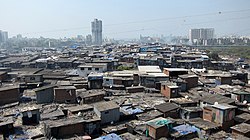
Principal photography took place in Dharavi, a slum in Mumbai, India.
Principal photography took place in Bhuj, Dharavi, Mumbai, Uzbekistan, Kazakhstan and Russia.[6][17] During the shooting in Uzbekistan, a Russian actor dressed as a soldier had to chase Abraham. After running 200 meters (660ft), the man collapsed from oxygen depletion and had to be rushed to a hospital, as the shooting was on a high altitude.[18]Abhishek Pathak, Kumar Mangat Pathak's son, served as the first assistant director of the film.[19]
Finding the soundtrack to be "unconventional, and exciting in a couple of places," Bollywood Hungama's Joginder Tuteja praised the renditions of Sami and Rekha Bhardwaj, but argued that "Kash Laga" is "fine if one strictly keeps in mind its situational appeal."[20]
Themes
K's predicament was compared to Alex DeLarge, the protagonist in A Clockwork Orange.
Authoritarianism
FilmCompanion's Zoeb Matin compared Baba Bangali's "pompously philosophic" figure to despots who use false spiritualism as means for their "nefarious end".[21]The Guardian's Phelim O'Neill called him "Hitler-loving,"[22]FilmCompanion's Prejo called him a friend of Hitler's,[23] and The Times's Anil Sinanan called him "a proud Hitler fan" by pointing out the climactic gas chamber sequence.[24]The Guardian's Philip French pointed out that his means of coercion include constant surveillance and loss of privacy.[25]The Hollywood Reporter's Gautaman Bhaskaran noted further that, "in using politico-religious methods, including curbing the freedom of his female employees by making them wear veils, the character reflects the state of autocracy and fanaticism, driven by money, politics and religion, which prevails in Indian society," and how the film is ultimately about manipulating the human being as K loathes the idea of giving up his right.[13] Comparing Baba Bengali to 1984's Big Brother, Prejo posited that the film metaphorically depicts an authoritarian regime where the privilege of "free will and freedom of expression" may be granted only to "further the regime's cause."[23]
Censorship
On the significance of fingers, Kashyap said that fingers could also be used to hold a pen, which symbolises writing that is freedom of expression; and that K without his fingers represented his body without soul.[1] Kashyap has said that chopping two fingers symbolises Paanch and Black Friday, his first two directorial efforts, that were refused release by the CBFC, India's statutory film certification body.[5][23] Prejo interpreted the film to be the "director's depiction of this authoritarian regime where even cinema, as an artistic form of expression, is suppressed and restrained."[23] Similarly, Bhaskaran stated, "Kashyap must have realized that open confrontation with the authorities does not quite pay, so he plays around with words and actions."[13]The A.V. Club's Saloni Gajjar interpretated the film as a "journey through hell and back, one in which Kashyap has to fight against a system that controls his output."[5] However, film director Raja Sen doubted the claims that K stood for Kashyap, arguing instead that "K is a character with no redeeming qualities whatsoever," so that must not be the director's intention.[26]
Freedom
Kashyap has stated that No Smoking is the story of "arrogance versus super arrogance, freedom to choose versus censorship; and that in the end freedom loses."[1]Time Out Mumbai's Girish Shahane compared the film favorably to Stanley Kubrick's A Clockwork Orange and argued that both films show that "the cure is worse than the disease if it robs you of your soul."[21]
Rise and fall
Matin pointed out how K's journey takes him from his "plush South Bombay apartment overlooking the magnificent vista of Brabourne Stadium," into the "almost claustrophobic bustle of Dharavi's slums," and then further into a "subterranean purgatory in the hot bowels of the city where, as in a dream, time and place coalesce in a mist of sunlight and dirt."[21]
Quitting smoking
Prejo interpreted the film as a "journey through the complicated mind and psychology of a smoking addict who intends to kick the habit, a depiction of the travails of a chain smoker who finds it difficult to quit and the mental toll this process has on him."[23]
Psyche
Prejo noted the uncertainties of the events, whether they were real or in K's "convoluted psyche," pointing out K's repeated emergings from a bathtub, which could be his returning "to the real world" or "into his own mind."[23]
No Smoking was invited to be screened at the 2nd Rome Film Festival, where the film had its premiere on 24 October 2007, where it was well-received,[33] before its general release on 26 October.[17][34]
Box office
Prithviraj Hegde noted that No Smoking could be cheered at film festivals, but that "it sure won't either at a suburban multiplex nor a tent cinema in Tamil Nadu or Bihar."[35] Gautaman Bhaskaran also found it "unlikely to get into the commercial circuit."[13] It ultimately bombed at the box-office,[27][29] grossing ₹3.49 crore (equivalent to ₹11croreorUS$1.2million in 2023) against a budget of ₹7.50 crore (equivalent to ₹23croreorUS$2.7million in 2023).[f]
Critical reception
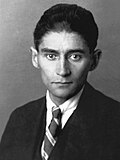
The works of Franz Kafka (left),[25] David Lynch (center)[37] and Neil Gaiman (right) were counted among as influences on the film.[38]
No Smoking received negative reviews from critics,[g] though international reviews were considerably positive.[23] On the review aggregator website Rotten Tomatoes, 50% of 12 critics' reviews are positive, with an average rating of 4.8/10.[40]
The film was criticised for its cryptic storytelling and ambition.[5][33]IBN Live's Rajeev Masand criticised its "intentionally incohesive screenplay and bizarre dialogue."[28] The film leaves one "completely baffled and desperately looking for logic", according to Times of India's Nikhat Kazmi.[41]DNA India's Indu Mirani said that "understanding its plot's many forward and backward movements would be out of the scope of the layman."[38]Hindustan Times' Khalid Mohamed remarked that the film was "too in-depth" and asked in their review "What’s happening out here?" after recounting the film's sequences.[42]Bollywood Hungama's Taran Adarsh called No Smoking the "most complicated cinematic experience of 2007," and that it leaves one "exasperated, because till the end credits roll, you just don’t know what happened in those 2 hours. Moviegoers want to watch a good story at the end of the day."[43]Rediff.com's Prithviraj Hegde called it "a bad dream, peopled with strange characters and situations" which "spins into a downward spiral that's unreal, incomprehensible and leaves you dazed. I have no clue what the movie was about."[35] Among foreign critics, The Guardian's Phelim O'Neill criticised its "unsettled internal logic and goofy subplot."[22]BBC Films' Tajpal Rathore found its "shoddy screenplay stale, and its situations laughable."[9]BBC's Manish Gajjar called it illogical and confusing on account of "constantly switching from reality and dream sequences."[44]Variety's Jay Weissberg found it "confused and a tedious mind-screw."[8]
Abraham's performance was praised by Bhaskaran, who said that he gave "a solid performance as a conceited man,"[13] Adarsh, who stated that he made "a sincere attempt to leave a mark and succeeds to an extent,"[43] Gajjar, who termed the performance "his strongest to date,"[5] Mirani,[38] and Manish Gajjar.[44] In contrast, Mohamed said that Abraham "still has to learn the A B C of acting,"[42] and Sinanan found his performance "leaden."[24] Takia's performance was criticised by Adarsh, who said that she "runs through her role mechanically,"[43] Mirani, who stated that she "sleepwalks through her part,"[38] and Mohamed, who said that she "has to stop looking plump."[42] In contrast, she impressed Manish Gajjar.[44] Rawal's performance was praised by Bhaskaran, who said that he played his role with a "verve,"[13] Manish Gajjar, who called him "typically brilliant,"[44] and Adarsh and Mirani, both of whom found him "okay."[38][43] Shorey's performance was criticised by Adarsh, who found him "a big bore,"[43] and Mirani, who said that he "disappoints greatly."[38] Cinematography was praised by Masand, who said that the film had "spectacular photography,"[28] Adarsh, who said that it was a "good-looking film," and that cinematography was its "only aspect that stand out,"[43] O'Neill, who stated that the film had a "slick look,"[22] Saloni Gajjar, who found the cinematography "excellent,"[5] and Manish Gajjar, who called it "stunning."[44] The flashback scene of K and Abbas smoking in the toilet was praised by Masand and Sen.[26][28]
Abraham first expressed his interest in a sequel in 2013.[29] In 2025, after Abraham reiterated his interest again, Kashyap said that he needs a thrilling, appropriate and unique subject matter to move forward with it.[27]
This page is based on this Wikipedia article Text is available under the CC BY-SA 4.0 license; additional terms may apply. Images, videos and audio are available under their respective licenses.