Related Research Articles

Intellectual property (IP) is a category of property that includes intangible creations of the human intellect. There are many types of intellectual property, and some countries recognize more than others. The best-known types are patents, copyrights, trademarks, and trade secrets. The modern concept of intellectual property developed in England in the 17th and 18th centuries. The term "intellectual property" began to be used in the 19th century, though it was not until the late 20th century that intellectual property became commonplace in most of the world's legal systems.

The Internet Corporation for Assigned Names and Numbers is a global multistakeholder group and nonprofit organization headquartered in the United States responsible for coordinating the maintenance and procedures of several databases related to the namespaces and numerical spaces of the Internet, ensuring the Internet's stable and secure operation. ICANN performs the actual technical maintenance work of the Central Internet Address pools and DNS root zone registries pursuant to the Internet Assigned Numbers Authority (IANA) function contract. The contract regarding the IANA stewardship functions between ICANN and the National Telecommunications and Information Administration (NTIA) of the United States Department of Commerce ended on October 1, 2016, formally transitioning the functions to the global multistakeholder community.
Entertainment law, also referred to as media law, is legal services provided to the entertainment industry. These services in entertainment law overlap with intellectual property law. Intellectual property has many moving parts that include trademarks, copyright, and the "right of publicity". However, the practice of entertainment law often involves questions of employment law, contract law, torts, labor law, bankruptcy law, immigration, securities law, security interests, agency, right of privacy, defamation, advertising, criminal law, tax law, International law, and insurance law.

Domain name speculation, popular as domain investing, domain flipping or domaining in professional jargon, is the practice of identifying and registering or acquiring generic Internet domain names as an investment with the intent of selling them later for a profit.
The Uniform Domain-Name Dispute-Resolution Policy (UDRP) is a process established by the Internet Corporation for Assigned Names and Numbers (ICANN) for the resolution of disputes regarding the registration of internet domain names. The UDRP currently applies to all generic top level domains, some country code top-level domains, and to all new generic top-level domains.
Intellectual property rights (IPRs) have been acknowledged and protected in China since 1980. China has acceded to the major international conventions on protection of rights to intellectual property. Domestically, protection of intellectual property law has also been established by government legislation, administrative regulations, and decrees in the areas of trademark, copyright, and patent.
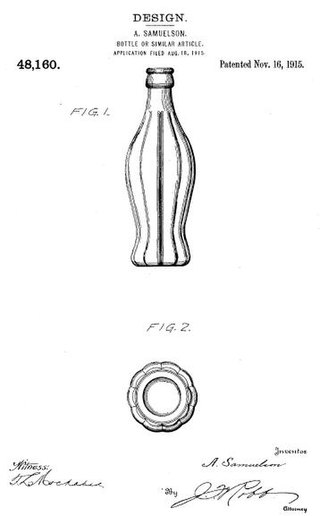
In the United States, a design patent is a form of legal protection granted to the ornamental design of an article of manufacture. Design patents are a type of industrial design right. Ornamental designs of jewelry, furniture, beverage containers and computer icons are examples of objects that are covered by design patents.
The University of New Hampshire Franklin Pierce School of Law is a public law school in Concord, New Hampshire, United States, associated with the University of New Hampshire. It is the only law school in the state and was founded in 1973 by Robert H. Rines and Frank DiPietro. The school is particularly well known for its Intellectual Property Law program.
Nominative use, also "nominative fair use", is a legal doctrine that provides an affirmative defense to trademark infringement as enunciated by the United States Ninth Circuit, by which a person may use the trademark of another as a reference to describe the other product, or to compare it to their own. Nominative use may be considered to be either related to, or a type of "trademark fair use". All "trademark fair use" doctrines, however classified, are distinct from the fair use doctrine in copyright law. However, the fair use of a trademark may be protected under copyright laws depending on the complexity or creativity of the mark as a design logo.
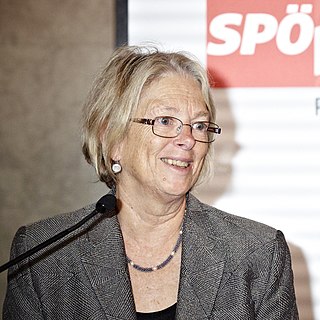
Pamela Samuelson is an American legal scholar, activist, and philanthropist. She is the Richard M. Sherman '74 Distinguished Professor of Law at the University of California, Berkeley, School of Law, where she has been a member of the faculty since 1996. She holds a joint appointment at the UC Berkeley School of Information. She is a co-founder of Authors Alliance and a co-director of the Berkeley Center for Law and Technology.
Golan v. Holder, 565 U.S. 302 (2012), was a US Supreme Court case that dealt with copyright and the public domain. It held that the "limited time" language of the United States Constitution's Copyright Clause does not preclude the extension of copyright protections to works previously in the public domain.
The International Trademark Association is concerned with protecting trademarks and complementary intellectual property via advocacy work and offering educational programs and legal resources.

Fanfiction has encountered problems with intellectual property law due to usage of copyrighted characters without the original creator or copyright owner's consent.
The following outline is provided as an overview of and topical guide to intellectual property:

A trademark is a type of intellectual property consisting of a recognizable sign, design, or expression that identifies a product or service from a particular source and distinguishes it from others. A trademark owner can be an individual, business organization, or any legal entity. A trademark may be located on a package, a label, a voucher, or on the product itself. Trademarks used to identify services are sometimes called service marks.
.music is a community-based top-level domain name (TLD) operated for the benefit of the global music community. It was one of the most highly contested new gTLDs, with eight applicants in contention.
Kevin Jerome Greene is an American lawyer and professor of contract music law and entertainment law at Southwestern Law School in Los Angeles, California. Professor Greene was among the first legal scholars to examine the treatment of African-American art forms, such as the blues, under intellectual property law.

IDEA: The Law Review of the Franklin Pierce Center for Intellectual Property is a law review published by an independent student organization at the Franklin Pierce Center for Intellectual Property at the University of New Hampshire School of Law.
Michael Greenberg is an American lawyer, regarded as a legal expert in intellectual property law and patent law. He is a partner of the Washington, D.C.-based law firm, Greenberg & Lieberman, with Stevan Lieberman, established in 1996. As part of the firm, Greenberg has been involved in hundreds of UDRP or trademark infringement disputes and is a well-regarded and experienced litigator, with particular expertise in patent infringement cases.

The Trademark Clearinghouse is a database of validated and registered trademarks established by ICANN to assist trademark holders prevent infringing behavior in the Domain Name System. In combination with the Uniform Rapid Suspension System (URS), it is the second significant attempt by ICANN to handle the "Trademark Dilemma". The first attempt was the Uniform Domain-Name Dispute-Resolution Policy.
References
- ↑ "ICANN".
- ↑ "Wong, Mary". UNH School of Law. Archived from the original on 2012-12-06. Retrieved 2012-11-16.
- ↑ "Mary Wong". ICANNWiki. Retrieved 2012-11-16.
- ↑ WorldCat