Related Research Articles
Ray Jayawardhana is the Harold Tanner Dean of the Cornell University College of Arts and Sciences and a Professor of Astronomy at Cornell University,effective September 1,2018. He was formerly Dean of Science and a Professor of physics &astronomy at York University. Prior to that,he was a Professor of Astronomy &Astrophysics at the University of Toronto,and an Assistant Professor of Astronomy at the University of Michigan. An award-winning science writer,his primary research areas include the formation and early evolution of stars,brown dwarfs and planets.. His current research focuses on characterizing exoplanets using telescopes on the ground and in space.
Margaret Elizabeth Cannon is a Canadian engineer specializing in geomatics engineering and president Emerita of the University of Calgary. From 2010 to 2018,she served as the university's eighth president and vice-chancellor,the first alumna to hold that position.
Shana O. Kelley is a scientist and Neena B. Schwartz Professor of Chemistry and Biomedical Engineering at Northwestern University. She is affiliated with Northwestern's International Institute for Nanotechnology and was previously part of the University of Toronto's Faculty of Pharmacy and Faculty of Medicine. Kelley's research includes the development of new technologies for clinical diagnostics and drug delivery. In 2023,she was chosen as president of Chicago's new Chan Zuckerberg Biohub.

Stephen Wayne "Steve" Scherer is a Canadian scientist who studies genetic variation in human disease. He obtained his PhD at the University of Toronto under Professor Lap-chee Tsui. Together they founded Canada's first human genome centre,the Centre for Applied Genomics (TCAG) at the Hospital for Sick Children. He continues to serve as director of TCAG,and is also a University Professor in the Department of Molecular Genetics,and the director of the McLaughlin Centre at the Temerty Faculty of Medicine at the University of Toronto.
Ingrid Suzanne Johnsrude is a Canadian neuroscientist,a professor of psychology at University of Western Ontario,and was the holder of the Canada Research Chair in Cognitive Neuroscience. Her research involves brain imaging,the connections between brain structure and language ability,and the diagnosis of degenerative brain diseases in the elderly.
Sheelagh Carpendale is a Canadian artist and computer scientist working in the field of information visualization and human-computer interaction.

Mark Lautens,OC,is a Canadian organic chemist and is a University Professor at the University of Toronto.

Raquel Urtasun is a professor at the University of Toronto. Urtasun uses artificial intelligence,particularly deep learning,to make vehicles and other machines perceive the world more accurately and efficiently.
Elena M. Bennett is an American ecosystem ecologist specializing in studying the interactions of ecosystem services on landscape. She is currently a Professor and the Canada Research Chair in Sustainability Science at McGill University. She was inducted to the Royal Society of Canada’s College of New Scholars,Artists,and Scientists in 2017. She was elected a member of the National Academy of Sciences in 2022 and became a Guggenheim Fellow in the same year.
Jane Marie Heffernan is a Canadian mathematician. Her research focuses on understanding the spread and persistence of infectious diseases. She is a full professor at York University and a Tier 2 York Research Chair in Multi-Scale Quantitative Methods for Evidence-Based Health Policy. She is the director of the Centre for Disease Modelling,and is on the board of directors of the Canadian Applied and Industrial Mathematics Society.
Gilles Fontaine was a professor of astrophysics at the Universitéde Montréal in Quebec,Canada.
Paul D. McNicholas is an Irish-Canadian statistician. He is a professor and University Scholar in the Department of Mathematics and Statistics at McMaster University. In 2015,McNicholas was awarded the Tier 1 Canada Research Chair in Computational Statistics. McNicholas uses computational statistics techniques,and mixture models in particular,to gain insight into large and complex datasets. He is editor-in-chief of the Journal of Classification.
N. Louise Glass is the Fred E. Dickinson Chair of Wood Science and Technology at the University of California,Berkeley. She specialises in plant and microbial biology,particularly fungal cell biology and genetics
Julia Kathleen Baum is a Canadian marine biologist. In 2017,she was named to the Royal Society of Canada's College of New Scholars,Artists,and Scientists. She was awarded a Pew Fellowship in Marine Conservation in 2017 and an EWR Steacie Fellowship in 2018.
Edward H. Sargent is a Canadian scientist,who serves as University Professor of Electrical &Computer Engineering and Vice-President of Research and Innovation,and Strategic Initiatives at the University of Toronto. He also is the Canada Research Chair in Nanotechnology. He will join the Departments of Chemistry and of Electrical and Computer Engineering at Northwestern University,and will be affiliated with the International Institute for Nanotechnology at Northwestern.
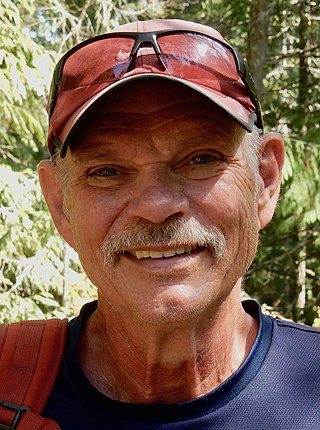
Benjamin F. Koop is a Canadian molecular biologist and evolutionary geneticist. As of 2004,he is a Tier 1 Canada Research Chair in Genomics and Molecular Biology at the University of Victoria.

David J. Vocadlo is a Canadian chemical biologist. He is a Tier 1 Canada Research Chair in Chemical Glycobiology and Professor of Chemistry at Simon Fraser University.
Marc T. J. Johnson is a professor of biology at the University of Toronto Mississauga. He is the Canada Research Chair for Urban Environmental Science,and the Director of the Centre for Urban Environments.
Emily D. Cranston is a Canadian chemist who is a professor at the University of British Columbia and President’s Excellence Chair in Forest Bioproducts. She investigates nanocellulose and hybrid bio-based materials. Cranston is an NSERC E.W.R. Steacie fellow and was awarded the Kavli Emerging Leader in Chemistry lectureship in 2018 and the Tappi NanoDivision Technical Award in 2021.
Aaron R. Wheeler is a Canadian chemist who is a professor of chemistry and biomedical engineering at the University of Toronto since 2005 with cross-appointment at Institute of Biomedical Engineering and Terrence Donnelly Centre for Cellular and Biomolecular Research. His academic laboratory is located at Lash Miller Chemical Laboratories and Terrence Donnelly Centre for Cellular and Biomolecular Research at the University of Toronto. In 2005,Wheeler was appointed as assistant professor and Tier II Canada Research Chair then promoted to associate professor in 2010,full professor in 2013,and in 2018 he became the Tier I Canada Research Chair in Microfluidic Bioanalysis.
References
- ↑ "Leah E. Cowen". Canadian Institute for Advanced Research . Retrieved November 6, 2021.
- ↑ Cameron, David (September 21, 2005). "Leah Cowen awarded Genzyme Fellowship". Whitehead Institute . Retrieved November 6, 2021.
- 1 2 3 Kalvapalle, Rahul (November 20, 2020). "Leah Cowen appointed U of T's first associate vice-president, research". University of Toronto. Retrieved November 6, 2021.
- ↑ "Researchers uncover molecular pathway through which common yeast becomes fungal pathogen". Eurekalert. March 16, 2012. Retrieved November 6, 2021.
- ↑ Hall, Jenny (March 13, 2012). "U of T wins four new Canada Research Chairs". University of Toronto. Retrieved November 6, 2021.
- 1 2 "2015 NSERC E.W.R. Steacie Memorial Fellowships". Natural Sciences and Engineering Research Council. Retrieved November 6, 2021.
- ↑ Hall, Jenny (February 17, 2015). "NSERC awards: big night for U of T as researchers take home three Steacie Fellowships, one postdoctoral prize". University of Toronto. Retrieved November 6, 2021.
- ↑ Sorensen, Chris (May 3, 2018). "Thinking different: U of T's newest Canada Research Chairs are exploring new frontiers in knowledge and innovation". University of Toronto. Retrieved November 6, 2021.
- ↑ "Leah Cowen elected fellow of the American Association for the Advancement of Science". University of Toronto. November 24, 2020. Retrieved November 6, 2021.
- ↑ "Welcome to new editors at G3 and GENETICS". Genes to Genomes. May 31, 2021. Retrieved November 6, 2021.
