
The largemouth bass is a carnivorous freshwater ray-finned fish in the Centrarchidae (sunfish) family, native to the eastern and central United States, southeastern Canada and northern Mexico. It is known by a variety of regional names, such as the widemouth bass, bigmouth bass, black bass, bucketmouth, largie, Potter's fish, Florida bass, Florida largemouth, green bass, bucketmouth bass, green trout, Gilsdorf bass, Oswego bass, LMB, and southern largemouth and northern largemouth.
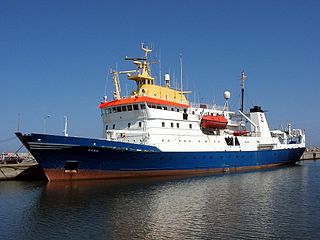
Fisheries science is the academic discipline of managing and understanding fisheries. It is a multidisciplinary science, which draws on the disciplines of limnology, oceanography, freshwater biology, marine biology, meteorology, conservation, ecology, population dynamics, economics, statistics, decision analysis, management, and many others in an attempt to provide an integrated picture of fisheries. In some cases new disciplines have emerged, as in the case of bioeconomics and fisheries law. Because fisheries science is such an all-encompassing field, fisheries scientists often use methods from a broad array of academic disciplines. Over the most recent several decades, there have been declines in fish stocks (populations) in many regions along with increasing concern about the impact of intensive fishing on marine and freshwater biodiversity.
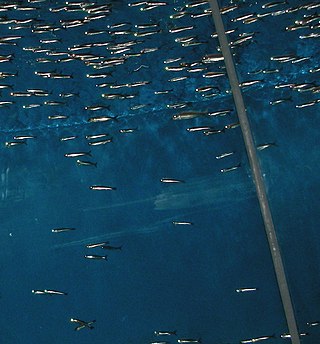
Bait fish are small-sized fish caught and used by anglers as bait to attract larger predatory fish, particularly game fish. Baitfish species are typically those that are common and breed rapidly, making them easy to catch and in abundant supply.

John Treadwell Nichols was an American ichthyologist and ornithologist.
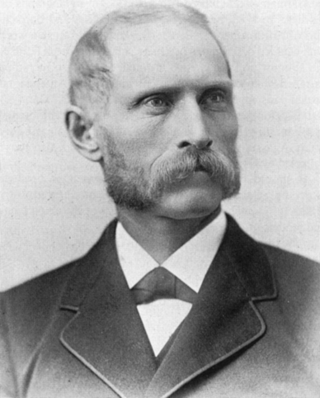
Samuel Walton Garman, or "Garmann" as he sometimes styled himself, was an American naturalist and zoologist. He became noted as an ichthyologist and herpetologist.
Ethelwynn Trewavas was an ichthyologist at the British Museum of Natural History. She was known for her work on the families Cichlidae and Sciaenidae. She worked with Charles Tate Regan, another ichthyologist and taxonomist.
The American Society of Ichthyologists and Herpetologists (ASIH) is an international learned society devoted to the scientific studies of ichthyology and herpetology. The primary emphases of the society are to increase knowledge about these organisms, to communicate that knowledge through publications, conferences, and other methods, and to encourage and support young scientists who will make future advances in these fields. The programs of the American Society of Ichthyologists and Herpetologists are part of a global effort to interpret, understand, and conserve the Earth's natural diversity and to contribute to the wise use of natural resources for the long-term benefit of humankind.
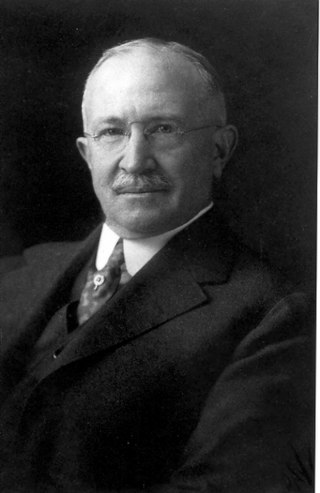
Charles Henry Gilbert was a pioneer ichthyologist and fishery biologist of particular significance to natural history of the western United States. He collected and studied fishes from Central America north to Alaska and described many new species. Later he became an expert on Pacific salmon and was a noted conservationist of the Pacific Northwest. He is considered by many as the intellectual founder of American fisheries biology. He was one of the 22 "pioneer professors" of Stanford University.
George Sprague Myers was an American ichthyologist who spent most of his career at Stanford University. He served as the editor of Stanford Ichthyological Bulletin as well as president of the American Society of Ichthyologists and Herpetologists. Myers was also head of the Division of Fishes at the United States National Museum, and held a position as an ichthyologist for the United States Fish and Wildlife Service. He was also an advisor in fisheries and ichthyology to the Brazilian Government.

The red shiner or red-horse minnow is a North American species of freshwater fish in the family Cyprinidae. They are deep-bodied and laterally compressed, and can grow to about 3 inches (7.6 cm) in length. For most of the year, both males and females have silver sides and whitish abdomens. Males in breeding coloration, though, have iridescent pink-purple-blue sides and a red crown and fins.
The Prairie Research Institute is a multidisciplinary research institute charged with providing objective research, expertise, and data on the natural and cultural resources of Illinois. It was established as a unit of the University of Illinois at Urbana-Champaign by a Public Act of the Illinois State Legislature in 2008. The institute comprises four state scientific surveys: the Illinois Natural History Survey (INHS), the Illinois State Archaeological Survey (ISAS), the Illinois State Geological Survey (ISGS), and the Illinois State Water Survey (ISWS), and the institute also houses the Illinois Sustainable Technology Center (ISTC). The institute has a combined total staff of more than 700 employees, with facilities located on the Urbana-Champaign campus of the University of Illinois, and field offices and research stations throughout the state.

Steven J. Cooke is a Canadian biologist specializing in ecology and conservation physiology of fish. He is best known for his integrative work on fish physiology, behaviour, ecology, and human-dimensions to understand and solve complex environmental problems. He currently is a Canada Research Professor in Environmental Science and Biology at Carleton University and the Editor-in-Chief of the American Fisheries Society magazine Fisheries, Co-Editor-in-Chief of the Collaboration for Environmental Evidence journal Environmental Evidence, and Emeritus Editor and Strategic Advisor for the journal Conservation Physiology.
Lynne R. Parenti is an American ichthyologist. She serves as a Research Scientist and Curator of Fishes at the National Museum of Natural History of the Smithsonian Institution. Her specialty is the systematics and historical biogeography of freshwater and coastal fishes, and she has conducted research in this area for about thirty years.

Peter B. Moyle is Distinguished Professor Emeritus in the Department of Wildlife, Fish and Conservation Biology and associate director of the Center for Watershed Sciences at the University of California, Davis. He has studied the ecology and conservation of fishes in freshwater and estuarine habitats in California (US) for over fifty years. He has a special interest in salmonid fishes and in the state's highly endemic freshwater and estuarine fish fauna. Moyle has authored or co-authored more than 270 peer-reviewed publications, including 10 books, and over 225 other publications, including ca. 75 blogs.

Roger Lansing Grande, more commonly known as Lance Grande, is an evolutionary biologist and curatorial scientist. His research and work is focused on Paleontology, Ichthyology, Systematics and Evolution. He is well known for his work on the paleontology of the Green River Formation and for his detailed monographs on the comparative anatomy and evolution of ray-finned fishes. He has also published books on broader issues, engaging larger audiences on the importance of the natural and the social sciences.
Fang Fang Kullander, née Fang Fang, was a Swedish-Chinese ichthyologist.
The American Fisheries Society, is the "world’s oldest and largest organization dedicated to strengthening the fisheries profession, advancing fisheries science, and conserving fisheries resources." It is a member-driven 501(c)(3) nonprofit organization governed by an executive director, a governing board, and officers who are guided by the AFS's organizational documents, a constitution, and a set of rules. Their stated mission is "to improve the conservation and sustainability of fishery resources and aquatic ecosystems by advancing fisheries and aquatic science and promoting the development of fisheries professionals." AFS publishes five peer-reviewed fish journals, books, and the magazine Fisheries, organizes seminars and workshops that promote scientific research and fisheries management, and encourages fisheries education through 58 university-based student subunits. AFS has 48 chapters comprising four geographic regions in North America — North Central, Northeastern, Southern, and Western — and includes two "bi-national" chapters and a Mexico chapter.
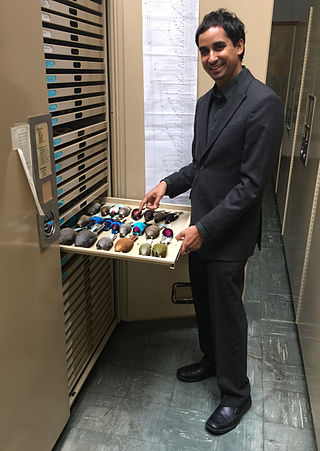
Prosanta Chakrabarty is an American ichthyologist and George H. Lowery Jr. Professor of ichthyology, evolution and systematics at Louisiana State University. He studied at McGill University where he received a bachelor of science in Applied Zoology and at the University of Michigan where he obtained his PhD in Ecology and Evolution. Among other professional positions he was a Program Director for the National Science Foundation and was the President of the American Society of Ichthyologist and Herpetologist in 2023. He was named a TED Fellow in 2016, and a TED Senior Fellow in 2018. He was named an Elected Fellow of the AAAS for "distinguished contributions to evolutionary biology, focusing on the bioluminescent systems and historical biogeography of freshwater fishes, and for effectively communicating science to the public".
Clark Hubbs was an American ichthyologist who was professor of zoology at the University of Texas from 1963 until he accepted emeritus status in 1991. He was a leading figure in ichthyology in Texas, teaching students who went on to be renowned in the field, was involved in ichthyological societies and was an editor of scientific journals. Hubbs was also an environmental activist, fighting to conserve freshwater ecosystems.
Hypostomus boulengeri is a species of catfish in the family Loricariidae. It is native to South America. The species reaches 24.5 cm SL and is believed to be a facultative air-breather.
