A limited liability company (LLC) is the US-specific form of a private limited company. It is a business structure that can combine the pass-through taxation of a partnership or sole proprietorship with the limited liability of a corporation. An LLC is not a corporation under state law; it is a legal form of a company that provides limited liability to its owners in many jurisdictions. LLCs are well known for the flexibility that they provide to business owners; depending on the situation, an LLC may elect to use corporate tax rules instead of being treated as a partnership, and, under certain circumstances, LLCs may be organized as not-for-profit. In certain U.S. states, businesses that provide professional services requiring a state professional license, such as legal or medical services, may not be allowed to form an LLC but may be required to form a similar entity called a professional limited liability company (PLLC).
Incorporation is the formation of a new corporation. The corporation may be a business, a nonprofit organization, sports club, or a government of a new city or town.
Limited liability is a legal status where a person's financial liability is limited to a fixed sum, most commonly the value of a person's investment in a corporation, company or partnership. If a company that provides limited liability to its investors is sued, then the claimants are generally entitled to collect only against the assets of the company, not the assets of its shareholders or other investors. A shareholder in a corporation or limited liability company is not personally liable for any of the debts of the company, other than for the amount already invested in the company and for any unpaid amount on the shares in the company, if any, except under special and rare circumstances permitting "piercing the corporate veil." The same is true for the members of a limited liability partnership and the limited partners in a limited partnership. By contrast, sole proprietors and partners in general partnerships are each liable for all the debts of the business.
Piercing the corporate veil or lifting the corporate veil is a legal decision to treat the rights or duties of a corporation as the rights or liabilities of its shareholders. Usually a corporation is treated as a separate legal person, which is solely responsible for the debts it incurs and the sole beneficiary of the credit it is owed. Common law countries usually uphold this principle of separate personhood, but in exceptional situations may "pierce" or "lift" the corporate veil.

Salomon v A Salomon & Co Ltd[1896] UKHL 1, [1897] AC 22 is a landmark UK company law case. The effect of the House of Lords' unanimous ruling was to uphold firmly the doctrine of corporate personality, as set out in the Companies Act 1862, so that creditors of an insolvent company could not sue the company's shareholders for payment of outstanding debts.

Kosmopoulos v Constitution Insurance Co of Canada is a leading Supreme Court of Canada decision on the court's ability to pierce the corporate veil—to impose an interest or liability, that is, upon the shareholders of a company instead of the company itself. It was held that the veil can only be lifted where it would be "just and equitable", specifically to third parties.

Walkovszky v. Carlton, 223 N.E.2d 6, is a United States corporate law decision on the conditions under which Courts may pierce the corporate veil. A cab company had shielded itself from liability by incorporating each cab as its own corporation. The New York Court of Appeals refused to pierce the veil on account of undercapitalization alone.

Adams v Cape Industries plc [1990] Ch 433 is a UK company law case on separate legal personality and limited liability of shareholders. The case also addressed long-standing issues under the English conflict of laws as to when a company would be resident in a foreign jurisdiction such that the English courts would recognise the foreign court's jurisdiction over the company. It has in effect been superseded by Lungowe v Vedanta Resources plc, which held that a parent company could be liable for the actions of a subsidiary on ordinary principles of tort law.
Bowoto v. Chevron Corp. was a lawsuit against Chevron Nigeria Ltd., a subsidiary of Chevron USA, which went to trial in 2008 in the United States District Court for the Northern District of California. The plaintiffs, Nigerian citizens who had been injured during or who had survived human rights violations perpetrated by Nigerian military personnel, alleged that the Chevron subsidiary backed the military action and that the parent company thus should bear liability in US courts for the resultant fallout. The suit was decided on December 1, 2008, when nine jurors unanimously agreed Chevron was not liable for any of the numerous allegations. Judgment was entered the next day, officially exonerating Chevron.
Spectrum Sports, Inc. v. McQuillan, 506 U.S. 447 (1993), was a case in which the Supreme Court of the United States rejected the assertion that attempted monopolization may be proven merely by demonstration of unfair or predatory conduct. Instead, conduct of a single firm could be held to be unlawful attempted monopolization only when it actually monopolized or dangerously threatened to do so. Thus, the Court rejected the conclusion that injury to competition could be presumed to follow from certain conduct. The causal link must be demonstrated.

Pauline Newman is a United States Circuit Judge of the United States Court of Appeals for the Federal Circuit.
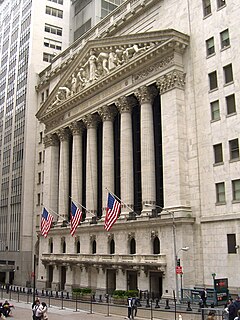
United States corporate law regulates the governance, finance and power of corporations in US law. Every state and territory has its own basic corporate code, while federal law creates minimum standards for trade in company shares and governance rights, found mostly in the Securities Act of 1933 and the Securities and Exchange Act of 1934, as amended by laws like the Sarbanes–Oxley Act of 2002 and the Dodd–Frank Wall Street Reform and Consumer Protection Act. The US Constitution was interpreted by the US Supreme Court to allow corporations to incorporate in the state of their choice, regardless of where their headquarters are. Over the 20th century, most major corporations incorporated under the Delaware General Corporation Law, which offered lower corporate taxes, fewer shareholder rights against directors, and developed a specialized court and legal profession. Nevada has done the same. Twenty-four states follow the Model Business Corporation Act, while New York and California are important due to their size.
The corporate veil in the United Kingdom is a metaphorical reference used in UK company law for the concept that the rights and duties of a corporation are, as a general principle, the responsibility of that company alone. Just as a natural person cannot be held legally accountable for the conduct or obligations of another person, unless they have expressly or implicitly assumed responsibility, guaranteed or indemnified the other person, as a general principle shareholders, directors and employees cannot be bound by the rights and duties of a corporation. This concept has traditionally been likened to a "veil" of separation between the legal entity of a corporation and the real people who invest their money and labor into a company's operations.
Wilko v. Swan, 346 U.S. 427 (1953), is a United States Supreme Court decision on the arbitration of securities fraud claims. It had originally been brought by an investor who claimed his broker at Hayden Stone had sold stock to him without disclosing that he and the firm were the primary sellers. By a 7–2 margin the Court held that the provisions of the Securities Act of 1933 barring any waiver of rights under that statute took precedence over the Federal Arbitration Act's (FAA) requirement that arbitration clauses in contracts be given full effect by federal courts. It reversed a decision to the contrary by a divided panel of the Second Circuit Court of Appeals.
Kiobel v. Royal Dutch Petroleum Co., 569 U.S. 108 (2013), was a United States Supreme Court decision in which the court found that the Alien Tort Claims Act presumptively does not apply extraterritorially.
Fletcher v. Atex, Inc., 68 F.3d 1451, is a veil piercing case by Judge José A. Cabranes in corporation law.

Prest v Petrodel Resources Ltd[2013] UKSC 34, [2013] 2 AC 415 is a leading UK company law decision of the UK Supreme Court concerning the nature of the doctrine of piercing the corporate veil, resulting trusts and equitable proprietary remedies in the context of English family law.

Perpetual Real Estate Services, Inc. v. Michaelson Properties, Inc. 974 F.2d 545, is a US corporate law case, concerning piercing the corporate veil.

VTB Capital plc v Nutritek International Corp[2013] UKSC 5, [2013] 2 AC 337 is an English company law case, concerning piercing the corporate veil for fraud.