
Gene therapy is a medical technology that aims to produce a therapeutic effect through the manipulation of gene expression or through altering the biological properties of living cells.
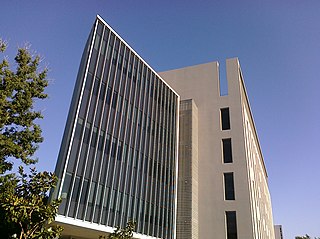
The Beckman Research Institute of City of Hope (BRI) is a not-for-profit medical research facility located at and partnering with the City of Hope National Medical Center in Duarte, California, United States. It is dedicated to studying normal and abnormal biological processes which may be related to cancer, diabetes, HIV/AIDS and other life-threatening diseases. Both basic and clinical research are carried out in cooperation with the City of Hope National Medical Center. The institute itself is organized into more than 20 departments and divisions. As of 2021, the director is Steven T. Rosen. The Beckman Research Institute also hosts the Irell & Manella Graduate School of Biological Sciences whose founding dean was Arthur Riggs.

William French Anderson is an American physician, geneticist and molecular biologist. He is known as the "father of gene therapy". He graduated from Harvard College in 1958, Trinity College, Cambridge University (England) in 1960, and from Harvard Medical School in 1963. In 1990 he was the first person to succeed in carrying out gene therapy by treating a 4-year-old girl suffering from severe combined immunodeficiency.
Jerry McKee Adams is an Australian-American molecular biologist whose research into the genetics of haemopoietic differentiation and malignancy, led him and his wife, Professor Suzanne Cory, to be the first two scientists to pioneer gene cloning techniques in Australia, and to successfully clone mammalian genes.
Malcolm K. Brenner is a British clinical scientist working mostly in the field of gene therapy and immunotherapy applied to malignancy. In 2016, Dr. Brenner was elected to the National Academy of Medicine, part of the National Academies of Sciences, Engineering, and Medicine.
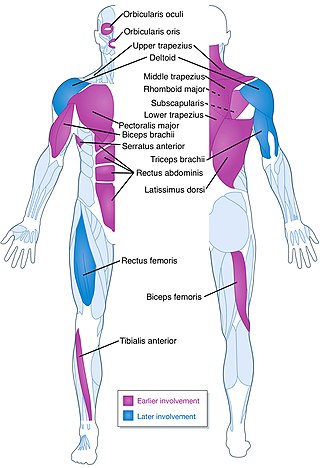
Facioscapulohumeral muscular dystrophy (FSHD) is a type of muscular dystrophy, a group of heritable diseases that cause degeneration of muscle and progressive weakness. Per the name, FSHD tends to sequentially weaken the muscles of the face, those that position the scapula, and those overlying the humerus bone of the upper arm. These areas can be spared, and muscles of other areas usually are affected, especially those of the chest, abdomen, spine, and shin. Almost any skeletal muscle can be affected in advanced disease. Abnormally positioned, termed 'winged', scapulas are common, as is the inability to lift the foot, known as foot drop. The two sides of the body are often affected unequally. Weakness typically manifests at ages 15–30 years. FSHD can also cause hearing loss and blood vessel abnormalities at the back of the eye.
James Sherley is a biological engineer and the founder of Asymmetrex, an adult stem cell research center. He has also conducted research at the Boston Biomedical Research Institute and Massachusetts Institute of Technology (MIT). Sherley filed a suit against the government in Sherley v. Sebelius, resulting in a protracted legal battle attempting to ban the government from funding any research relating to embryonic stem cells.
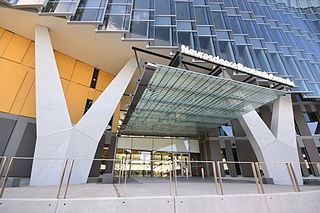
Neuroscience Research Australia is an independent, not for profit medical research institute based in Sydney, Australia. The institute is made up of over 400 researchers specialising in research to improve the lives of people living with brain and nervous system disorders. The institute’s research spans neurodegeneration, including dementia and Parkinson’s disease; mental health and mental illness including bipolar disorder and schizophrenia; and translational neuroscience including falls prevention, pain and injury prevention.

Siddhartha Mukherjee is an Indian-American physician, biologist, and author. He is best known for his 2010 book, The Emperor of All Maladies: A Biography of Cancer, that won notable literary prizes including the 2011 Pulitzer Prize for General Nonfiction, and Guardian First Book Award, among others. The book was listed in the "All-Time 100 Nonfiction Books" by Time magazine in 2011. His 2016 book The Gene: An Intimate History made it to #1 on The New York Times Best Seller list, and was among The New York Times 100 best books of 2016, and a finalist for the Wellcome Trust Prize and the Royal Society Prize for Science Books.

Douglas James Hilton is an Australian molecular biologist. He is the CEO of CSIRO and immediate past Director of the Walter and Eliza Hall Institute of Medical Research in Melbourne, Australia. His research has focused on cytokines, signal transduction pathways and the regulation of blood cell formation (hematopoiesis). Hilton was the President of the Association of the Australian Medical Research Institutes (AAMRI) from 2014-16.
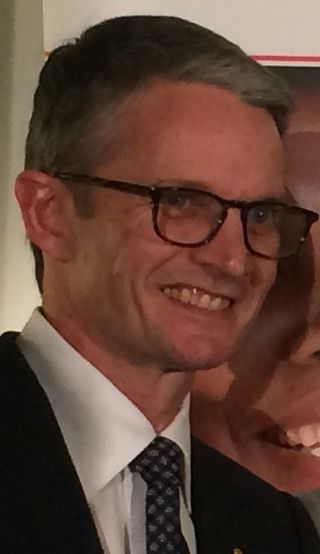
Brendan Scott Crabb is an Australian microbiologist, research scientist and director and chief executive officer of the Burnet Institute, based in Melbourne, Victoria, Australia.
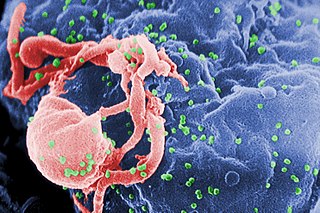
HIV/AIDS research includes all medical research that attempts to prevent, treat, or cure HIV/AIDS, as well as fundamental research about the nature of HIV as an infectious agent and AIDS as the disease caused by HIV.
Rosetta Martiniello-Wilks is an Australian cancer researcher. She is a former senior lecturer at the University of Technology Sydney (UTS) in Ultimo, Sydney, Australia. Martiniello-Wilks was a core member of the Centre for Health Technologies at UTS and head of the Translational Cancer Research Group in the School of Medical and Molecular Biosciences, Faculty of Science, UTS.
Pamela J. Russell was an Australian academic researcher of immunology, bladder and prostate research. Russell was awarded Membership of the Order of Australia (AM) for her research on prostate and bladder cancer in 2003.
Darwin Prockop was an American biochemist and progenitor cell researcher. He held academic posts at several universities, and joined the faculty at the Texas A&M Health Science Center in 2008. Prockop was elected to several academic societies, including the National Academy of Sciences and the Institute of Medicine.

Sharon Ruth Lewin is an Australian infectious diseases expert who is the inaugural Director of The Peter Doherty Institute for Infection and Immunity and the Cumming Global Centre for Pandemic Therapeutics. She is also a Melbourne Laureate Professor of Medicine at The University of Melbourne, and the current president of the International AIDS Society (IAS).

Marshall L. Summar is an American physician, clinical geneticist and academic specializing in the field of genetics and rare disease. He is board-certified in pediatrics, biochemical genetics and clinical genetics. He is best known for his work in caring and developing treatments for children with rare genetic diseases.
Robert Williamson is a retired British-Australian molecular biologist who specialised in the mapping, gene identification, and diagnosis of human genetic disorders.

Marguerite Virginia Evans-Galea is the co-founder of Women in STEMM Australia. STEMM. Her research is focused on gene therapy and neurodegenerative diseases.
Stephen Donald Wilton, also known as Steve Wilton, is an Australian molecular biologist and academic, serving as the Foundation Professor of Molecular Therapy at Murdoch University and adjunct professor at the University of Western Australia (UWA). He also fulfills dual roles as a Director at the Perron Institute for Neurological and Translational Science and deputy director at Murdoch's Centre for Molecular Medicine and Innovative Therapeutics (CMMIT).

