Related Research Articles

The Council on Foreign Relations (CFR) is an American think tank specializing in U.S. foreign policy and international relations. Founded in 1921,it is an independent and nonpartisan nonprofit organization. CFR is based in New York City,with an additional office in Washington,D.C. Its membership has included senior politicians,numerous secretaries of state,CIA directors,bankers,lawyers,professors,corporate directors and CEOs,and senior media figures.

Roscoe Henry Hillenkoetter was the third director of the post–World War II United States Central Intelligence Group (CIG),the third Director of Central Intelligence (DCI),and the first director of the Central Intelligence Agency created by the National Security Act of 1947. He served as DCI and director of the CIG and the CIA from May 1,1947,to October 7,1950,and,after his retirement from the United States Navy,was a member of the board of governors of National Investigations Committee On Aerial Phenomena (NICAP) from 1957 to 1962.

The National Reconnaissance Office (NRO) is a member of the United States Intelligence Community and an agency of the United States Department of Defense which designs,builds,launches,and operates the reconnaissance satellites of the U.S. federal government,and provides satellite intelligence to several government agencies,particularly signals intelligence (SIGINT) to the NSA,imagery intelligence (IMINT) to the NGA,and measurement and signature intelligence (MASINT) to the DIA. The NRO announced in 2023 that it plans within the following decade to quadruple the number of satellites it operates and increase the number of signals and images it delivers by a factor of ten.

William Oliver Studeman is a retired admiral of the United States Navy and former deputy director of the Central Intelligence Agency,with two extended periods as acting Director of Central Intelligence. As deputy director of Central Intelligence,he served in the administrations of George H. W. Bush and Bill Clinton under three directors of Central Intelligence,Robert Gates,R. James Woolsey Jr.,and John M. Deutch. Studeman retired from the navy in 1995 after almost 35 years of service. Between 1988 and 1992 he was director of the National Security Agency;he was the Director of Naval Intelligence,from September 1985 to July 1988.

Ronald Michael "Ron" Sega is an American former astronaut who is professor of systems engineering and Vice President for Energy and the Environment at the Colorado State University Research Foundation,a non-profit advocacy organization supporting CSU. He is also the Vice President and Enterprise Executive for Energy and Environment at Ohio State University. From August 2005 to August 2007,he served as Under Secretary of the Air Force. He is a retired major general in the United States Air Force and a former NASA astronaut. Sega was born in Cleveland,Ohio,he is of Slovene origin. He was married to fellow astronaut Bonnie J. Dunbar. He is now married to Ann Sega and they have two sons. He has lived in both Northfield,Ohio and Colorado Springs.

William Hedgcock Webster is an American attorney and jurist who most recently served as chair of the Homeland Security Advisory Council from 2005 until 2020. He was a United States district judge of the United States District Court for the Eastern District of Missouri and a United States circuit judge of the United States Court of Appeals for the Eighth Circuit before becoming director of the Federal Bureau of Investigation (FBI) from 1978 to 1987 and director of Central Intelligence (CIA) from 1987 to 1991. He is the only person to have held both positions.

Leon Edward Panetta is an American politician and government official who has served under several Democratic administrations as Secretary of Defense (2011–2013),director of the CIA (2009–2011),White House Chief of Staff (1994–1997),director of the Office of Management and Budget (1993–1994),and as a U.S. Representative from California (1977–1993).

Norman Ralph "Norm" Augustine is a U.S. aerospace businessman who served as United States Under Secretary of the Army from 1975 to 1977. Augustine served as chairman and CEO of the Lockheed Martin Corporation. He was chairman of the Review of United States Human Space Flight Plans Committee.

Robert Michael Gates is an American intelligence analyst and university president who served as the 22nd United States secretary of defense from 2006 to 2011. He was appointed by President George W. Bush and was retained by President Barack Obama. Gates began his career serving as an officer in the United States Air Force but was quickly recruited by the Central Intelligence Agency (CIA). Gates served for twenty-six years in the CIA and at the National Security Council,and was director of central intelligence under President George H. W. Bush from 1991 to 1993. After leaving the CIA,Gates became president of Texas A&M University and was a member of several corporate boards. Gates served as a member of the Iraq Study Group,the bipartisan commission co-chaired by James A. Baker III and Lee H. Hamilton that studied the lessons of the Iraq War.

The National Intelligence Distinguished Service Medal (NIDSM) is a decoration awarded for service to the United States Intelligence Community. The decoration is awarded to any member or contributor to the National Intelligence Community,either civilian or military,who distinguishes themselves by meritorious actions to the betterment of national security in the United States of America,through sustained and selfless service of the highest order.
Awards and decorations of the United States government are civilian awards of the U.S. federal government which are typically issued for sustained meritorious service,in a civilian capacity,while serving in the U.S. federal government. Certain U.S. government awards may also be issued to military personnel of the United States Armed Forces and be worn in conjunction with awards and decorations of the United States military. In order of precedence,those U.S. non-military awards and decorations authorized for wear are worn after U.S. military personal decorations and unit awards and before U.S. military campaign and service awards.

Robert Michael Kimmitt was United States Deputy Secretary of the Treasury under President George W. Bush. He was nominated by President Bush on June 29,2005. The United States Senate unanimously confirmed him on July 29,2005,and he was sworn into office on August 16,2005. Kimmitt served through the end of the Bush administration,leaving office on January 20,2009.
Donald Phinney Gregg is a retired American politician,CIA employee,and U.S. Ambassador to South Korea. Gregg worked for the Central Intelligence Agency for 31 years,from 1951 to 1982. He was a National Security Council advisor (1979–1982) and National Security Advisor to U.S. Vice President George H. W. Bush (1982–1989),United States Ambassador to Korea (1989–1993),and the chairman of the board of The Korea Society,where he called for greater engagement with North Korea.

Porter Johnston Goss is an American politician and government official who served as the head of the Central Intelligence Agency from 2004 to 2006. He was the last Director of Central Intelligence (DCI) from 2004 to 2005,then became the first Director of the Central Intelligence Agency following the passage of the 2004 Intelligence Reform and Terrorism Prevention Act,which abolished the DCI position and replaced it with the Director of National Intelligence on December 17,2004

Lieutenant General Lincoln D. Faurer was United States Air Force officer who served as director of the National Security Agency and chief of the Central Security Service from 1981 to 1985.

Scott F. Large is an American intelligence officer who served as the sixteenth Director of the National Reconnaissance Office from 2007 to 2009. He previously served as the Principal Deputy Director of the National Reconnaissance Office from April to October 2007,and as the Central Intelligence Agency's Associate Deputy Director for Science and Technology.
The Intelligence Medal of Merit is awarded by the Central Intelligence Agency for performance of especially meritorious service or for achievement conspicuously above normal duties.

Robert James Woolsey Jr. is an American political appointee who has served in various senior positions. He headed the Central Intelligence Agency as Director of Central Intelligence from February 5,1993,until January 10,1995. He held a variety of government positions in the 1970s and 1980s,including as United States Under Secretary of the Navy from 1977 to 1979,and was involved in treaty negotiations with the Soviet Union for five years in the 1980s. His career also included time as a professional lawyer,venture capitalist and investor in the private sector.

Rufus Lackland Taylor Jr. was an officer in the United States Navy. Eventually he became Director of the Office of Naval Intelligence and held the rank of Vice Admiral. In 1966 he was appointed as Deputy Director of the Defense Intelligence Agency (DIA),then shortly thereafter as Deputy Director of the CIA,where he served from 1966 to 1969.
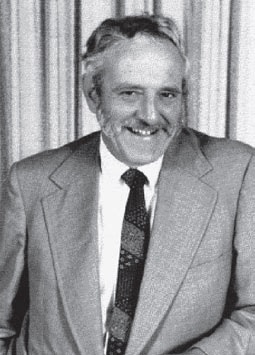
John J. Hicks was second director of National Photographic Interpretation Center (NPIC). Hicks was appointed as the Director of NPIC in July 1973,after retirement of Arthur C. Lundahl,first director of NPIC. He served as the Director of NPIC from July 1973 to May 1978.
References
- ↑ "Jeffrey D. Grant Vice Chairman, Space Foundation -". Space Foundation. Retrieved February 24, 2024.
- ↑ "Jeffrey D. Grant". fit.edu. December 28, 2021. Retrieved February 24, 2024.
- ↑ "MR. JEFFREY D. GRANT". aerospace.org. Retrieved 24 February 2024.