Related Research Articles
Robert Hinrichs Bates is an American political scientist specializing in comparative politics. He is Eaton Professor of the Science of Government in the Departments of Government and African and African American Studies at Harvard University. From 2000–2012, he served as Professeur associé, School of Economics, University of Toulouse.

Jane Ellen Buikstra is an American anthropologist and bioarchaeologist. Her 1977 article on the biological dimensions of archaeology coined and defined the field of bioarchaeology in the US as the application of biological anthropological methods to the study of archaeological problems. Throughout her career, she has authored over 20 books and 150 articles. Buikstra's current research focuses on an analysis of the Phaleron cemetery near Athens, Greece.
Janet Roitman is an American anthropologist. She is the co-founder of the Platform Economies Research Network. Roitman is a professor at RMIT University, an Associate Investigator with the Centre of Excellence for Automated Decision-Making and Society (ADM+S), and co-Director of the Digital Ethnography Research Centre. She is also a member of the Council of Advisors for the Platform Cooperativism Consortium, New York.

Jean Comaroff is Professor of African and African American Studies and of Anthropology, Oppenheimer Fellow in African Studies at Harvard University. She is an expert on the effects of colonialism on people in Southern Africa. Until 2012, Jean was the Bernard E. & Ellen C. Sunny Distinguished Service Professor of Anthropology and of Social Sciences at the University of Chicago and Honorary Professor of Anthropology at the University of Cape Town.
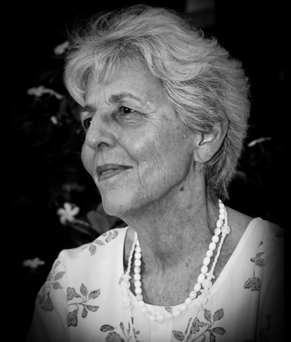
Olga Francesca Linares was a Panamanian–American academic anthropologist and archaeologist, and senior staff scientist (emerita) at the Smithsonian Tropical Research Institute (STRI) in Panama, who supported much of her research throughout her career. She is well known for her work on the cultural ecology of Panama, and more recently in the Casamance region of Southern Senegal. She is also concerned with the social organization of agrarian systems as well as the relationship between "ecology, political economy, migration and the changing dynamics of food production among rural peoples living in tropical regions".

Martha Alter Chen is an American academic, scholar and social worker, who is presently a lecturer in public policy at the Harvard Kennedy School and senior advisor of the global research-policy-action network WIEGO and a member of the Advisory Board of the United Nations University World Institute for Development Economics Research (UNU-WIDER). Martha is a development practitioner and scholar who has worked with the working poor in India, South Asia, and around the world. Her areas of specialization are employment, poverty alleviation, informal economy, and gender. She lived in Bangladesh working with BRAC, one of the world's largest non-governmental organizations, and in India, as field representative of Oxfam America for India and Bangladesh for 15 years.

Kathryn J. Edin, is an American sociologist and a professor of sociology and public affairs at the Princeton School of Public and International Affairs at Princeton University. She specializes in the study of people living on welfare. Two of her books are Making ends meet: how single mothers survive welfare and low-wage work, and Promises I can keep: why poor women put motherhood before marriage.
Virginia Dominguez is a political and legal anthropologist. She is currently the Edward William and Jane Marr Gutgsell Professor of Anthropology at the University of Illinois at Urbana-Champaign.

Sarah Francesca Green is a professor of social and cultural anthropology at the University of Helsinki. She is a specialist on borders, spatial relations, gender and sexuality, and information and communications technologies. She has lived in Greece, the UK, US, Italy and currently lives in Helsinki, Finland. In September 2016, Green was awarded a European Research Council (ERC) Advanced Grant to develop new research in the Mediterranean region. She was also awarded an Academy of Finland Project, called Transit, Trade and Travel, which also concerns the Mediterranean, though its focus is different.
Lenore Hilda Manderson is an Australian medical anthropologist. She is Professor of Medical Anthropology in the Faculty of Medicine, Nursing and Health Sciences, and the School of Political and Social Inquiry, Faculty of Arts, at Monash University, Australia.
Sara Sweezy Berry is an American scholar of contemporary African political economies, professor of history at Johns Hopkins University and co-founder of the Center for Africana Studies at Johns Hopkins.

Melissa Leach, is a British geographer and social anthropologist. She has been the Executive Director of the Cambridge Conservation Initiative since June 2024. She studies sustainability and development concerns in policy-making and has a focus on the politics of science and technology of Africa. She was previously the Director of the Institute of Development Studies (2014-2024) located on the University of Sussex campus.

Janet Carsten is an anthropologist and professor currently employed at the University of Edinburgh. Carsten studies social and cultural anthropology. She is the daughter of the British historian Francis Ludwig Carsten.
Shirley G. Ardener is a pioneer of research on women and a committed anthropological researcher working with Bakweri people in Cameroon since the 1950s, initially with her husband Edwin Ardener (1927–1987).
Adia Benton is an American cultural and medical anthropologist whose research concerns how care is provided in humanitarian emergencies and development projects. Benton is currently an associate professor of anthropology and African Studies at Northwestern University.
Larissa Adler Lomnitz was a French-born Chilean-Mexican social anthropologist, researcher, professor, and academic. After living in France, Colombia, and Israel, she received Chilean nationality by marriage and Mexican nationality by residence.
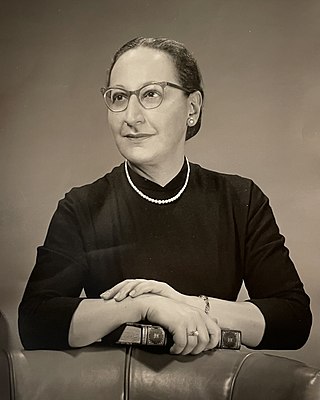
Ethel M. Albert was an American ethnologist. Albert conducted ethnological research related to speech, values, and ethics, employing a cross-cultural approach studying different social classes, ethnic groups, and locations. Albert conducted research with the Navajo (Diné) in the American southwest and the Rundi people in the Republic of Burundi. Albert is most well known among late twentieth-century American semiotics researchers for reviving semiotics in the American university curriculum.
Deborah James, is a South African anthropologist and academic, who specialises in South Africa, economic anthropology, political anthropology, and ethnography.
References
- ↑ David Schoenbrun: Jane I. Guyer (1943–2024): A singular student of economic life and enthusiastic supporter of the careers of others. PNAS, Vol. 121 (41), September 26, 2024, e2418097121. doi:10.1073/pnas.2418097121.
- 1 2 Reed, Ann M. (8 May 1998). "Jane I. Guyer: The Contributions of a Scholar". Indiana University. Retrieved 28 June 2012.
- ↑ Exhibit guide Archived 2014-02-05 at the Wayback Machine
