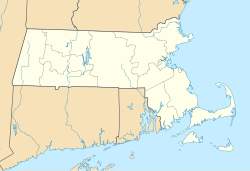
The Bolton Center Historic District is the historic center of the town of Bolton, Massachusetts. The district encompasses what is essentially a linear town center, strung out principally along Main Street, with a well-preserved collection of residential and civic architecture spanning more than two centuries. The district was listed on the National Register of Historic Places in 1996.

The Abbott Street School is a historic school building at 36 Abbott Street in Worcester, Massachusetts. Built in 1894, it is a good local example of Romanesque Revival architecture. It served as a public school until 1981, after which it was converted to residential use. The building was listed on the National Register of Historic Places in 1980.

The Myrtle Street School is a historic school at 64 Myrtle Street in the Indian Orchard neighborhood of Springfield, Massachusetts. Built in stages between 1868 and 1915, it encapsulates changing trends in school design over that period of time, and is a good example of a school building with Second Empire and Classical Revival features. It was listed on the National Register of Historic Places in 1985. It has been converted to residential use.

The Martin W. Carr School is a historic school building located at 25 Atherton Street, in the Spring Hill area of Somerville, Massachusetts. Built in 1898, it is a prominent local example of Colonial and Renaissance Revival architecture, and the only known surviving work of local architect Aaron H. Gould. It served the local neighborhood as a school until 1980, and was subsequently converted into condominiums. It was listed on the National Register of Historic Places in 1984.

The Albert Ridyard Three-Decker is a historic triple decker in Worcester, Massachusetts. Built in 1914, it was listed on the National Register of Historic Places in 1990 for its exterior Colonial Revival styling, most of which has since been removed or covered over.

The Philip Duke Three-Decker is a historic triple decker house in Worcester, Massachusetts. Built c. 1888, the house is an early representative of triple-decker development in the Vernon Hill area of southern Worcester. It was listed on the National Register of Historic Places in 1990, but has lost some of the architectural elements important to its listing since then.

The William Trowbridge Forbes House was a historic house at 23 Trowbridge Road in Worcester, Massachusetts. Built in 1898 to a design by Barker & Nourse, it was one of the city's finest examples of Tudor Revival architecture, and was home to Esther Forbes, author of Johnny Tremain. The house was listed on the National Register of Historic Places in 1980. The house was demolished in November 2003.

The Upsala Street School is a historic school building at 36 Upsala Street in Worcester, Massachusetts. Built in 1894 and twice enlarged, it is a good local example of a Romanesque Revival school building, designed by local architect George Clemence. It was listed on the National Register of Historic Places in 1980. The building has been converted into senior living apartments.

Hammond Heights is an historic neighborhood subdivision on the west side of Worcester, Massachusetts. It includes properties along Germain, Haviland, Highland, and Westland Streets and Institute Road, most of which were built between 1890 and 1918, and is a good example of a turn-of-the-century residential subdivision, with a diversity of period architectural styles. The district was listed on the National Register of Historic Places in 1980.

The Harris-Merrick House is an historic house at located 41 Fruit Street in Worcester, Massachusetts. Built sometime between 1832 and 1844, it is a good example of Greek Revival architecture, and a rare surviving element of the early residential development west of downtown Worcester. The house was listed on the National Register of Historic Places on March 5, 1980.

Indian Hill-North Village is a residential historic district encompassing the largest planned worker housing community in Worcester, Massachusetts. Located in the suburban northern part of the city, it was developed in the 1910s by the Norton Company, then the city's largest employer. The district was listed on the National Register of Historic Places in 1980.

The Malvern Road School is a historic school building on Malvern Road and Southbridge Street in Worcester, Massachusetts. Built in 1896 and enlarged in 1907, it is a high quality example of Beaux Arts and Renaissance Revival architecture. It is also significant as a well-preserved work of the local architectural firm Fuller & Delano. The building was listed on the National Register of Historic Places in 1984. The building has been converted to residential condominiums.
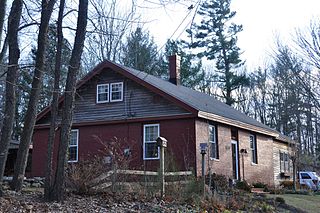
Dennison School House is a historic school building at Dennison Lane in Southbridge, Massachusetts. Built about 1849, it is the city's only surviving rural district schoolhouse built in brick. The building was listed on the National Register of Historic Places in 1989.
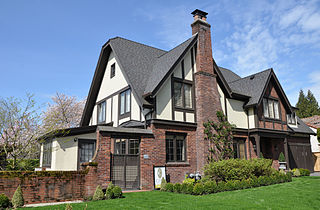
The James Hickey House is a house in the Eastmoreland neighborhood of southeast Portland, Oregon. The Tudor Revival style house was finished in 1925 and was added to the National Register of Historic Places in 1990. It was built by the architectural firm Lawrence & Holford and was one of architect Ellis Lawrence's designs for a building contractor named James Hickey. The house was built with the intention of being a model home in the Eastmoreland neighborhood.

The William Parker Straw House is a historic house at 282 North River Road in Manchester, New Hampshire. It was built in 1923 for William Parker Straw, a leading executive of the Amoskeag Manufacturing Company and president of the Amoskeag Bank, and is the city's finest example of Tudor Revival architecture. It was listed on the National Register of Historic Places in 1987.

The English High School is a historic former school building at 498 Essex Street in downtown Lynn, Massachusetts. Built in 1892 and enlarged in 1916, it served as the city's second high school until 1932, when the present Lynn English High School building on Goodridge Street was built. This building was listed on the National Register of Historic Places for its architecture in 1986. A total of five Holman K. Wheeler structures in Lynn are listed on the National Register. After serving for many years as a junior high school, it was converted into residential units.

The Duprey Building is a historic commercial building at 16 Norwich Street in downtown Worcester, Massachusetts. Built in 1926, it is a good example of a commercial Classical Revival building, built by a prominent local developer. The building was listed on the National Register of Historic Places in 1980. It is now mostly occupied by residences.

The Dudley Hill Historic District encompasses the historic heart of Dudley, Massachusetts. The historic district is essentially linear, extending along Center Street between Dudley Hill and Tanyard Roads. This area was the first to be settled in the mid-17th century, and is composed mainly of civic, religious, and residential buildings dating to the 18th and 19th centuries. The district listed on the National Register of Historic Places in 2001.

The Dale and Ethan Allen Streets Historic District of Worcester, Massachusetts encompasses a collection of apartment houses. Located along Dale, Ethan Allen, and Allendale Streets southwest of downtown Worcester, these buildings were built between 1910 and 1930, and are a stylistically diverse collection, including examples of Classical Revival, Colonial Revival, Tudor Revival, and Craftsman architecture. The district was listed on the National Register of Historic Places in 2019.

The Saint Joseph's Home for Working Girls is an historic social services building at 52 High Street in downtown Worcester, Massachusetts. Completed in 1924, it was operated for many years as a home for needy women by the Sisters of Mercy. Since 2009 it has been home to Abby's House, which continues the same mission. The building, designed by Edward Fitzgerald, was listed on the National Register of Historic Places in 2021.