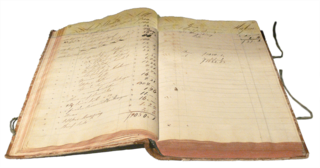
An accountant is a practitioner of accounting or accountancy. Accountants who have demonstrated competency through their professional associations' certification exams are certified to use titles such as Chartered Accountant, Chartered Certified Accountant or Certified Public Accountant, or Registered Public Accountant. Such professionals are granted certain responsibilities by statute, such as the ability to certify an organization's financial statements, and may be held liable for professional misconduct. Non-qualified accountants may be employed by a qualified accountant, or may work independently without statutory privileges and obligations.
The International Accounting Standards Committee (IASC) was founded in June 1973 in London at the initiative of Sir Henry Benson, former president of the Institute of Chartered Accountants in England and Wales. The IASC was created by national accountancy bodies from a number of countries with a view to harmonizing the international diversity of company reporting practices. Between its founding in 1973 and its dissolution in 2001, it developed a set of International Accounting Standards (IAS) that gradually acquired a degree of acceptance in countries around the world. Although the IASC came to include some organizations representing preparers and users of financial statements, it largely remained an initiative of the accountancy profession. On 1 April 2001, it was replaced by the International Accounting Standards Board (IASB), an independent standard-setting body. The IASB adopted the extant corpus of IAS which it continued to develop as International Financial Reporting Standards.
A financial audit is conducted to provide an opinion whether "financial statements" are stated in accordance with specified criteria. Normally, the criteria are international accounting standards, although auditors may conduct audits of financial statements prepared using the cash basis or some other basis of accounting appropriate for the organization. In providing an opinion whether financial statements are fairly stated in accordance with accounting standards, the auditor gathers evidence to determine whether the statements contain material errors or other misstatements.

Forensic accounting, forensic accountancy or financial forensics is the specialty practice area of accounting that investigates whether firms engage in financial reporting misconduct, or financial misconduct within the workplace by employees, officers or directors of the organization. Forensic accountants apply a range of skills and methods to determine whether there has been financial misconduct by the firm or its employees.
Chartered accountants were the first accountants to form a professional accounting body, initially established in Scotland in 1854. The Edinburgh Society of Accountants (1854), the Glasgow Institute of Accountants and Actuaries (1854) and the Aberdeen Society of Accountants (1867) were each granted a royal charter almost from their inception. The title is an internationally recognised professional designation; the certified public accountant designation is generally equivalent to it. Women were able to become chartered accountants only following the Sex Disqualification (Removal) Act 1919 after which, in 1920, Mary Harris Smith was recognised by the Institute of Chartered Accountants in England and Wales and became the first woman chartered accountant in the world.
The Institute of Chartered Accountants of India, abbreviated as ICAI, is India's largest professional accounting body under the administrative control of Ministry of Corporate Affairs, Government of India. It was established on 1 July 1949 as a statutory body under the Chartered Accountants Act, 1949 enacted by the Parliament for promotion, development and regulation of the profession of Chartered Accountancy in India.

The Institute of Financial Analysts of India (IFAI) was established in 1984 as a non-profit educational society in Hyderabad, Telangana, India. The institution has been offering education to students across India through its various programs in the field of higher education. The institution was founded by N. J. Yasaswy, Besant C. Raj and Dr. Prasanna Chandra, the Director of Centre for Financial Management.

Income tax in India is governed by Entry 82 of the Union List of the Seventh Schedule to the Constitution of India, empowering the central government to tax non-agricultural income; agricultural income is defined in Section 10(1) of the Income-tax Act, 1961. Income-tax law consists of the 1961 act, Income Tax Rules 1962, Notifications and Circulars issued by the Central Board of Direct Taxes (CBDT), annual Finance Acts, and judicial pronouncements by the Supreme and high courts.
The Association of International Accountants (AIA) is a professional accountancy body. It was founded in the UK in 1928 and since that date has promoted the concept of ‘international accounting’ to create a global network of accountants in over 85 countries worldwide.

T. N. Manoharan is a chartered accountant, former president of the Institute of Chartered Accountants of India (ICAI) and Ex-chairman of Canara Bank, the fourth largest public sector bank in India.
National Advisory Committee on Accounting Standards (NACAS) is a body set up under section 210A of the Companies Act, 1956 by the Government of India. It advises the Central Government on the formulation and laying down of accounting policy and accounting standards for adoption by companies . The advisory committee shall consist of the following members, namely: 1. A chairperson who shall be a person of eminence well versed in accountancy, finance, business administration, business law, economics or similar Discipline; 2. One member each nominated by The Institute of Chartered Accountants of India constituted under the Chartered Accountants Act, 1949, The Institute of Cost and Work Accountants Act, 1959 and The Institute of Company Secretaries of India constituted under the Company secretaries Act 1980. 3. One representative each of the Central government, Reserve Bank of India, Comptroller & Auditor General of India to be nominated by it. 4. A person who holds or has held the office of professor in Accountancy, Finance or Business Management in any University or deemed university; 5. The Chairman of the Central Board of Direct Tax (India) constituted under the Central Board of Revenue Act, 1963 (India) or his nominee; 6. Two members to represent the chambers of commerce and industry to be nominated by The Central Government of India; and 7. One representative of the Security and Exchange Board of India to be nominated by it.
Indian Accounting Standard (abbreviated as Ind_AS) is the accounting standard adopted by companies in India and issued under the supervision of Accounting Standards Board (ASB) which was constituted as a body in the year 1977. ASB is a committee under Institute of Chartered Accountants of India (ICAI) which consists of representatives from government department, academics, other professional bodies viz. ICAI, representatives from ASSOCHAM, CII, FICCI, etc. ICAI is an independent body formed under an act of parliament.
R. Narayanaswamy is a retired Indian accountant and educator. He was Professor of Finance at the Indian Institute of Management Bangalore (IIMB) between 1986 and 2021.
Indian tax forms are used to document information in compliance with the Income Tax Act of 1961 and in accordance with the Income Tax Rules, which govern the process of filing income tax returns in India.
General anti-avoidance rule (GAAR) is an anti-tax avoidance law under Chapter X-A of the Income Tax Act, 1961 of India. It is framed by the Department of Revenue under the Ministry of Finance. GAAR was originally proposed in the Direct Tax Code 2009 and was targeted at arrangements or transactions made specifically to avoid taxes. GAAR provisions were also present in the Direct Tax Code 2010 and Direct Tax Code 2013. However, the Direct Tax Code did not see the light of the day and was not implemented in India. GAAR was finally introduced in India by then Finance Minister, Pranab Mukherjee, on 16 March 2012 during the Budget session introduced vide Finance Act, 2012. However, it was considered controversial because it had provisions to seek taxes from past overseas deals involving local assets retrospectively.
Auditing in India is a system of independently reviewing the records/activities and expressing an opinion thereon.
Narain Dass Gupta is Member of Parliament Rajya Sabha from NCT of Delhi, practicing chartered accountant, and former president of the Institute of Chartered Accountants of India (ICAI). He is a financial policy expert who has written several books on taxation.
Forensic Accounting and Investigation Standards by ICAI are a set of Forensic Accounting and Investigation Standards issued by The Institute of Chartered Accountants of India (ICAI) for preventing the rising issues of accounting, financial and loan irregularities. The standards are designed to be helpful for banks, regulators, corporate entities, and enforcement agencies such as the Economic offense Wing, Enforcement Directorate, Serious Fraud Investigation Office, Central Bureau of Investigation and Reserve Bank of India (RBI) and users of these reports on standardising the activities and to highlight the fundamental principles to be followed by members while auditing and acts as performance benchmarks. The standards lays down the primary qualitative measures for conducting investigations. The full set of FAIS standards drafted for the forensic professionals by The Institute of Chartered Accountants of India (ICAI) with the help of group of professionals and experts is the first in the accounting world.
In India, a Chartered Accountant is a qualified accountant of the Institute of Chartered Accountants of India. Chartered Accountants have knowledge of various subjects like accounting, auditing, corporate laws, costing and various aspects of direct and indirect taxation.
