Plot
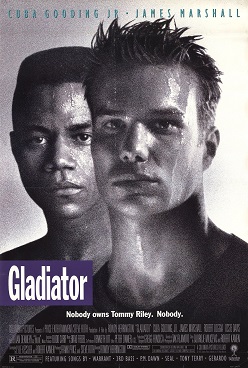
Tommy Riley and his father John have just moved to start a new life. John has accumulated many gambling debts, but has found a new job that requires him to travel extensively, leaving Tommy alone at home. Tommy also has a hard time fitting in at school, having crossed gang members. He takes a job at a local diner and enters into a romantic relationship with Dawn, the daughter of the owner, but is jumped by the gang members outside the restaurant. Seeing how well Tommy is able to fight, local boxing promoter Pappy Jack offers Tommy a chance to fight in an illegal underground boxing operation. When two men arrive announcing that John owes a large sum of money to pay off gambling debts, Jack convinces his boss, boxing promoter Jimmy Horn, to buy out the debt, which forces Tommy to pay off John's debts by boxing.
Tommy enjoys a great deal of success and develops a friendship with Romano Essadro and Abraham "Lincoln" Haines, two fellow fighters. However, he continues to be harassed by gang members, and discovers that two of them, Black Death and Shortcut, are boxers who fight dirty, using elbows, kicks, knees and low blows, and count on the crooked refs to overlook the clear violations. Tommy defeats Black Death in the ring, but Shortcut hides a fluid in his gloves, which he uses to blind Romano during a match. Unable to defend himself, Romano is brutally beaten in the ring and is declared brain dead by doctors. Shortcut later tries the same trick on Tommy, but Tommy has learned to fight dirty, and defeats Shortcut.
Meanwhile, Lincoln shows signs of possible brain damage after narrowly defeating heavyweight fighter Wolfe and is told to quit fighting for at least 60 days or else suffer permanent brain damage. Despite this, Horn arranges a match between Lincoln and Tommy. Afraid of killing Lincoln, Tommy takes a beating until the two are unwilling to continue the match. In revenge, Horn, a former boxer who retired with only one defeat, punches Lincoln severely enough to knock him out of the ring.
Furious, Tommy challenges Horn to a match. If Horn wins, Tommy will continue to work for him indefinitely, but if Tommy wins, John's debt is wiped clean. Horn accepts on the condition that they fight bare-knuckle. Horn's vast experience with boxing initially gives him the upper hand, and Horn's confidence influences him to play with and humiliate Tommy as a result. Tommy eventually uses the various forms of advice he has received throughout his brief boxing experience to outwit Horn. He fakes a broken hand to give Horn even more confidence, and then uses the element of surprise to defeat Horn, freeing himself from Horn's contract.
This page is based on this
Wikipedia article Text is available under the
CC BY-SA 4.0 license; additional terms may apply.
Images, videos and audio are available under their respective licenses.