 | This article needs additional citations for verification .(September 2023) |
Ghatak is an Indian family name and surname found amongst Bengali Brahmins.
| | This article needs additional citations for verification .(September 2023) |
Ghatak is an Indian family name and surname found amongst Bengali Brahmins.
Ghataks (literally, one who makes things happen) or matchmakers were middleman who established links between the two parties in a marriage. In the past it was not the custom of Indian society, especially of Bengali society, to allow boys and girls to mix freely. This is why the services of Ghataks were widely used to arrange marriages. Many Ghataks were professionals, and matchmaking was their source of livelihood. When the matchmaking resulted in a wedding, Ghataks used to be rewarded by both parties.[ citation needed ]
In the past, educated and respectable people used to take up matchmaking as a profession. They were known as 'Kulacharya' and used to maintain books with detailed histories of families. Some of these books have been used as sources for writing the history of Bengal. Some of the well-known matchmakers were Edu Mishra, Hari Mishra (c 13th century), Dhruvananda Mishra, Debibar Ghatak (15th century) and Nulo Panchanan (18th century). They used to enjoy a great deal of social prestige.[ citation needed ]
As of 2014, 78.2% of all known bearers of the surname Ghatak were residents of India and 19.6% were residents of Bangladesh. In India, the frequency of the surname was higher than national average in the following states and union territories: [1]
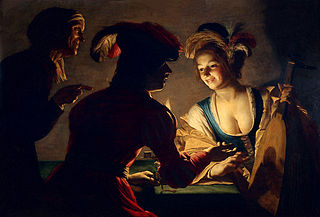
Matchmaking is the process of matching two or more people together, usually for the purpose of marriage, in which case the matchmaker is also known as a marriage broker. The word is also used in the context of sporting events such as boxing, in business, in online video games and in pairing organ donors.

Mahasweta Devi was an Indian writer in Bengali and an activist. Her notable literary works include Hajar Churashir Maa, Rudali, and Aranyer Adhikar. She was a leftist who worked for the rights and empowerment of the tribal people of West Bengal, Bihar, Madhya Pradesh and Chhattisgarh states of India. She was honoured with various literary awards such as the Sahitya Akademi Award, Jnanpith Award and Ramon Magsaysay Award along with India's civilian awards Padma Shri and Padma Vibhushan.
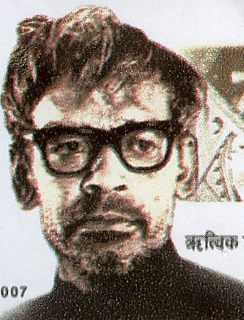
Ritwik Kumar Ghatak was a noted Indian film director, screenwriter and playwright. Along with prominent contemporary Bengali filmmakers like Satyajit Ray, Tapan Sinha and Mrinal Sen, his cinema is primarily remembered for its meticulous depiction of social reality, partition and feminism. He won the National Film Award's Rajat Kamal Award for Best Story in 1974 for his Jukti Takko Aar Gappo and Best Director's Award from Bangladesh Cine Journalist's Association for Titash Ekti Nadir Naam. The Government of India honoured him with the Padma Shri for Arts in 1970.
Mukherjee, also Mukerjee, Mookerjee, Mukerji, Mukherji, Mukhujje or Mookherjee, is a Bengali Hindu Kulin Brahmin surname originating from the Bengal region of the Indian subcontinent. The traditional Bengali version is Mukhopaddhae, which is sometimes written Mukhopadhyay.
Chakraborty is a surname of Bengali Hindus and Assamese Hindus of India and Bangladesh, the surname is used by people of the Bengali Brahmin and Assamese Brahmin communities.
Das is a common last name in South Asia, among adherents of Hinduism and Sikhism, as well as those who converted to Islam or Christianity. It is a derived from the Sanskrit word Dasa meaning servant, devotee, or votary. "Das" may be inferred to be one who has surrendered to God. The surname is often used by those in the Vaishnav community.
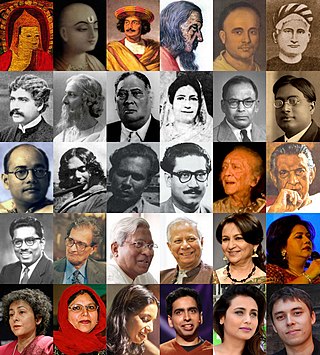
Bengalis, also rendered as Bangalee or the Bengali people, are an Indo-Aryan ethnolinguistic group originating from and culturally affiliated with the Bengal region of South Asia. The current population is divided between the independent country Bangladesh and the Indian states of West Bengal and Tripura, Barak Valley, Andaman and Nicobar Islands, Jharkhand and part of Meghalaya and Manipur. Most of them speak Bengali, a language from the Indo-Aryan language family.
Ghosh or Ghose is a native Bengali surname that is found among the Bengali Hindu community of India and Bangladesh.
Arranged marriage is a tradition in the societies of the Indian subcontinent, and continue to account for an overwhelming majority of marriages in the Indian subcontinent. Despite the fact that romantic love is "wholly celebrated" in both Indian mass media and folklore, and the arranged marriage tradition lacks any official legal recognition or support, the institution has proved to be "surprisingly robust" in adapting to changed social circumstances and has defied predictions of decline as India modernized.
Majumdar is a native Bengali surname that is used by the both Bengali Hindu and Bengali Muslim community of Indian states of West Bengal, Assam and as well as of Bangladesh.
Dasgupta is a common Bengali Hindu last name or surname that is used by the Bengalis of West Bengal, Assam, Tripura and Bangladesh. The surname is found among the members of the Baidya caste of Bengal.
Pal, alternative form "Paul", is a common surname found in India and Bangladesh. It is traditionally believed that 'Pal' originated from the Sanskrit pala meaning protector or keeper. It is also occasionally found in other countries.
Channa is a village located in Galsi II CD Block in Bardhaman Sadar North subdivision of Purba Bardhaman district in West Bengal, India. It is famous for the ashram of Niralamba Swami, a famous saint.
Sengupta is a Bengali surname found among the Bengalis of West Bengal, Assam, Tripura and Bangladesh. They belong to the Baidya caste. The surname is a compound of Sen and Gupta.
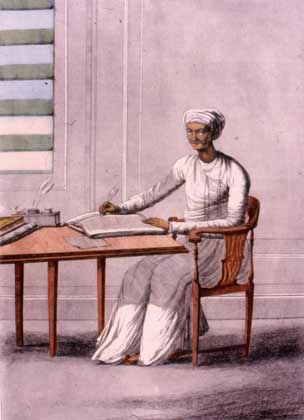
Bengali Kayastha is a Bengali Hindu caste, and is one of the main subgroups of the Kayastha community. The historical caste occupation of Kayasthas throughout India has been that of scribes, administrators, ministers and record-keepers; the Kayasthas in Bengal, along with Brahmins and Baidyas, are regarded among the three traditional higher castes that comprise the "upper layer of Hindu society." During the British Raj, the Bhadraloks of Bengal were drawn primarily, but not exclusively, from these three castes, who continue to maintain a collective hegemony in West Bengal.

Nagendranath Basu was an archaeologist, encyclopaedist and a nationalist social historian of Bengal.
Barman or its variants Burman, Varman, , Varma, Verma, are surnames used in the Indian subcontinent.
Deb or Dev is a Bengali Hindu last name or surname, commonly used by the Bengalis of West Bengal, Tripura, Assam and Bangladesh. The surname is found among the Bengali Kayastha community of India and Bangladesh.
Sarkar is a surname among the people of the Indian subcontinent. It was an honorific title given to landlords/zamindars of East India, irrespective of their religious affiliation, under the Mughal Empire and even in Sher Shah's reign, as part of the erstwhile Persian nobility. At present there are Sarkar families in different parts of West Bengal, India as well as in Bangladesh. The term is used in both Bengali Hindu and Muslim communities.
Ghatak Pakhi Bhai is a Bangladeshi matchmaker and spiritual teacher who have a matrimonial agency in the country. Through him the profession of matchmaking became popular in Bangladesh and he maintained a monopoly in this business for thirty decades in the country.
