Related Research Articles
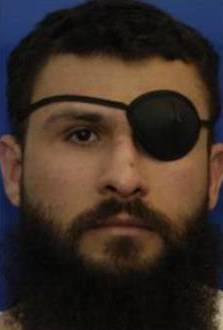
Abu Zubaydah is a Palestinian citizen born in Saudi Arabia currently held by the U.S. in the Guantanamo Bay detention camp in Cuba. He is held under the authority of Authorization for Use of Military Force Against Terrorists (AUMF).

Abd al-Rahim Hussein Muhammed Abdu al-Nashiri is a Saudi Arabian citizen alleged to be the mastermind of the bombing of USS Cole and other maritime attacks. He is alleged to have headed al-Qaeda operations in the Persian Gulf and the Gulf states prior to his capture in November 2002 by the CIA's Special Activities Division.
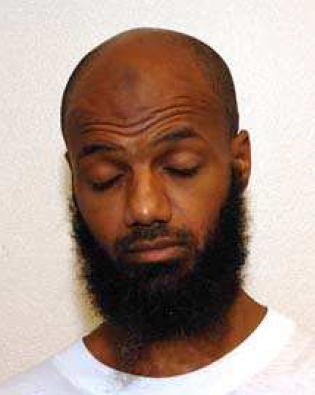
Binyam Ahmed Mohamed, also referred to as Benjamin Mohammed, Benyam Mohammed or Benyam Mohammed al-Habashi, is an Ethiopian national and United Kingdom resident, who was detained as a suspected enemy combatant by the US Government in Guantanamo Bay prison between 2004 and 2009 without charges. He was arrested in Pakistan and transported first to Morocco under the US's extraordinary rendition program, where he claimed to have been interrogated under torture.

Omar Amer Deghayes is a Libyan citizen who had legal residency status with surviving members of his family in the United Kingdom since childhood. He was arrested in Pakistan in 2002. He was held by the United States as an enemy combatant at Guantanamo Bay detention camp from 2002 until December 18, 2007. He was released without charges and returned to Britain, where he lives. His Guantanamo Internment Serial Number was 727. Deghayes says he was blinded permanently in one eye, after a guard at Guantanamo gouged his eyes with his fingers. Deghayes was never charged with any crime at Guantanamo.
Bisher Amin Khalil Al-Rawi is an Iraqi citizen, who became a resident of the United Kingdom in the 1980s. Arrested in Gambia on a business trip in November 2002, he was transferred to United States military custody and held until 30 March 2007, in extrajudicial detention in the United States Guantanamo Bay detention camp at its naval base in Cuba. His Guantanamo Internment Serial Number was 906. The Department of Defense reports that Al Rawi was born on 23 December 1960, in Baghdad, Iraq.

Jamil Abdul Latif el-Banna, born 28 May 1962, is a Jordanian of Palestinian origin, with refugee status in the United Kingdom, who had been living in north-west London. He was abducted in November 2002 by the CIA from the Gambia while on a business trip, and suffered extraordinary rendition to Bagram, Afghanistan, where he was held and interrogated by the CIA until March 2003. He was transferred to military custody at Guantanamo Bay detainment camp in March 2003, and held there until 19 December 2007.
Extrajudicial prisoners of the United States, in the context of the early twenty-first century War on Terrorism, refers to foreign nationals the United States detains outside of the legal process required within United States legal jurisdiction. In this context, the U.S. government is maintaining torture centers, called black sites, operated by both known and secret intelligence agencies. Such black sites were later confirmed by reports from journalists, investigations, and from men who had been imprisoned and tortured there, and later released after being tortured until the CIA was comfortable they had done nothing wrong, and had nothing to hide.
Ghassan Abdallah Ghazi al-Sharbi is a Saudi citizen who was held in extrajudicial detention in the United States Guantanamo Bay detention camps, in Cuba. His Guantanamo Internment Serial Number was 682.
Gitanjali S. Gutierrez is an American lawyer. She is the lawyer for the defendant Mohammed al-Qahtani, who is held at Camp Delta in Guantanamo Bay by the United States Military. Gitanjali Gutierrez is an attorney with the Center for Constitutional Rights, a New York–based nonprofit organization.
Noor Uthman Muhammed is a citizen of Sudan who was confined in the United States Guantanamo Bay detention camp in Cuba where he also served a sentence for terrorism after being convicted by the Guantanamo military commission.
Majid Shoukat Khan is a Pakistani who was the only known legal resident of the United States held in the Guantanamo Bay Detainment Camp. He was a "high value detainee" and was tortured by U.S. intelligence forces.
"Enhanced interrogation techniques" or "enhanced interrogation" was a program of systematic torture of detainees by the Central Intelligence Agency (CIA), the Defense Intelligence Agency (DIA) and various components of the U.S. Armed Forces at remote sites around the world—including Abu Ghraib, Bagram, Bucharest, and Guantanamo Bay—authorized by officials of the George W. Bush administration. Methods used included beating, binding in contorted stress positions, hooding, subjection to deafening noise, sleep disruption, sleep deprivation to the point of hallucination, deprivation of food, drink, and medical care for wounds, as well as waterboarding, walling, sexual humiliation, rape, sexual assault, subjection to extreme heat or extreme cold, and confinement in small coffin-like boxes. A Guantanamo inmate's drawings of some of these tortures, to which he himself was subjected, were published in The New York Times. Some of these techniques fall under the category known as "white room torture". Several detainees endured medically unnecessary "rectal rehydration", "rectal fluid resuscitation", and "rectal feeding". In addition to brutalizing detainees, there were threats to their families such as threats to harm children, and threats to sexually abuse or to cut the throat of detainees' mothers.

Tina Monshipour Foster is an Iranian-American lawyer and director of the International Justice Network.
Rafiq Bin Bashir Bin Jalud al Hami is a citizen of Tunisia, who was formerly held for over seven years without charge or trial in the United States's Guantanamo Bay detention camps, in Cuba. His Guantanamo Internment Serial Number was 892. The Department of Defense reports that he was born on 14 March 1969, in Tunisia.
Noor al-Deen is a citizen of Syria wounded when he was captured by counter-terrorism officials at a raid on a "Faisalabad safe house" when Abu Zubaydah was captured. According to the Washington Post Noor al-Deen, like Abu Zubaydah, was sent to Morocco by the CIA, so he too could be subjected to "enhanced interrogation techniques"
The John Adams Project was established by the American Civil Liberties Union and the National Association of Criminal Defense Lawyers to "support military counsel at Guantanamo Bay." The United States government has detained hundreds of men at the Guantanamo Bay detention camp following the September 11 attacks and the war in Afghanistan.
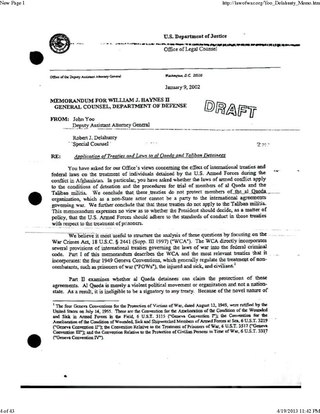
A set of legal memoranda known as the "Torture Memos" were drafted by John Yoo as Deputy Assistant Attorney General of the United States and signed in August 2002 by Assistant Attorney General Jay S. Bybee, head of the Office of Legal Counsel of the United States Department of Justice. They advised the Central Intelligence Agency, the United States Department of Defense, and the President on the use of enhanced interrogation techniques—mental and physical torment and coercion such as prolonged sleep deprivation, binding in stress positions, and waterboarding—and stated that such acts, widely regarded as torture, might be legally permissible under an expansive interpretation of presidential authority during the "War on Terror".
In 2003, a secret compound, known as Strawberry Fields, was constructed near the main Guantanamo Bay detention camps, in Cuba. In August 2010 reporters found that it had been constructed to hold CIA detainees classified as "high value". These were among the many men known as ghost detainees, as they were ultimately held for years for interrogation by the CIA in its secret prisons known as black sites at various places in Europe, the Mideast, and Asia, including Afghanistan.
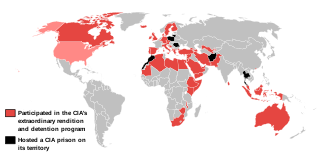
Following the September 11 attacks of 2001 and subsequent War on Terror, the United States Central Intelligence Agency (CIA) established a "Detention and Interrogation Program" that included a network of clandestine extrajudicial detention centers, officially known as "black sites", to detain, interrogate, and often torture suspected enemy combatants, usually with the acquiescence, if not direct collaboration, of the host government.
According to UN experts, the Guantanamo Bay detention facility in Cuba is a site of "unparalleled notoriety" and has been condemned as a site of "unrelenting human rights violations." The facility has been holding prisoners for over 20 years. A document released by the Amnesty International reported ongoing and historic human rights violations at the Guantánamo Bay detention facility.
References
- ↑ George Brent Mickum IV. "Torturing Decocracy". George Washington University. Archived from the original on 2009-03-12.
Brent Mickum, who has practiced law for 23 years, is a partner with Hollingsworth LLP in Washington, D.C.
- 1 2 "George Brent Mickum". Findlaw . Archived from the original on 2011-06-06.
- ↑ Carol D. Leonnig (2004-12-02). "Judge Questions Sweep of Bush's War on Terrorism". Washington Post . p. A04. Archived from the original on 2016-03-04. Retrieved 2008-06-29.
- ↑ OARDEC (2006-05-15). "List of Individuals Detained by the Department of Defense at Guantanamo Bay, Cuba from January 2002 through May 15, 2006" (PDF). United States Department of Defense. Archived from the original (PDF) on September 30, 2007. Retrieved 2007-09-29.
- ↑ "An Interview with Brent Mickum". Islamic Networking. 2005-03-31. Archived from the original on February 14, 2012. Retrieved 2009-03-07.
{{cite news}}: CS1 maint: bot: original URL status unknown (link) - ↑ "George Brent Mickum IV: Attorney, Spriggs & Hollingsworth". George Washington University. 2007-11-19. Archived from the original on March 12, 2009. Retrieved 2009-03-07.
- 1 2 Vikram Dodd (2004-09-28). "'Backdoor' trials for Britons in Guantánamo: Britons face trials". The Guardian . Retrieved 2009-03-07.
- ↑ Brent Mickum (2005-01-12). "Tortured, humiliated and crying out for some justice: Four Guantánamo Britons are coming home. Don't forget those left behind". The Guardian . Retrieved 2009-03-07.
- ↑ Carol Rosenberg (2008-02-27). "After years, captive sees lawyer". Miami Herald. Archived from the original on May 18, 2008. Retrieved 2008-06-28.
- ↑ "George Brent Mickum IV". Spriggs & Hollingsworth. Archived from the original on 2011-06-06. Retrieved 2008-06-28.
- ↑ Carol Cratty (2008-03-17). "Terror detainee falsely held, lawyers say". CNN . Retrieved 2008-06-29.
- ↑ "U.S. Seeks To Keep Detainee From Lawyer". CBS News . 2006-11-04. Archived from the original on 2011-06-04.
A suspected terrorist who spent years in a secret CIA prison should not be allowed to speak to a civilian attorney, the Bush administration argues, because he could reveal the agency's closely guarded interrogation techniques.
- ↑ "U.S. fights detainee access to attorney". USA Today. 2006-11-04. Archived from the original on 2012-10-26.
- ↑ George Brent Mickum IV (2009-03-30). "The truth about Abu Zubaydah: The Bush administration's false claim that my client was a top al-Qaida official has led to his imprisonment and torture". The Guardian . Archived from the original on 2009-04-01.