Related Research Articles
Psychodynamic psychotherapy and psychoanalytic psychotherapy are two categories of psychological therapies. Their main purpose is revealing the unconscious content of a client's psyche in an effort to alleviate psychic tension, which is inner conflict within the mind that was created in a situation of extreme stress or emotional hardship, often in the state of distress. The terms "psychoanalytic psychotherapy" and "psychodynamic psychotherapy" are often used interchangeably, but a distinction can be made in practice: though psychodynamic psychotherapy largely relies on psychoanalytical theory, it employs substantially shorter treatment periods than traditional psychoanalytical therapies. Psychodynamic psychotherapy is evidence-based; the effectiveness of psychoanalysis and its relationship to facts is disputed.
The Columbia University Center for Psychoanalytic Training and Research was founded in 1945. It is part of the Department of Psychiatry of the Columbia University College of Physicians and Surgeons.
Dr. Robert Glick is a professor of psychiatry at Columbia University College of Physicians and Surgeons, and a Supervising and Training Psychoanalyst at the Columbia University Center for Psychoanalytic Training and Research; he was formerly a director of the Center.
Theodore Shapiro is a psychiatrist and psychoanalyst in New York, where he is a professor emeritus in psychiatry and pediatrics at Weill Cornell Medical College and the Payne Whitney Psychiatric Clinic. He is a faculty member of the Columbia University Center for Psychoanalytic Training and Research and a training and supervising psychoanalyst at the New York Psychoanalytic Institute.
Intensive short-term dynamic psychotherapy (ISTDP) is a form of short-term psychotherapy developed through empirical, video-recorded research by Habib Davanloo.
Interpersonal psychotherapy (IPT) is a brief, attachment-focused psychotherapy that centers on resolving interpersonal problems and achieving symptomatic recovery. IPT is an empirically supported treatment (EST) that follows a highly structured and time-limited approach. Interpersonal therapy is intended to be completed within 12–16 weeks. IPT is based on the principle that relationships and life events impact mood and vice versa. The treatment was developed by Gerald Klerman and Myrna Weissman in order to treat major depression in the 1970s and has since been adapted for other mental disorders. IPT is an empirically validated intervention for depressive disorders and is more effective when used in combination with psychiatric medications.
The conversational model of psychotherapy was devised by the English psychiatrist Robert Hobson, and developed by the Australian psychiatrist Russell Meares. Hobson listened to recordings of his own psychotherapeutic practice with more disturbed clients, and became aware of the ways in which a patient's self—their unique sense of personal being—can come alive and develop, or be destroyed, in the flux of the conversation in the consulting room.

The Austen Riggs Center is a psychiatric treatment facility located in Stockbridge, Massachusetts. It was founded in 1913 as the Stockbridge Institute for the Study and Treatment of Psychoneuroses by Austen Fox Riggs. The institution was renamed in his honor on July 21, 1919.
Richard B. Gartner is a clinical psychologist who was trained both as a family therapist and an interpersonal psychoanalyst. One of the founders of MaleSurvivor: the National Organization on Male Sexual Victimization, he is a Past President of the organization and now chairs its advisory board. He is known for his research and clinical work in the area of child sexual abuse against boys and its aftermath for them as men.
Susan W. Coates is an American psychoanalyst, who has worked on gender dysphoria in children and early childhood trauma.
The American Academy of Psychodynamic Psychiatry and Psychoanalysis (AAPDPP) is a scholarly society including psychiatrists interested in all aspects of psychodynamic psychiatry.
Richard C. Friedman was an academic psychiatrist, a Clinical Professor of Psychiatry at Weill Cornell Medical College, and a faculty member at Columbia University. He has conducted research in the endocrinology and the psychodynamics of homosexuality, especially within the context of psychoanalysis. Friedman was born in The Bronx, New York.
Supportive psychotherapy is a psychotherapeutic approach that integrates various therapeutic schools such as psychodynamic and cognitive-behavioral, as well as interpersonal conceptual models and techniques.
The mainstay of management of borderline personality disorder is various forms of psychotherapy with medications being found to be of little use.
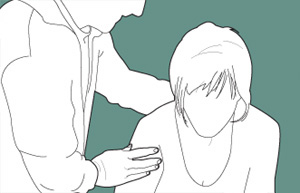
Panic disorder is a mental and behavioral disorder, specifically an anxiety disorder characterized by reoccurring unexpected panic attacks. Panic attacks are sudden periods of intense fear that may include palpitations, sweating, shaking, shortness of breath, numbness, or a feeling that something terrible is going to happen. The maximum degree of symptoms occurs within minutes. There may be ongoing worries about having further attacks and avoidance of places where attacks have occurred in the past.
Allen J. Frances is an American psychiatrist. He is currently Professor and Chairman Emeritus of the Department of Psychiatry and Behavioral Sciences at Duke University School of Medicine. He is best known for serving as chair of the American Psychiatric Association task force overseeing the development and revision of the fourth edition of the Diagnostic and Statistical Manual of Mental Disorders (DSM-IV). Frances is the founding editor of two well-known psychiatric journals: the Journal of Personality Disorders and the Journal of Psychiatric Practice.
Edward Khantzian was a professor of psychiatry at Harvard Medical School. Beginning in the 1970s, he developed a progressively more coherent and empirically-grounded self-medication hypothesis of drug abuse, which states that individuals use drugs in an attempt to self-medicate states of distress and suffering.

Andrew J. Gerber is an American psychoanalyst and the current president and medical director of Silver Hill Hospital in New Canaan, Connecticut. His principal interests and research lie in studying the neurobiological bases of social cognition, particularly in relation to autism spectrum disorders and change in response to psychotherapy. He is a member of the American Academy of Child and Adolescent Psychiatry, American Psychiatric Association, American Psychoanalytic Association and the Psychoanalytic Psychodynamic Research Society.

Eric M. Plakun is an American psychiatrist, psychoanalyst, researcher and forensic psychiatrist. He is the current medical director/CEO at the Austen Riggs Center in Stockbridge, Massachusetts. Plakun's primary interests include the mental health advocacy, full implementation of the mental health parity law, access-to-care issues, and reducing health disparities; the value of and evidence base for psychosocial treatments and the diagnosis, treatment, longitudinal course and outcome of patients with borderline personality disorder and treatment resistant disorders.
Jacques P. Barber is a French-born, American clinical psychologist and psychotherapy researcher. He is an Emeritus Professor and Dean at the Gordon F. Derner School of Psychology at Adelphi University. He served as Dean from August 2011 until his retirement in August 2023.
References
- ↑ "Fredric Neal Busch, M.D., MD". Fredric N. Busch, MD. Retrieved 2024-01-17.
- ↑ "Fredric N. Busch, MD". Columbia University Department of Psychiatry. 2017-02-09. Retrieved 2018-12-26.
- ↑ "Psychiatry Unbound: Problem-Focused Psychodynamic Psychotherapy". 2023-01-17.
- ↑ Barbara Milrod, M.D., Fredric N. Busch, M.D., Arnold M. Cooper, M.D., and Theodore Shapiro, M.D. Manual of Panic-Focused Psychodynamic Psychotherapy. ISBN 978-0-88048-871-6.
{{cite book}}: CS1 maint: multiple names: authors list (link) - ↑ Busch FN, Rudden MG, Shapiro T (2016). Psychodynamic Treatment of Depression. American Psychiatric Publishing. ISBN 978-1615370351.
- ↑ Benedict Carey (6 February 2007). "In Rigorous Test, Talk Therapy Works for Panic Disorder". New York Times. Retrieved 19 October 2012.
- ↑ "Psychodynamic Approaches to Behavioral Change".
- ↑ "Trauma Focused Psychodynamic Psychotherapy".
- ↑ "Trauma-Focused Psychodynamic Psychotherapy of a Patient With PTSD in a Veterans Affairs Setting".
- ↑ Columbia Psychiatry "Columbia Department of Psychiatry".
- ↑ Tobin B. Review of 'Psychotherapy and medication: The challenge of integration'. Journal of the American Psychoanalytic Association [serial online]. October 2009;57(5):1279-1284. Available from: PsycINFO, Ipswich, MA. Accessed May 9, 2012.
- ↑ Golebiewski T. Review of 'Mentalization: Theoretical considerations, research findings and clinical implications, psychoanalytic inquiry book series, vol. 29'. Clinical Social Work Journal [serial online]. December 2010;38(4):450-451. Available from: PsycINFO, Ipswich, MA. Accessed May 9, 2012.
| International | |
|---|---|
| National | |
| Other | |
