
The Federal Bureau of Investigation (FBI) is the domestic intelligence and security service of the United States and its principal federal law enforcement agency. An agency of the United States Department of Justice, the FBI is a member of the U.S. Intelligence Community and reports to both the attorney general and the director of national intelligence. A leading American counterterrorism, counterintelligence, and criminal investigative organization, the FBI has jurisdiction over violations of more than 200 categories of federal crimes.

DNA profiling is the process of determining an individual's deoxyribonucleic acid (DNA) characteristics. DNA analysis intended to identify a species, rather than an individual, is called DNA barcoding.
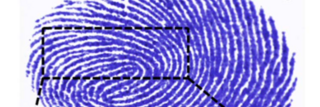
Forensic science, also known as criminalistics, is the application of science principles and methods to support legal decision-making in matters of criminal and civil law.

Henry Chang-Yu Lee is a Taiwanese and American forensic scientist.

Hair analysis may refer to the chemical analysis of a hair sample, but can also refer to microscopic analysis or comparison. Chemical hair analysis may be considered for retrospective purposes when blood and urine are no longer expected to contain a particular contaminant, typically three months or less.

Digital forensics is a branch of forensic science encompassing the recovery, investigation, examination, and analysis of material found in digital devices, often in relation to mobile devices and computer crime. The term "digital forensics" was originally used as a synonym for computer forensics but has expanded to cover investigation of all devices capable of storing digital data. With roots in the personal computing revolution of the late 1970s and early 1980s, the discipline evolved in a haphazard manner during the 1990s, and it was not until the early 21st century that national policies emerged.
Forensic biology is the application of biological principles and techniques in the investigation of criminal and civil cases.

The FBI Laboratory is a division within the United States Federal Bureau of Investigation that provides forensic analysis support services to the FBI, as well as to state and local law enforcement agencies free of charge. The lab is located at Marine Corps Base Quantico in Quantico, Virginia. Opened November 24, 1932, the lab was first known as the Technical Laboratory. It became a separate division when the original Bureau of Investigation (BOI) was renamed the FBI.
A crime laboratory, often shortened to crime lab, is a scientific laboratory, using primarily forensic science for the purpose of examining evidence from criminal cases.

The Oklahoma State Bureau of Investigation (OSBI) is an independent state law enforcement agency of the government of Oklahoma. The OSBI assists the county sheriff offices and city police departments of the state, and works independent of the Oklahoma Department of Public Safety to investigate criminal law violations within the state at the request of statutory authorized requesters. The OSBI was created in 1925 during the term of Governor Martin E. Trapp.

Ranajit Chakraborty was a human and population geneticist. At the time of his death, he was Director of the Center for Computational Genomics at the Institute of Applied Genetics and Professor in the Department of Forensic and Investigative Genetics at the University of North Texas Health Science Center in Fort Worth, Texas. His scientific contributions include studies in human genetics, population genetics, genetic epidemiology, statistical genetics, and forensic genetics.
Frederic "Fred" Whitehurst is an American chemist and attorney who served as a Supervisory Special Agent in the Federal Bureau of Investigation Laboratory from 1986 to 1998. Concerned about problems he saw among agents, he went public as a whistleblower to bring attention to procedural errors and misconduct by agents. After the FBI retaliated against his claims, he began to attend law school at night and used his Juris Doctor degree to continue his fight. After ten years of refusal, the FBI investigated his claims and agreed to 40 reforms to improve the forensic reliability of its testing.
The Combined DNA Index System (CODIS) is the United States national DNA database created and maintained by the Federal Bureau of Investigation. CODIS consists of three levels of information; Local DNA Index Systems (LDIS) where DNA profiles originate, State DNA Index Systems (SDIS) which allows for laboratories within states to share information, and the National DNA Index System (NDIS) which allows states to compare DNA information with one another.
Rapid DNA describes the fully automated process of developing a CODIS Core STR profile or other STR profile from a reference sample buccal swab. The “swab in – profile out” process consists of automated extraction, amplification, separation, detection and allele calling without human intervention. An instrument designed to perform such rapid DNA analysis is called a DNA "magic box" by enforcement authorities.

The Science and Technology Branch (STB) is a service within the Federal Bureau of Investigation that comprises three separate divisions and three program offices. The goal when it was founded in July 2006 was to centralize the leadership and management of the three divisions. The mission of the STB is discover, develop, and deliver innovative science and technology so that intelligence and innovative investigation is enhanced.

Forensic firearm examination is the forensic process of examining the characteristics of firearms or bullets left behind at a crime scene. Specialists in this field try to link bullets to weapons and weapons to individuals. They can raise and record obliterated serial numbers in an attempt to find the registered owner of a weapon and look for fingerprints on a weapon and cartridges.

Colorado Bureau of Investigation (CBI), a division of Colorado Department of Public Safety, is a law enforcement agency of the state of Colorado that performs forensic and laboratory services and criminal investigations at the request of local and state law enforcement agencies and district attorneys. They investigate arson, homicides, sexual assaults, fraud, cyber, identity theft, and other crimes. Their forensic services include DNA, biology, firearm, latent print, toxicology and drug chemistry analysis. Other units in the CBI include Crime Scene Services, Crime Information Management Unit, Criminal Justice Information Systems, and Colorado’s InstaCheck Unit. The CBI is designated by the Federal Bureau of Investigation (FBI), Criminal Justice Information Services (CJIS) Division, as the CJIS Systems Agency for Colorado. It is headquartered in the Denver suburb of Lakewood at 690 Kipling Street.

With no witnesses to the murders of Nicole Brown Simpson and Ron Goldman, DNA evidence in the O. J. Simpson murder trial was the key physical proof used by the prosecution to link O. J. Simpson to the crime. Over nine weeks of testimony, 108 exhibits of DNA evidence, including 61 drops of blood, were presented at trial. Testing was cross-referenced and validated at three separate labs using different tests with no discrepancies found. The prosecution offered the defense access to the evidence samples to conduct their own testing, but they declined.
Charles A. Appel Jr., known as the founder of the Federal Bureau of Investigation (FBI) Laboratory, was an FBI Special Agent from 1924 through 1948. Assigned in 1929 by then-Bureau of Investigation Director J. Edgar Hoover to coordinate outside experts for forensic examinations, Appel became the Bureau's one-man forensic laboratory in 1931. In November 1932, the FBI's Technical Laboratory was formally established. In August 1933, he began processing evidence and testifying on handwriting, typewriting, fingerprints, ballistics, and chemicals submitted by U.S. police agencies. Appel was joined in late 1933 by Special Agent Samuel F. Pickering, a chemist, and in 1934, by Special Agents Ivan W. Conrad and Donald J. Parsons, also scientists. In September 1934, the FBI Laboratory came to widespread attention due to Appel's identification of Bruno Hauptmann as the kidnapper of Charles Lindbergh Jr., from hand-written ransom demand notes.
