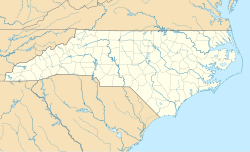
Horne Creek Farm is a historical farm near Pinnacle, Surry County, North Carolina. The farm is a North Carolina State Historic Site that belongs to the North Carolina Department of Natural and Cultural Resources, and it is operated to depict farm life in the northwest Piedmont area c. 1900. The historic site includes the late 19th century Hauser Farmhouse, which has been furnished to reflect the 1900-1910 era, along with other supporting structures. The farm raised animal breeds that were common in the early 20th century. The site also includes the Southern Heritage Apple Orchard, which preserves about 800 trees of about 400 heritage apple varieties. A visitor center includes exhibits, a gift shop and offices.
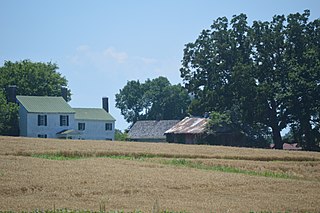
Brandon Plantation is a historic plantation home located near Alton, Halifax County, Virginia. The main house is a two-part, frame vernacular farmhouse. The earliest section of the farmhouse is a single-pile, three-bay gable-roof dwelling erected about 1800. Attached to the east end is a two-bay section added about 1842. The interior features details attributed to Thomas Day, a well-known African-American cabinetmaker from Milton, North Carolina. The farmhouse underwent an extensive remodeling and modernization in the early 1960s but preserves a significant degree of architectural integrity. Also on the property are a contributing frame kitchen / slave quarter outbuilding, an early stone-lined well, and the sites of early agricultural outbuildings.

The Universalist Society Meetinghouse is an historic Greek Revival meetinghouse at 3 River Road in Orleans, Massachusetts. Built in 1834, it was the only Universalist church built in Orleans, and is architecturally a well-preserved local example of Greek Revival architecture. The Meeting House is now the home of the Orleans Historical Society and is known as the Meeting House Museum. It was listed on the National Register of Historic Places in 1999.

Ebenezer Methodist Church is a historic church located near Bells, Chatham County, North Carolina. It is located on the west side of SR 1008, about 0.5 miles (0.80 km) north of its junction with SR 1975. It is a modest single-story wood-frame structure, with a steeply-pitched metal gable roof and weatherboard siding. It has Gothic Revival features, including a tower with Gothic-arched entrance openings. The sanctuary's windows, doors, and interior woodworking are original to the structure. It was built about 1890, for a Methodist congregation established in 1827.

St. John's Episcopal Church is a historic Episcopal church located on the southeast corner of SR 1917 and SR 1753 in St. John's, Pitt County, North Carolina. It was built between 1893 and 1895, and is a one-story, gable front frame building. It has a projecting vestibule, is sheathed in weatherboard, rests on a brick pier foundation, and has a steeply pitched gable roof. The interior features a barrel vault ceiling.

St. John's Episcopal Church is a historic Episcopal church located on SR 1329 in Williamsboro, Vance County, North Carolina. It was built in 1773, and is a rectangular, seven bay long, frame church on a brick foundation. It has a gable roof and is sheathed in weatherboard. The church was restored in the 1950s.

Botany Bay Heritage Preserve & Wildlife Management Area is a state preserve on Edisto Island, South Carolina. Botany Bay Plantation was formed in the 1930s from the merger of the Colonial-era Sea Cloud Plantation and Bleak Hall Plantation. In 1977, it was bequeathed to the state as a wildlife preserve; it was opened to the public in 2008. The preserve includes a number of registered historic sites, including two listed in the National Register of Historic Places: a set of three surviving 1840s outbuildings from Bleak Hall Plantation, and the prehistoric Fig Island shell rings.
The Dr. Alexander C. Brabson House is a historic house in rural Macon County, North Carolina. It is located off Academy Road near the community of Otto.

John Alexander Lackey House is a historic home located at Morganton, Burke County, North Carolina. It was built about 1900, and is a two-story, T-shaped, gable roofed, brick farmhouse. It has a one-story, gabled kitchen wing. The house features Colonial Revival style detailing.

Dr. E. H. Ward Farm is a historic home and farm located near Bynum, Chatham County, North Carolina. The main house was built in sections during the mid-19th through early-20th century beginning about 1840. The earliest section is a 1+1⁄2-story, gable-roofed, two room log structure, that forms the rear of the main section. The main section was built about 1870, and is a one-story, gable-roofed frame structure with a simple gable-front porch. A one-story board-and-batten rear ell was added about 1900. Also on the property are the contributing office of Dr. Ward, carriage house and gear room, board-and-batten barn and log cribs, smokehouse and pen, and a small brick well house.

Irvin-Hamrick Log House is a historic home located near Boiling Springs, Cleveland County, North Carolina. It consists of log and frame sections. The front log section was built about 1795, and is a small, two room, rectangular, gable roof structure. It features a full-width shed porch. The frame rear addition was built after the American Civil War and is under a gable roof set perpendicular to the log house. Also on the property is a small cemetery enclosed by a wrought iron fence.
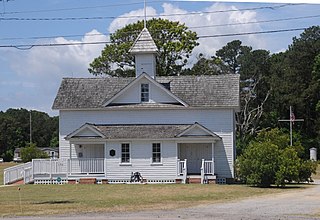
Jarvisburg Colored School is a historic school building for African-American students located at Jarvisburg, Currituck County, North Carolina. First built as a one-room school in 1868 on land donated by Mr. William Hunt Sr, an educated African American farmer in Currituck, His gift of land included property for a church. Replaced in the 1890s with a two-room building and again expanded in 1911 to its current size. It was in service from 1868 until 1950 when Currituck opened a Consolidated School and closed all the small African American county schools. The Jarvisburg Colored School is a two-story, frame building built of cypress wood with Queen Anne style design elements. It has a gable roof and features a pyramidal roofed bell tower with the original four foot wooden spire. It last housed a school in 1950. Today, the Jarvisburg Colored School serves as a Museum to share the stories of former students and histories of all the Colored Schools in Currituck County, North Carolina.
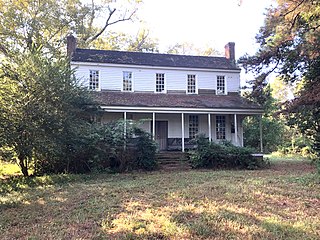
Deane House, also known as Pritchard Farm, is a historic plantation house and farm located near Cofield, Hertford County, North Carolina. The house is a two-story, five bay Georgian period frame dwelling. It has a shed porch across the front, and a rear ell. Also on the property are the contributing small board-and-batten outbuilding, a large gable-roof outbuilding with additions, three gable-roof barns, and a rectangular well-house.
King Parker House is a historic home located near Winton, Hertford County, North Carolina. It was built about 1850, and is a two-story, three-bay, single-pile vernacular Greek Revival style frame dwelling. It has a low-pitched, side-gable roof and front portico with vernacular Italianate fretwork. The house encompasses an 18th-century, one-room, 1+1⁄2-story, gable-roofed building.
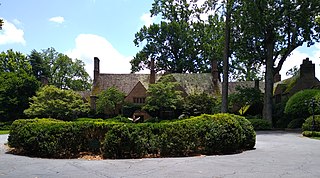
Morrocroft is a historic home located at Charlotte, Mecklenburg County, North Carolina. It was designed by architect Harrie T. Lindeberg and built between 1925 and 1927. It is a Colonial Revival/Tudor Revival-style brick manor house. It consists of a main two story block with rambling 1+1⁄2-story side wings. It is characterized by picturesque massing, rhythmic spacing of mullioned, multipaned grouped windows, and numerous multi-stack chimneys rising from steeply pitched gable roofs. It was built by North Carolina Governor and Congressman Cameron A. Morrison and his second wife, Sara Ecker Watts Morrison. After Morrison's death in 1953, the house passed to his daughter, Angelia Lawrance Morrison Harris.
William Edward Mattocks House is a historic home located at Swansboro, Onslow County, North Carolina. It was started in 1901 and completed in the 1910s. It is a 1+1⁄2-story, Colonial Revival style frame dwelling. It has board-and-batten siding, a steeply pitched gable roof with dormers, and two-tier engaged porch. Also on the property is a similar 1+1⁄2-story frame house built about 1931 and operated as a cafe.

Jones–Lee House is a historic home located at Greenville, Pitt County, North Carolina, US. It was built in 1895, and is a two-story, "L"-plan, frame dwelling with Queen Anne style decorative elements. It has an intersecting gable roof and one-story, gable roofed porch. It features decorative shingles, curvilinear sawnwork, and applied half-timbering.

Randle House, also known as the Randall House, is a historic plantation house located near Norwood, Stanly County, North Carolina. It was built about 1835, and is a two-story, transitional Federal / Greek Revival style frame I-house dwelling. It is sheathed in weatherboard and has a gable roof. It has a gable roofed ell and attached kitchen/dining building. The front facade features a hipped roof porch.
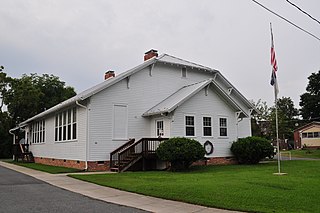
Walnut Cove Colored School, also known as London School, is historic Rosenwald School located at Walnut Cove, Stokes County, North Carolina. It was built in 1921 with a grant from Sears & Roebuck financier, Julius Rosenwald. A condition of the grant was that it had to have local matching funds. Therefore, it was built on land donated by John William Dalton and his brother George Samuel Dalton and with materials provided by The Dan River Lumber Company.
Coleman-White House, also known as Whitesome, is a historic home located at Warrenton, Warren County, North Carolina. It was built between 1821 and 1824, and is a two-story, three-bay, late Federal style rectangular frame dwelling. It has a side gable roof, entrance porch with Tuscan order columns, and exterior end chimneys. At the rear is an earlier 1+1⁄2-story frame dwelling with a gable roof. The front facade features a Palladian entrance with sidelights and Tuscan colonnettes and Palladian window on the second level.