Related Research Articles

The Nineteenth Amendment to the United States Constitution prohibits the United States and its states from denying the right to vote to citizens of the United States on the basis of sex, in effect recognizing the right of women to vote. The amendment was the culmination of a decades-long movement for women's suffrage in the United States, at both the state and national levels, and was part of the worldwide movement towards women's suffrage and part of the wider women's rights movement. The first women's suffrage amendment was introduced in Congress in 1878. However, a suffrage amendment did not pass the House of Representatives until May 21, 1919, which was quickly followed by the Senate, on June 4, 1919. It was then submitted to the states for ratification, achieving the requisite 36 ratifications to secure adoption, and thereby went into effect, on August 18, 1920. The Nineteenth Amendment's adoption was certified on August 26, 1920.
Women's suffrage is the right of women to vote in elections. Several instances occurred in recent centuries where women were selectively given, then stripped of, the right to vote. In Sweden, conditional women's suffrage was in effect during the Age of Liberty (1718–1772), as well as in Revolutionary and early-independence New Jersey (1776–1807) in the US.

Mary Ashton Livermore was an American journalist, abolitionist, and advocate of women's rights. Her printed volumes included: Thirty Years Too Late, first published in 1847 as a prize temperance tale, and republished in 1878; Pen Pictures; or, Sketches from Domestic Life; What Shall We Do with Our Daughters? Superfluous Women, and Other Lectures; and My Story of the War. A Woman's Narrative of Four Years' Personal Experience as Nurse in the Union Army, and in Relief Work at Home, in Hospitals, Camps and at the Front during the War of the Rebellion. She wrote a sketch of the sculptor Anne Whitney for Women of the Day and delivered the historical address for the Centennial Celebration of the First Settlement of the Northwestern States in Marietta, Ohio on July 15, 1788.

Ruth Fox was a 19th-century English-born American women's rights activist in the Territory of Utah. Fox was a poet, hymn writer, and a leader of youth in the Church of Jesus Christ of Latter-day Saints.
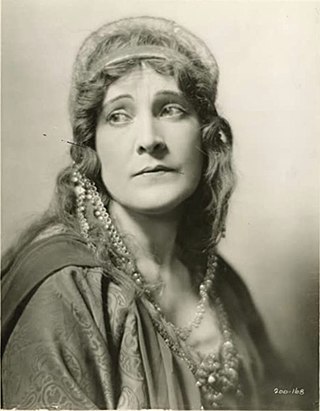
Claire McDowell was an American actress of the silent era. She appeared in 350 films between 1908 and 1945.

Elizabeth Pugsley Hayward was an American politician and Democratic member of the Utah House of Representatives and Utah State Senate.
This timeline highlights milestones in women's suffrage in the United States, particularly the right of women to vote in elections at federal and state levels.

Women's suffrage was established in the United States on a full or partial basis by various towns, counties, states, and territories during the latter decades of the 19th century and early part of the 20th century. As women received the right to vote in some places, they began running for public office and gaining positions as school board members, county clerks, state legislators, judges, and, in the case of Jeannette Rankin, as a member of Congress.

Ruza Wenclawska, more widely known as Rose Winslow and later as Rose Lyons by marriage, was a Polish-American suffragist, factory inspector and trade union organizer. She was a dedicated member of the National Woman's Party. Wenclawska's main goal within this organization was to advocate fair treatment in the workplace for women. She also worked as an actress and a poet.
Stella Wynne Herron was an American writer and suffragist whose work appeared in a variety of magazines, including Collier's, Sunset, and Weird Tales. She is most known for her 1916 short story "Shoes", which pioneering film director Lois Weber adapted into a film of the same name. The film is now considered a feminist classic in early cinema history.
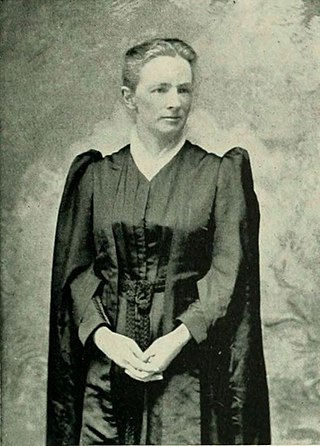
Eliza Mason Tupper Wilkes was an American suffragist and Unitarian Universalist minister.

The 1st Wyoming Territorial Legislature was a meeting of the Wyoming Legislature that lasted from October 12 to December 10, 1869. This was the first meeting of the territorial legislature following the creation of the Wyoming Territory by the United States Congress.
Fredrikke S. Palmer was a Norwegian-born American illustrator and cartoonist, best known for her work in The Woman's Journal, an American suffrage magazine.
Katherine Reed Balentine was an American suffragist and the founder of The Yellow Ribbon, a suffrage magazine.

Mary Clare Laurence Brassington was an American suffragist, president of the Delaware Equal Suffrage Association (DESA) from 1915 to 1917.
Mary Daisy White was a 20th-century American politician and business owner. One of the first women ever elected to the Nevada State Legislature, she represented rural Churchill County from November 1924 to November 1926. In 1953, she was declared to be the oldest Churchill County native still living in the county.

Cora Scott Pope was an American professor, a scenario writer, and a real estate developer. She was also a women’s rights activist, suffragist, and militant prohibitionist.

Catherine Mary Flanagan was an American suffragist affiliated with the Connecticut Woman Suffrage Association and later the National Woman's Party. She was among the Silent Sentinels arrested for protesting outside the White House in 1917.
Clara W. MacNaughton was an American dentist and suffragist.

Daisy Allen Story, also known as Mrs. William C. Story, was an American socialite, clubwoman, and suffragist. She served two consecutive terms as the President General of the Daughters of the American Revolution.
References
- ↑ Harper, I.H. (1920). The History of Woman Suffrage, Volume VI. The History of Woman Suffrage. National American Woman Suffrage Association. p. 647. Retrieved 12 November 2023.
- ↑ Utah (November 12, 1917). "Public Documents, State of Utah" – via Google Books.
- ↑ https://www.findagrave.com/memorial/44511/daisy-claire-allen
- ↑ "Biographical Sketch of Daisy C. Allen | Alexander Street Documents". documents.alexanderstreet.com.
- ↑ Statistics, Utah State Bureau of Immigration, Labor and (November 12, 1917). "Facts and Figures Pertaining to Utah". State of Utah – via Google Books.
{{cite web}}: CS1 maint: multiple names: authors list (link)

