Related Research Articles
In criminal law, mens rea is the mental state of a defendant who is accused of committing a crime. In common law jurisdictions, most crimes require proof both of mens rea and actus reus before the defendant can be found guilty.
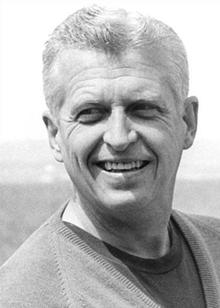
Philip Francis Berrigan was an American peace activist and Catholic priest with the Josephites. He engaged in nonviolent, civil disobedience in the cause of peace and nuclear disarmament and was often arrested.

Clarence Seward Darrow was an American lawyer who became famous in the 19th century for high profile representations of trade union causes, and in the 20th century for several criminal matters, including the Leopold and Loeb murder trial, the Scopes "monkey" trial, and the Ossian Sweet defense. He was a leading member of the American Civil Liberties Union and a prominent advocate for Georgist economic reform. Darrow was also well known as a public speaker, debater, and writer. He is considered by some legal analysts and lawyers to be the greatest lawyer of the 20th century. He was posthumously inducted into the Trial Lawyer Hall of Fame.
Jury nullification, also known in the United Kingdom as jury equity or a perverse verdict, is when the jury in a criminal trial gives a verdict of not guilty even though they think a defendant has broken the law. The jury's reasons may include the belief that the law itself is unjust, that the prosecutor has misapplied the law in the defendant's case, that the punishment for breaking the law is too harsh, or general frustrations with the criminal justice system. Some juries have also refused to convict due to their own prejudices in favor of the defendant. Such verdicts are possible because a jury has an absolute right to return any verdict it chooses.
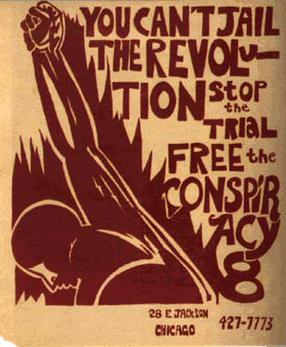
The Chicago Seven, originally the Chicago Eight and also known as the Conspiracy Eight or Conspiracy Seven, were seven defendants – Rennie Davis, David Dellinger, John Froines, Tom Hayden, Abbie Hoffman, Jerry Rubin, and Lee Weiner – charged by the United States Department of Justice with conspiracy, crossing state lines with intent to incite a riot, and other charges related to anti-Vietnam War and 1960s counterculture protests in Chicago, Illinois during the 1968 Democratic National Convention. The Chicago Eight became the Chicago Seven after the case against codefendant Bobby Seale was declared a mistrial.
The Gainesville Eight were a group of anti-Vietnam War activists indicted on charges of conspiracy to disrupt the 1972 Republican National Convention in Miami Beach, Florida. All eight defendants were acquitted.
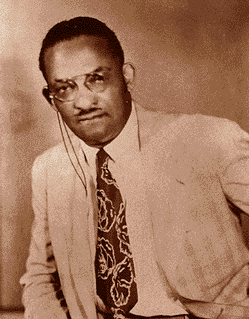
Ossian Sweet was an African-American physician in Detroit, Michigan. He is known for being charged with murder in 1925 after he and his friends used armed self-defense against a hostile white mob protesting after Sweet moved into their neighborhood. Stones were thrown at his house, breaking windows. Shots were fired, and one white man was killed and another wounded. Sweet, his wife, and nine associates at the house were all arrested and charged with murder.
Malice aforethought is the "premeditation" or "predetermination" required as an element of some crimes in some jurisdictions and a unique element for first-degree or aggravated murder in a few. Insofar as the term is still in use, it has a technical meaning that has changed substantially over time.

The Diocese of Toledo in America is a Latin Church ecclesiastical jurisdiction, or diocese, of the Catholic Church covering nineteen counties in northwestern Ohio in the United States.
The United Freedom Front (UFF) was a small American Marxist organization active in the 1970s and 1980s. It was originally called the Sam Melville/Jonathan Jackson Unit, and its members became known as the Ohio 7 when they were brought to trial. Mainly led by Raymond Luc Levasseur and assisted by Tom Manning, between 1975 and 1984 the UFF carried out at least 20 bombings and ten bank robberies in the northeastern United States, targeting corporate buildings, courthouses, and military facilities. Brent L. Smith describes them as "undoubtedly the most successful of the leftist terrorists of the 1970s and 1980s." The group's members were eventually apprehended and convicted of conspiracy, murder, attempted murder, and other charges.
In the United States on May 11, 2006, retired Roman Catholic priest Gerald Robinson was convicted of the murder of Sister Margaret Ann Pahl (1908–1980), a Sister of Mercy, a Catholic religious order of women on Holy Saturday, April 5, 1980. Robinson repeatedly appealed, but without success. On July 4, 2014, Robinson died in prison.
Michael O. Billington is an activist in the LaRouche Movement, Asia editor for the Executive Intelligence Review, and author of Reflections of an American Political Prisoner: the Repression and Promise of the LaRouche Movement.

The Harrisburg Seven were a group of religious anti-war activists, led by Philip Berrigan, charged in 1971 in a failed conspiracy case in the United States District Court for the Middle District of Pennsylvania, located in Harrisburg. The seven were Phillip Berrigan, Elizabeth McAlister, Rev. Neil McLaughlin, Rev. Joseph Wenderoth, Eqbal Ahmad, Anthony Scoblick, and Mary Cain Scoblick.
In the United States, jury nullification occurs when a jury in a criminal case reaches a verdict contrary to the weight of evidence, sometimes because of a disagreement with the relevant law. It has its origins in colonial America under British law. The American jury draws its power of nullification from its right to render a general verdict in criminal trials, the inability of criminal courts to direct a verdict no matter how strong the evidence, the Fifth Amendment's Double Jeopardy Clause, which prohibits the appeal of an acquittal, and the fact that jurors cannot be punished for the verdict they return.
A citizen's right to a trial by jury is a central feature of the United States Constitution. It is considered a fundamental principle of the American legal system.
United States v. Dougherty, 473 F.2d 1113 was a 1972 decision by the United States Court of Appeals for the District of Columbia in which the court ruled that members of the D.C. Nine, who had broken into Dow Chemical Company, vandalized office furniture and equipment, and spilled about a bloodlike substance, were not entitled to a new trial on the basis of the judge's failing to allow a jury nullification jury instruction. The Appeals Court ruled, by a 2–1 vote:
The fact that there is widespread existence of the jury's prerogative, and approval of its existence as a "necessary counter to casehardened judges and arbitrary prosecutors," does not establish as an imperative that the jury must be informed by the judge of that power. On the contrary, it is pragmatically useful to structure instructions in such wise that the jury must feel strongly about the values involved in the case, so strongly that it must itself identify the case as establishing a call of high conscience, and must independently initiate and undertake an act in contravention of the established instructions. This requirement of independent jury conception confines the happening of the lawless jury to the occasional instance that does not violate, and viewed as an exception may even enhance, the over-all normative effect of the rule of law. An explicit instruction to a jury conveys an implied approval that runs the risk of degrading the legal structure requisite for true freedom, for an ordered liberty that protects against anarchy as well as tyranny.

Arc of Justice: A Saga of Race, Civil Rights, and Murder in the Jazz Age is a 2004 book by historian Kevin Boyle, published by Henry Holt. The book chronicles racism in Detroit during the 1920s Jazz Age through the lens of Ossian Sweet, an African American doctor who moves to Detroit during the great migration. While living in Detroit he eventually moves out of the ghetto and he and his wife move into an all-white middle-class neighborhood. When racist whites attack the Sweets' home, a white man is killed. Sweet and his family are persecuted by the legal system.
The Milwaukee Fourteen were fourteen peace activists who burned Selective Service records to protest the Vietnam War. On 24 September 1968, they entered Milwaukee's Brumder Building, site of nine Wisconsin draft boards, gathered up about 10,000 files, carried them to an open public space, and set them on fire with homemade napalm. The fourteen then remained at the site, singing and reading from the gospels of John and Luke as Milwaukee firemen and police officers arrived. The subsequent trial of twelve of the protestors became the first resistance trial in which the defendants chose to represent themselves. After a trial of eleven days, the defendants were each found guilty of theft, arson, and burglary.
United States v. Moylan, 417 F.2d 1002, 1003, was a United States Court of Appeals for the Fourth Circuit case affirming a district court's refusal to permit defense counsel to argue for jury nullification.
References
- ↑ Carroll, Frank (23 January 2020). ""Dow Shalt Not Kill": The Story of the D.C. Nine". boundarystones.weta.org. Retrieved 19 October 2022.
- ↑ Roose, Kevin (4 March 2019). "Why Napalm Is a Cautionary Tale for Tech Giants Pursuing Military Contracts". The New York Times. Retrieved 19 October 2022.
- ↑ United States v. Dougherty , 473f2d1113 (DC Cir.June 30, 1972).