Related Research Articles

Epidemiology is the study and analysis of the distribution,patterns and determinants of health and disease conditions in defined population.
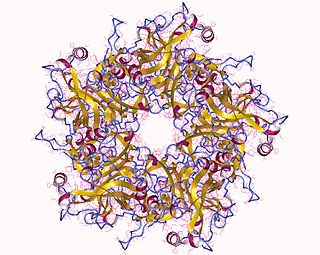
Human papillomavirus infection is caused by a DNA virus from the Papillomaviridae family. Many HPV infections cause no symptoms and 90% resolve spontaneously within two years. In some cases,an HPV infection persists and results in either warts or precancerous lesions. These lesions,depending on the site affected,increase the risk of cancer of the cervix,vulva,vagina,penis,anus,mouth,tonsils,or throat. Nearly all cervical cancer is due to HPV and two strains –HPV16 and HPV18 –account for 70% of cases. HPV16 is responsible for almost 90% of HPV-positive oropharyngeal cancers. Between 60% and 90% of the other cancers listed above are also linked to HPV. HPV6 and HPV11 are common causes of genital warts and laryngeal papillomatosis.

Oral cancer,also known as mouth cancer,is cancer of the lining of the lips,mouth,or upper throat. In the mouth,it most commonly starts as a painless white patch,that thickens,develops red patches,an ulcer,and continues to grow. When on the lips,it commonly looks like a persistent crusting ulcer that does not heal,and slowly grows. Other symptoms may include difficult or painful swallowing,new lumps or bumps in the neck,a swelling in the mouth,or a feeling of numbness in the mouth or lips.

Head and neck cancer develops from tissues in the lip and oral cavity (mouth),larynx (throat),salivary glands,nose,sinuses or the skin of the face. The most common types of head and neck cancers occur in the lip,mouth,and larynx. Symptoms predominantly include a sore that does not heal or a change in the voice. Some may experience a sore throat that does not go away. In those with advanced disease,there may be unusual bleeding,facial pain,numbness or swelling,and visible lumps on the outside of the neck or oral cavity. Given the location of these cancers,trouble breathing may also be present.
A cancer registry is a systematic collection of data about cancer and tumor diseases. The data are collected by Cancer Registrars. Cancer Registrars capture a complete summary of patient history,diagnosis,treatment,and status for every cancer patient in the United States,and other countries.

Human papillomavirus (HPV) vaccines are vaccines that prevent infection by certain types of human papillomavirus (HPV). Available HPV vaccines protect against either two,four,or nine types of HPV. All HPV vaccines protect against at least HPV types 16 and 18,which cause the greatest risk of cervical cancer. It is estimated that HPV vaccines may prevent 70% of cervical cancer,80% of anal cancer,60% of vaginal cancer,40% of vulvar cancer,and show more than 90% efficacy in preventing HPV-positive oropharyngeal cancers. They additionally prevent some genital warts,with the quadrivalent and nonavalent vaccines that protect against HPV types HPV-6 and HPV-11 providing greater protection.
Gardasil is an HPV vaccine for use in the prevention of certain strains of human papillomavirus (HPV). It was developed by Merck &Co. High-risk human papilloma virus (hr-HPV) genital infection is the most common sexually transmitted infection among women. The HPV strains that Gardasil protects against are sexually transmitted,specifically HPV types 6,11,16 and 18. HPV types 16 and 18 cause an estimated 70% of cervical cancers,and are responsible for most HPV-induced anal,vulvar,vaginal,and penile cancer cases. HPV types 6 and 11 cause an estimated 90% of genital warts cases. HPV type 16 is responsible for almost 90% of HPV-positive oropharyngeal cancers,and the prevalence is higher in males than females. Though Gardasil does not treat existing infection,vaccination is still recommended for HPV-positive individuals,as it may protect against one or more different strains of the disease.
Heart cancer is an extremely rare form of cancer that is divided into primary tumors of the heart and secondary tumors of the heart.

R. William Field is an academic scholar and Professor in the Department of Occupational and Environmental Health and Department of Epidemiology within the College of Public Health at the University of Iowa. He received a BS and MS degree in Biology from Millersville University of Pennsylvania and a PhD in Preventive Medicine from the College of Medicine at the University of Iowa in 1994. Field is currently an occupational and environmental epidemiologist as well as an internationally recognized expert on the measurement and health effects of radon gas.

The Surveillance,Epidemiology,and End Results (SEER) program of the National Cancer Institute (NCI) is a source of epidemiologic information on the incidence and survival rates of cancer in the United States.

The epidemiology of cancer is the study of the factors affecting cancer,as a way to infer possible trends and causes. The study of cancer epidemiology uses epidemiological methods to find the cause of cancer and to identify and develop improved treatments.

Sentinel Event Notification System for Occupational Risks (SENSOR)-Pesticides is a U.S. state-based surveillance program that monitors pesticide-related illness and injury. It is administered by the National Institute for Occupational Safety and Health (NIOSH),twelve state health agencies participate. NIOSH provides technical support to all participating states. It also provides funding to some states,in conjunction with the US Environmental Protection Agency.

Oropharyngeal cancer (OPC),also known as oropharyngeal squamous cell carcinoma (OPSCC) and tonsil cancer,is a disease in which abnormal cells with the potential to both grow locally and spread to other parts of the body are found in the oral cavity,in the tissue of the part of the throat (oropharynx) that includes the base of the tongue,the tonsils,the soft palate,and the walls of the pharynx.

Human papillomavirus-positive oropharyngeal cancer,is a cancer of the throat caused by the human papillomavirus type 16 virus (HPV16). In the past,cancer of the oropharynx (throat) was associated with the use of alcohol or tobacco or both,but the majority of cases are now associated with the HPV virus,acquired by having oral contact with the genitals of a person who has a genital HPV infection. Risk factors include having a large number of sexual partners,a history of oral-genital sex or anal–oral sex,having a female partner with a history of either an abnormal Pap smear or cervical dysplasia,having chronic periodontitis,and,among men,younger age at first intercourse and a history of genital warts. HPV-positive OPC is considered a separate disease from HPV-negative oropharyngeal cancer.
Radon,a radioactive,colorless,odorless,tasteless noble gas,has been studied by a number of scientific and medical bodies for its effects on health. A naturally-occurring gas formed as a decay product of radium,radon is one of the densest substances that remains a gas under normal conditions,and is considered to be a health hazard due to its radioactivity. Its most stable isotope,radon-222,has a half-life of 3.8 days. Due to its high radioactivity,it has been less well studied by chemists,but a few compounds are known.

Health effects of pesticides may be acute or delayed in those who are exposed. Acute effects can include pesticide poisoning,which may be a medical emergency. Strong evidence exists for other,long-term negative health outcomes from pesticide exposure including birth defects,fetal death,neurodevelopmental disorder,cancer,and neurologic illness including Parkinson's disease. Toxicity of pesticides depend on the type of chemical,route of exposure,dosage,and timing of exposure. According to The Stockholm Convention on Persistent Organic Pollutants (2001),9 of the 12 most dangerous and persistent chemicals were pesticides,so many have now been withdrawn from use.
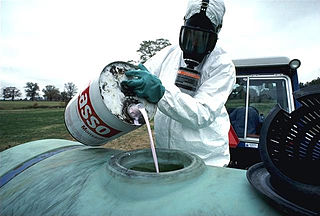
Pesticide regulation in the United States is primarily a responsibility of the Environmental Protection Agency (EPA). In America,it was not till the 1950s that pesticides were regulated in terms of their safety. The Pesticides Control Amendment (PCA) of 1954 was the first time Congress passed guidance regarding the establishment of safe limits for pesticide residues on food. It authorized the Food and Drug Administration (FDA) to ban pesticides they determined to be unsafe if they were sprayed directly on food. The Food Additives Amendment,which included the Delaney Clause,prohibited the pesticide residues from any carcinogenic pesticides in processed food. In 1959,pesticides were required to be registered.

The National Health Laboratory Service (NHLS) is a South African national government institution established in 2001. It was created by merging the South African Institute for Medical Research (SAIMR),the National Centre for Occupational Health and the National Institute for Virology. It also absorbed various provincial health department and university-run pathology laboratories.
Elizabeth M. Ward is an American scientist and researcher for the American Cancer Society. She received her PhD in Epidemiology from the University of Pennsylvania. Ward serves as the National Vice President of Intramural Research for the American Cancer Society and Chair of the World Trade Center Health Program Scientific and Technical Advisory Committee. She has held many positions in various cancer research organizations including a position on the National Cancer Institute's Board of Scientific Counselors for Clinical Sciences and Epidemiology. In recognition for her prominent work in the medical research field,she has received two different awards:U.S. Public Health Service Meritorious Service Medal and the Calum S. Muir Memorial Award. Ward's work is heavily centered around "cancer disparities,cancer treatment and outcomes,cancer surveillance,Occupational cancer and environmental cancer."
Gypsyamber D'Souza is an American epidemiologist. She is a professor of epidemiology at the Johns Hopkins Bloomberg School of Public Health. D'Souza researches infectious diseases,cancer prevention,and translational epidemiology. She is a principal investigator of the Multicenter AIDS Cohort Study / Women's Interagency HIV Study Combined Cohort Study (Mwccs.org).
References
- ↑ "Lynch Profile". Archived from the original on 29 August 2008. Retrieved 28 October 2017.
- ↑ "Google scholar citations" . Retrieved 31 October 2017.
- ↑ Cancer in Iowa 2003 (PDF). STATE HEALTH REGISTRY OF IOWA. February 2003. Retrieved 31 October 2017.
- ↑ "Biosketch" (PDF). University of Iowa. Retrieved 28 October 2017.
- ↑ "Executive Committee & Coordinating Center". NIH. Retrieved 31 October 2017.
- ↑ Koutros, S; Alavanja, MC; Lubin, JH; Sandler, DP; Hoppin, JA; Lynch, CF; Knott, C; Blair, A; Freeman, LE (November 1, 2011). "An Update of Cancer Incidence in the Agricultural Health Study". J Occup Environ Med. 52 (11): 1098–105. doi:10.1097/JOM.0b013e3181f72b7c. PMC 3052640 . PMID 21063187.
- ↑ Chaturvedi, A. K. (October 3, 2011). "Human papillomavirus and rising oropharyngeal cancer incidence in the United States". Journal of Clinical Oncology. 29 (32): 4294–4301. doi:10.1200/JCO.2011.36.4596. PMC 3221528 . PMID 21969503 . Retrieved 31 October 2017.
- ↑ Lynch, Chuck M.D. PhD (February 26, 2014). "Home Radon Testing". Youtube. University of Iowa Health Care. Archived from the original on 2021-12-14. Retrieved 31 October 2017.