The Caribbean Community is an intergovernmental organization that is a political and economic union of 15 member states throughout the Caribbean having primary objectives to promote economic integration and cooperation among its members, to ensure that the benefits of integration are equitably shared, and to coordinate foreign policy. The organisation was established in 1973 with the signing of the Treaty of Chaguaramas by its four founding members. Its major activities involve coordinating economic policies and development planning; devising and instituting special projects for the less-developed countries within its jurisdiction; operating as a regional single market for many of its members ; and handling regional trade disputes. The secretariat headquarters is in Georgetown, Guyana. CARICOM is an official United Nations Observer beneficiary.
Child sex tourism (CST) is tourism for the purpose of engaging in the prostitution of children, which is commercially facilitated child sexual abuse. The definition of child in the United Nations Convention on the Rights of the Child is "every human being below the age of 18 years". Child sex tourism results in both mental and physical consequences for the exploited children, which may include sexually transmitted infections, "drug addiction, pregnancy, malnutrition, social ostracism, and death", according to the State Department of the United States. Child sex tourism, part of the multibillion-dollar global sex tourism industry, is a form of child prostitution within the wider issue of commercial sexual exploitation of children. Child sex tourism victimizes approximately 2 million children around the world. The children who perform as prostitutes in the child sex tourism trade often have been lured or abducted into sexual slavery.
Megan's Law is the name for a federal law in the United States requiring law enforcement authorities to make information available to the public regarding registered sex offenders. Laws were created in response to the murder of Megan Kanka. Federal Megan's Law was enacted as a subsection of the Jacob Wetterling Crimes Against Children and Sexually Violent Offender Registration Act of 1994, which merely required sex offenders to register with local law enforcement. Since only a few states required registration prior to Megan's death, the state level legislation to bring states in compliance—with both the registration requirement of Jacob Wetterling Act and community notification required by federal Megan's Law—were crafted simultaneously and are often referred to as "Megan's Laws" of individual states. Thus, federal Megan's Law refers to community notification, whereas state level "Megan's Law" may refer to both sex offender registration and community notification.
The Association of Caribbean States is an advisory association of nations centered on the Caribbean Basin. It was formed with the aim of promoting consultation, cooperation, and concerted action among all the countries of the Caribbean coastal area. The primary purpose of the ACS is to promote greater trade between the nations, enhance transportation, develop sustainable tourism, and facilitate greater and more effective responses to local natural disasters.

The Caribbean Court of Justice is the judicial institution of the Caribbean Community (CARICOM). Established in 2005, it is based in Port of Spain, Trinidad and Tobago.
A sex offender is a person who has committed a sex crime. What constitutes a sex crime differs by culture and legal jurisdiction. The majority of convicted sex offenders have convictions for crimes of a sexual nature; however, some sex offenders have simply violated a law contained in a sexual category. Some of the serious crimes which usually result in a mandatory sex-offender classification are sexual assault, statutory rape, bestiality, child sexual abuse, incest, rape, and sexual imposition.
The CARICOM Single Market and Economy, also known as the Caribbean Single Market and Economy (CSME), is an integrated development strategy envisioned at the 10th Meeting of the Conference of Heads of Government of the Caribbean Community (CARICOM) which took place in July 1989 in Grand Anse, Grenada. The Grand Anse Declaration had three key Features:
- Deepening economic integration by advancing beyond a common market towards a Single Market and Economy.
- Widening the membership and thereby expanding the economic mass of the Caribbean Community.
- Progressive insertion of the region into the global trading and economic system by strengthening trading links with non-traditional partners.

The Caribbean Free Trade Association (CARIFTA) was organised on May 1, 1968, to provide a continued economic linkage between the English-speaking countries of the Caribbean. The agreements establishing it came following the dissolution of the West Indies Federation which lasted from 1958 to 1962.
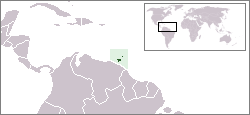
Lesbian, gay, bisexual, and transgender (LGBT) persons in Trinidad and Tobago face legal challenges not experienced by non-LGBT residents. Households headed by same-sex couples are not eligible for the same rights and benefits as that of opposite-sex couples.
Prostitution in Trinidad and Tobago is legal but related activities such as brothel keeping, soliciting and pimping are illegal.
The CARICOM passport is a passport document issued by the 15 member states of the Caribbean Community (CARICOM) for their citizens. It can be used both for intra-regional and international travel. The passport was created to facilitate intra-region travel; however, citizens of the OECS that are citizens from Antigua and Barbuda, Dominica, Grenada, St. Kitts and Nevis, Saint Lucia, Guyana and St. Vincent and the Grenadines may use a member-state issued drivers licence, national identification card, voters registration card or social security card for travel within the OECS area.
The Partnership for Prosperity and Security in the Caribbean (PPS) is a regional-level dialogue with the stated purpose of providing greater cooperation on security and economic issues. The Partnership was founded in Bridgetown, Barbados on March 10, 1997 by the Governments of the United States of America, Antigua and Barbuda, the Commonwealth of The Bahamas, Barbados, Belize, the Commonwealth of Dominica, the Dominican Republic, Grenada, the Co-operative Republic of Guyana, the Republic of Haiti, Jamaica, the Federation of St. Kitts and Nevis, Saint Lucia, St. Vincent and the Grenadines, the Republic of Suriname and the Republic of Trinidad and Tobago.
A sex offender registry is a system in various countries designed to allow government authorities to keep track of the activities of sex offenders, including those who have completed their criminal sentences. In some jurisdictions, registration is accompanied by residential address notification requirements. In many jurisdictions, registered sex offenders are subject to additional restrictions, including on housing. Those on parole or probation may be subject to restrictions that do not apply to other parolees or probationers. Sometimes, these include restrictions on being in the presence of underage persons, living in proximity to a school or day care center, owning toys or items targeted towards children, or using the Internet. Sex offender registries exist in many English-speaking countries, including Australia, Canada, New Zealand, the United States, Trinidad and Tobago, Jamaica, South Africa, the United Kingdom, Israel, and the Republic of Ireland. The United States is the only country with a registry that is publicly accessible; all other countries in the English-speaking world have sex offender registries only accessible by law enforcement.
Trinidad and Tobago is a destination, source, and transit country for women and children subjected to trafficking in persons, specifically forced prostitution, and children and men in conditions of forced labor. Some women and girls from Colombia, Dominican Republic, Venezuela, and Suriname who had been in prostitution in Trinidadian brothels and clubs have been identified as trafficking victims. Trinidadian trafficking victims have been identified in the United Kingdom and the United States. Undocumented economic migrants from the region and from Asia may be vulnerable to forced labor and forced prostitution. As a hub for regional travel, Trinidad and Tobago also is a potential transit point for trafficking victims traveling to Caribbean and South American destinations.
CARIPASS is a voluntary travel card programme that will provide secure and simple border crossings for Caribbean Community (CARICOM) citizens and some legal residents of CARICOM nations. The CARIPASS initiative is coordinated by the Implementation Agency for Crime and Security, and seeks to provide standardised border control facilities within participating Caribbean communities.
The country of Colombia, South America, has a high prevalence of women and girls who are subjected to trafficking in persons, specifically forced prostitution. These women and girls work within Colombia, and are also sent to sex tourism destinations in other parts of Latin America, the Caribbean, Western Europe, Asia, and North America, including the United States. The humanitarian crisis in Venezuela has worsened from 2010 to the present, with almost 1.5 million people fleeing from Venezuela to cities throughout Colombia in recent years. Immigrants in major Colombian cities such as Bogotá, Medellín, and Cali find work scarce, and some turn to prostitution as a last resort to feed their families. Within Colombia, some men are found in conditions of forced labor, but the forced prostitution of women and children from rural areas and urban areas remains a larger problem. Individual cases of forced marriage – a risk factor for trafficking – involuntary domestic servitude, and forced begging have been reported. Some children are subjected to forced labor in mines and quarries, in the agricultural sector or as domestic servants. Groups at high risk for internal trafficking include displaced persons, poor women in rural areas, and relatives of members of criminal organizations. Continued armed violence in Colombia has displaced many in rural communities, making them vulnerable to human trafficking. Guerillas and new illegal armed groups have been reported to forcibly recruit children to join their ranks; the government estimates thousands of children are exploited under such conditions. Members of gangs and organized criminal networks may force their relatives and acquaintances, and displaced persons – typically women and children – into conditions of forced prostitution and forced labor, including forced work in the illegal drug trade. Colombia is also a destination for foreign child sex tourists, particularly in coastal cities such as Cartagena and Barranquilla. Migrants from South America, Africa, and China transit Colombia en route to the United States and Europe; some may fall victim to traffickers.
The nation of Trinidad and Tobago has been the leading supporter of the Caribbean Community (CARICOM). Trinidad and Tobago was one of the four members in 1973 which then along with Barbados, Guyana and Antigua and Barbuda moved to establish the organisation that today it known as the Caribbean Community and Common Market. The new organisation because a successor to the Caribbean Free Trade Association (CARIFTA) by the Treaty of Chaguaramas, of which Trinidad and Tobago was a leading member and also a founding member.
Human rights in Trinidad and Tobago comprise a series of rights legally protected by the Constitution of Trinidad and Tobago. Trinidad and Tobago has ratified a number of international treaties and conventions on human rights and parts or principles of these legal texts have been integrated into the domestic laws of the country. The Ministry of the Attorney General has established the International Law and Human Rights Unit to ensure adherence to these principles.

Sex offender registries in the United States exist at both the federal and state levels. Registries contain information about persons convicted of sexual offenses for law enforcement and public notification purposes. All 50 states and the District of Columbia maintain sex offender registries that are open to the public via websites, although information on some offenders is visible to law enforcement only. Public disclosure of offender information varies between the states depending on offenders' designated tier, which may also vary from state to state, or risk assessment result. According to NCMEC, as of 2016 there were 859,500 registered sex offenders in United States.


