Related Research Articles

William Lloyd Garrison was an American abolitionist, journalist, and social reformer. He is best known for his widely read anti-slavery newspaper The Liberator, which Garrison founded in 1831 and published in Boston until slavery in the United States was abolished by the Thirteenth Amendment in 1865.

The American Anti-Slavery Society was an abolitionist society founded by William Lloyd Garrison and Arthur Tappan. Frederick Douglass, an escaped slave, had become a prominent abolitionist and was a key leader of this society, who often spoke at its meetings. William Wells Brown, also a freedman, also often spoke at meetings. By 1838, the society had 1,350 local chapters with around 250,000 members.
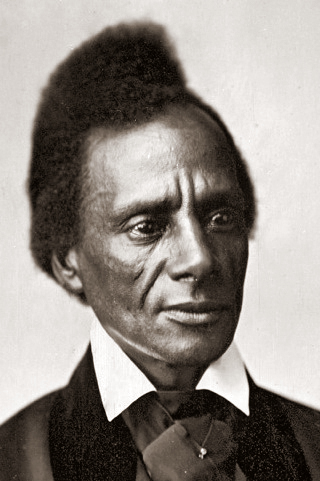
Charles Lenox Remond was an American orator, activist and abolitionist based in Massachusetts. He lectured against slavery across the Northeast, and in 1840 traveled to the British Isles on a tour with William Lloyd Garrison. During the American Civil War, he recruited blacks for the United States Colored Troops, helping staff the first two units sent from Massachusetts. From a large family of African-American entrepreneurs, he was the brother of Sarah Parker Remond, also a lecturer against slavery.
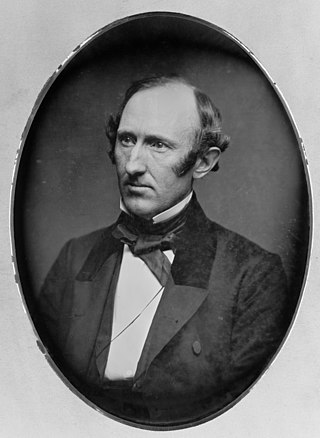
Wendell Phillips was an American abolitionist, advocate for Native Americans, orator, and attorney.
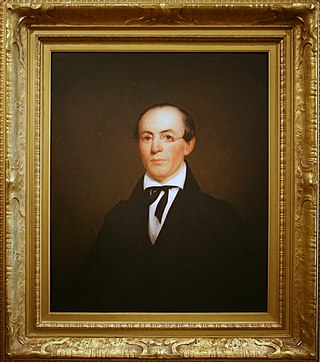
The New England Anti-Slavery Society (1831–1837) was formed by William Lloyd Garrison, editor of The Liberator, in 1831. The Liberator was its official publication.

The Liberator (1831–1865) was a weekly abolitionist newspaper, printed and published in Boston by William Lloyd Garrison and, through 1839, by Isaac Knapp. Religious rather than political, it appealed to the moral conscience of its readers, urging them to demand immediate freeing of the slaves ("immediatism"). It also promoted women's rights, an issue that split the American abolitionist movement. Despite its modest circulation of 3,000, it had prominent and influential readers, including all the abolitionist leaders, among them Frederick Douglass, Beriah Green, Arthur and Lewis Tappan, and Alfred Niger. It frequently printed or reprinted letters, reports, sermons, and news stories relating to American slavery, becoming a sort of community bulletin board for the new abolitionist movement that Garrison helped foster.

Thomas Dalton (1794–1883) was a free African American raised in Massachusetts who was dedicated to improving the lives of people of color. He was active with his wife Lucy Lew Dalton, Charlestown, Massachusetts, in the founding or ongoing activities of local educational organizations, including the Massachusetts General Colored Association, New England Anti-Slavery Society, Boston Mutual Lyceum, and Infant School Association, and campaigned for school integration, which was achieved in 1855.
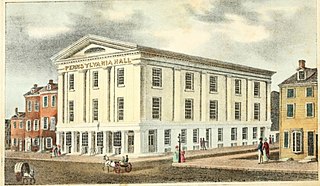
Pennsylvania Hall, "one of the most commodious and splendid buildings in the city," was an abolitionist venue in Philadelphia, built in 1837–38. It was a "Temple of Free Discussion", where antislavery, women's rights, and other reform lecturers could be heard. Four days after it opened it was destroyed by arson, the work of an anti-abolitionist mob.

The Massachusetts General Colored Association was organized in Boston in 1826 to combat slavery and racism. The Association was an early supporter of William Lloyd Garrison. Its influence spread locally and was realized within New England when they joined the New England Anti-Slavery Society in 1833.

Edmond Quincy V (1808–1877) was an American author and reformer.

The Boston Female Anti-Slavery Society (1833–1840) was an abolitionist, interracial organization in Boston, Massachusetts, in the mid-19th century. "During its brief history ... it orchestrated three national women's conventions, organized a multistate petition campaign, sued southerners who brought slaves into Boston, and sponsored elaborate, profitable fundraisers."

Francis Jackson (1789–1861) was an abolitionist in Boston, Massachusetts. He was president of the Massachusetts Anti-Slavery Society for many years, was also president of the New England Anti-Slavery Conventions, and vice president of the American Anti-Slavery Society. He was also affiliated with the Boston Female Anti-Slavery Society and the Boston Vigilance Committee. He worked for the South Cove Corporation, filling in land in Boston's South End in the 1830s.
William Gwinn was an African American from Boston, Massachusetts. He was one of the first African-Americans to participate in the antebellum American Back-to-Africa movement under the auspices of Captain Paul Cuffe's 1815 voyage to Sierra Leone.
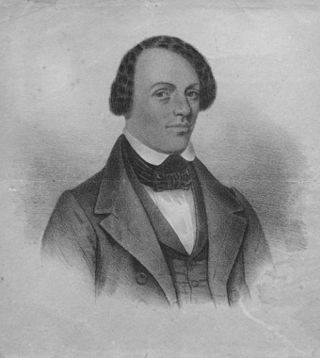
George Washington Latimer was an escaped slave whose case became a major political issue in Massachusetts.

Sarah Harris Fayerweather was an African-American activist, abolitionist, and school integrationist. Beginning in January 1833 at the age of twenty, she attended Prudence Crandall's Canterbury Female Boarding School in Canterbury, Connecticut, the first integrated school in the United States.

John Telemachus Hilton was an African-American abolitionist, author, and businessman, who established barber, furniture dealer, and employment agency businesses. He was a Prince Hall Mason and established the Prince Hall National Grand Lodge of North America and served as its first National Grand Master for ten years. He also was a founding member of the Massachusetts General Colored Association, and active member and author in the Anti-Slavery movement.
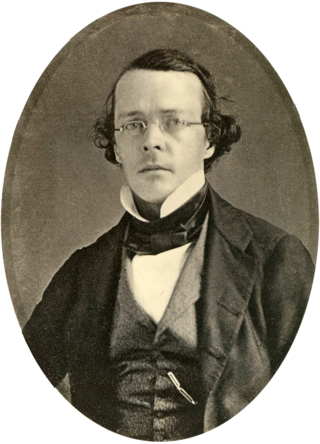
Isaac Knapp was an American abolitionist printer, publisher, and bookseller in Boston, Massachusetts. He is remembered primarily for his collaboration with William Lloyd Garrison in printing and publishing The Liberator newspaper.
James George Barbadoes was an African-American, community leader, and abolitionist in Boston, Massachusetts in the early 19th century. Dedicated to improving the lives of people of color at the local level, as well as the national level.
Joel W. Lewis was a prominent African-American businessman and abolitionist. He was among the best known and respected reformers in antebellum Boston.
References
- 1 2 "The Abolitionist". Garrison and Knapp. December 5, 1833 – via Google Books.
- 1 2 Yellin, Jean Fagan; Horne, John C. Van (May 31, 2018). The Abolitionist Sisterhood: Women's Political Culture in Antebellum America. Cornell University Press. ISBN 9781501711428 – via Google Books.
- ↑ Horton, James Oliver; Horton, Lois E. (December 5, 1999). Black Bostonians: family life and community struggle in the antebellum North. Holmes & Meier. ISBN 9780841913790 – via Google Books.
- ↑ Horton, James Oliver; Horton, Lois E. (December 5, 1999). Black Bostonians: family life and community struggle in the antebellum North. Holmes & Meier. ISBN 9780841913806 – via Google Books.
- ↑ "Agents" (PDF). The Liberator. Vol. III, no. 35. Boston, Mass.: William Lloyd Garrison and Isaac Knapp. Aug 31, 1833. p. 1. Retrieved Aug 7, 2024.
- ↑ "Charlestown". bwht.org.
 | This article related to Boston is a stub. You can help Wikipedia by expanding it. |
 | This African American–related article is a stub. You can help Wikipedia by expanding it. |