Related Research Articles

Robert Edward Lee was an American Confederate general during the Civil War, who was appointed the overall commander of the Confederate States Army toward the end of the war. He led the Army of Northern Virginia, the Confederacy's most powerful army, from 1862 until its surrender in 1865, earning a reputation as a skilled tactician.

Interstate 16 (I-16), also known as Jim Gillis Historic Savannah Parkway, is an east–west Interstate Highway located entirely within the US state of Georgia. It carries the hidden designation of State Route 404 (SR 404) for its entire length. I-16 travels from downtown Macon, at an interchange with I-75 and SR 540 to downtown Savannah at Montgomery Street (exit 167B). It also passes through or near the communities of Dublin, Metter, and Pooler. I-16's unsigned designation of SR 404 has a spur that is signed in Savannah.

Andrew Jackson Young Jr. is an American politician, diplomat, and activist. Beginning his career as a pastor, Young was an early leader in the civil rights movement, serving as executive director of the Southern Christian Leadership Conference (SCLC) and a close confidant to Martin Luther King Jr. Young later became active in politics, serving as a U.S. Congressman from Georgia, United States Ambassador to the United Nations in the Carter Administration, and 55th Mayor of Atlanta. He was the first African American elected to Congress from Georgia since Reconstruction, as well as one of the first two African Americans elected to Congress from the former Confederacy since Reconstruction, alongside Barbara Jordan of Texas. Since leaving office, Young has founded or served in many organizations working on issues of public policy and political lobbying.
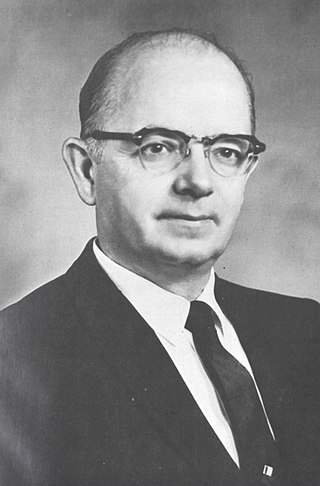
Lester Garfield Maddox Sr. was an American politician who served as the 75th governor of Georgia from 1967 to 1971. A populist Southern Democrat, Maddox came to prominence as a staunch segregationist when he refused to serve black customers in his Atlanta restaurant, the Pickrick, in violation of the Civil Rights Act of 1964. As he was ineligible to run for a second consecutive gubernatorial term, he sought and won election as lieutenant governor, serving alongside his successor as governor, Jimmy Carter.

Bobby Lee Rush is an American politician, activist and pastor who served as the U.S. representative for Illinois's 1st congressional district for three decades, ending in 2023. A civil rights activist during the 1960s, Rush co-founded the Illinois chapter of the Black Panther Party.

Richard Brevard Russell Jr. was an American politician. A Southern Democrat, he served as the 66th Governor of Georgia from 1931 to 1933 before serving in the United States Senate for almost 40 years, from 1933 to 1971. Russell was a founder and leader of the conservative coalition that dominated Congress from 1937 to 1963, and at his death was the most senior member of the Senate. He was a leader of Southern opposition to the civil rights movement for decades.

Amelia Isadora Platts Boynton Robinson was an American activist who was a leader of the American Civil Rights Movement in Selma, Alabama, and a key figure in the 1965 Selma to Montgomery marches.

Horace Julian Bond was an American social activist, leader of the civil rights movement, politician, professor, and writer. While he was a student at Morehouse College in Atlanta, Georgia, during the early 1960s, he helped establish the Student Nonviolent Coordinating Committee (SNCC). In 1971, he co-founded the Southern Poverty Law Center in Montgomery, Alabama, and served as its first president for nearly a decade.

Samuel Ernest Vandiver Jr. was an American Democratic Party politician who was the 73rd governor of Georgia from 1959 to 1963.

Lafayette McLaws was a United States Army officer and a Confederate general in the American Civil War. He served at Antietam and Fredericksburg, where Robert E. Lee praised his defense of Marye's Heights, and at Gettysburg, where his division made successful assaults through the Peach Orchard and Wheatfield, but was unable to dislodge Union forces from Cemetery Ridge. After the Knoxville Campaign, he was court-martialed for inefficiency, though this was overturned for procedural reasons. Finally, he was sent to his native Georgia to resist Sherman's March to the Sea but retreated through the Carolinas, losing many men through desertion, and was presumed to have surrendered with Joseph E. Johnston in April 1865.
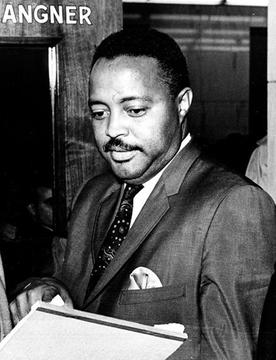
Hosea Lorenzo Williams was an American civil rights leader, activist, ordained minister, businessman, philanthropist, scientist, and politician. He was considered a member of famed civil rights activist and Nobel Peace Prize winner Martin Luther King Jr.'s inner circle. Under the banner of their flagship organization, the Southern Christian Leadership Conference, King depended on Williams to organize and stir masses of people into nonviolent direct action in myriad protest campaigns they waged against racial, political, economic, and social injustice. King alternately referred to Williams, his chief field lieutenant, as his "bull in a china shop" and his "Castro." Vowing to continue King's work for the poor, Williams is well known in his own right as the founding president of one of the largest social services organizations in North America, Hosea Feed the Hungry and Homeless. His famous motto was "Unbought and Unbossed."
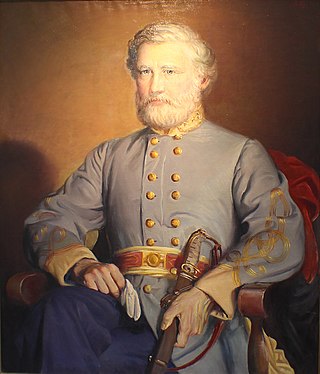
Henry Lewis Benning was a Confederate general officer during the American Civil War. He also was a lawyer, legislator, and judge on the Georgia Supreme Court. Following the Confederacy's defeat at the end of the war, he returned to his native Georgia, where he lived out the rest of his life. Fort Benning was named in his honor until 2023, when it was redesignated Fort Moore.
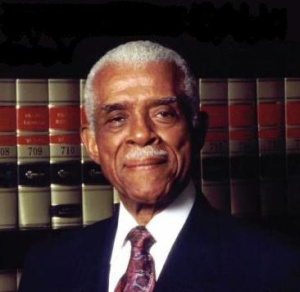
Donald Lee Hollowell was an American civil rights attorney during the Civil Rights Movement, in the state of Georgia. He successfully sued to integrate Atlanta's public schools, Georgia colleges, universities and public transit, freed Martin Luther King Jr. from prison, and mentored civil rights attorneys. The first black regional director of a federal agency, Hollowell is best remembered for his instrumental role in winning the desegregation of the University of Georgia in 1961. He is the subject of a 2010 documentary film, Donald L. Hollowell: Foot Soldier for Equal Justice.
Xernona Clayton Brady is an American civil rights leader and broadcasting executive. During the Civil Rights Movement, she worked for the National Urban League and Southern Christian Leadership Conference, where she became involved in the work of Dr. Martin Luther King Jr. Later, Clayton went into television, where she became the first African American from the southern United States to host a daily prime time talk show. She became corporate vice president for Turner Broadcasting.

Elonnie J. Josey was an African-American activist and librarian. Josey was the first chair of the Black Caucus of the American Library Association, having been instrumental in its formation in 1970; served as president of the American Library Association from 1984 to 1985; and was the author of over 400 books and other publications.

Richard Robert Wright Sr. was an American military officer, educator and college president, politician, civil rights advocate and banking entrepreneur. Among his many accomplishments, he founded a high school, a college, and a bank. He also founded the National Freedom Day Association in 1941.
Curtis V. Cooper was an American health care and civil rights leader from Georgia.
Earl Theodore Shinhoster was a Black civil rights activist in Savannah, Georgia.
The Province of Georgia was a significant battleground in the American Revolution. Its population was at first divided about exactly how to respond to revolutionary activities and heightened tensions in other provinces. Georgia was the only colony not present in the First Continental Congress in 1774. When violence broke out in 1775, radical Patriots took control of the provincial government, and drove many Loyalists out of the province. Georgia subsequently took part to the Second Continental Congress with the other colonies. In 1776 and 1778, Georgia served as the staging ground for several important raids into British-controlled Florida. The British army captured Savannah in 1778, and the American and French forces failed to recapture the city during the Siege of Savannah in 1779. Georgia remained under British control until their evacuation from Savannah in 1782.
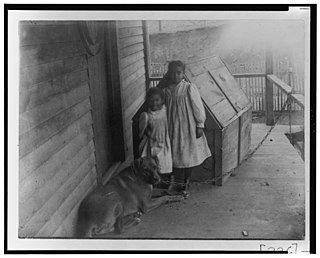
African-American Georgians are residents of the U.S. state of Georgia who are of African American ancestry. As of the 2010 U.S. Census, African Americans were 31.2% of the state's population. Georgia has the second largest African American population in the United States following Texas. Georgia also has a gullah community. African slaves were brought to Georgia during the slave trade.
References
- ↑ "Hill, Bobby L. (Bobby Lee), 1941-2000 - Civil Rights Digital Library". crdl.usg.edu.
- ↑ "Georgia HR355 | TrackBill". trackbill.com.
- 1 2 "Honoring Black History: Who was Rep. Bobby Hill? How will his legacy be remembered?". February 24, 2022.
- ↑ Tribune, Savannah (October 6, 2021). "Interchange Dedicated To Representative Bobby L. Hill - The Savannah Tribune".