Arabian archaeology, or the archaeology of the Arabian Peninsula, is the study of past societies on the Arabian Peninsula through surviving artefacts of human material culture. It is the only source of information for the period of Prehistoric Arabia, before written documentation of the region began, and one of the main sources of information for pre-Islamic Arabia, especially through the study of epigraphy and use of pre-Islamic Arabian inscriptions.
Many archaeological sites from the Arabian Peninsula have considerable cultural importance. In 2008, the Hegra Archaeological Site in Al-Ula became the first place in Saudi Arabia to be recognized by UNESCO as a World Heritage Site. [1] [2] On 25 January 2023, the seven sites from Yemen, called the Landmarks of the Ancient Kingdom of Saba, Marib, were designated as World Heritage Sites. These are the two ancient cities of Marib and Sirwah, the Temple of Awwam, the Barran Temple, and three locations of the Marib Dam site (its Northern Bank, the Southern Bank, and the Dam of Jufaynah). [3]
In recent years, many major new findings have been made by the field of Arabian archaeology. This includes the discovery of monumental stone structures at the Al Ha’it Oasis [4] and thousands of years of rock art at the Al-Ula region. [5] An extensive Hellenistic and Mediterranean repertoire of objects and artistry has been found at Qaryat al-Faw in Central Arabia, [6] and fortified towns dating back four thousand years in the Khaybar Oasis. [7]
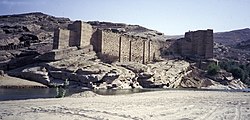
The earliest scientific interest in the Arabian Peninsula began with Dutch explorers in the 17th century, and for the next couple hundred years, remained among lay Western writers including travellers and Westerners stationed in the area. In the mid-19th century, the study of the Arabian Peninsula became a proper academic field, situated at academic institutions (like universities, libraries, etc) with dedicated professors and scholars to the area matter. [8] In the 1960s and 1970s, the field was joined by legal scholars, and social scientists, the first international conferences were held, and interdisciplinary projects and books began to address the area matter. Nevertheless, compared to other Middle East studies, the area remained fringe and the least-studied, until the boon in Yemeni Studies in the 1970s and then Gulf studies in the 2010s, facilitated by a reduction in censorship and allowance of greater academic freedom by governments in the area. As a result, the field finally became mainstream, with the release of many significant books, new journals, academic centers and organizations, etc. Major organizations today include the International Association for the Study of Arabia (IASA) and the Association for Gulf and Arabian Peninsula Studies (AGAPS). Significant initiatives and websites have included the Arabian Gulf Digital Archive and the Qatar Digital Library. [9]
Numerous journals have since been launched, including: [10]
Archaeological evidence indicates that the Arabian Peninsula experienced a prolonged phase of extreme aridity from much of the fourth millennium BC to parts of the third millennium BC (approximately 5900 and 5300 years ago), commonly referred to as the Dark Millennium. [11] This period followed earlier Holocene humid conditions and was marked by widespread environmental stress, including the contraction of lakes, wetlands, and vegetation. [11] Many regions, such as Qatar and the United Arab Emirates, have a dearth of archaeological sites dating to this timeframe. The period also coincides with the decline of Ubaid cultures. [12] While some archaeologists consider much of the Arabian Peninsula to be abandoned during this interval, recent research instead suggests regional variation. [11]
In northern Arabia, continued occupation was supported by shallow aquifers, seasonal water bodies, and oases such as Jubbah, Saudi Arabia. Archaeological sites around Jubbah indicate repeated use by pastoral groups, even during severe droughts, with evidence including wells, runoff-capture features, and oasis enclosures. In contrast, southeastern Arabia, which lacked comparable groundwater resources, experienced large-scale abandonment of its interior deserts. Populations increasingly relocated to the Persian Gulf coast, where livestock herding and fishing economies developed. Despite this shift, archaeological evidence suggests that coastal communities also faced nutritional stressors during this period. [11]
{{cite journal}}: CS1 maint: article number as page number (link)