英文互译镜像站

Ancient Diocese of Sisteron

Last updated
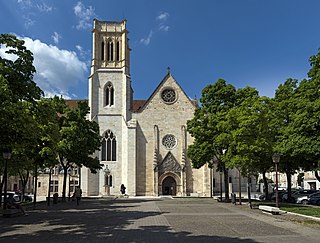
Concathedrale Notre-Dame-et-Saint-Thyrse, Sisteron Sisteron - Cathedrale Notre-Dame-des-Pommiers -208.jpg
Concathédrale Notre-Dame-et-Saint-Thyrse, Sisteron

The former French diocese of Sisteron existed until the French Revolution. Its see was at Sisteron in southern France and at Forcalquier, in the modern department of Alpes-de-Haute-Provence. Sisteron was the only diocese in France which had two cathedrals. Each cathedral had a Chapter, and the two Chapters voted together when an election was held to elect a new bishop of Sisteron. [1] The diocese of Sisteron was part of the ecclesiastical province of Narbonensis Secunda, whose Metropolitan was the Archbishop of Aix-en-Provence.

Contents

History

In 374, the town of Sisteron belonged to the Province of Gallia Narbonensis Secunda, and held the rank of sixth place. [2]

In 890, the bishops of Provence assembled in the Council of Valence, under the leadership of the archbishops of Lyon, Arles, Embrun, and Vienne. The bishops took note of the fact that Archbishop Bernoin of Vienne had been to Rome to complain to the pope of the increasing disorder of the kingdom since the death of Charlemagne. They singled out the invasions of the Northmen and of the Saracens, who had caused the depopulation of the entire area. [3] On 7 July 1057, Pope Victor II wrote a letter of privileges for Archbishop Winimann (Viminien) of Embrun. In the bull, the Pope took note of the invasion, occupation, and devastation of the city of Embrun by the Saracens. Embrun had also been a place of refuge for undisciplined people fleeing from other localities. [4] Sisteron is a distance of some 52 miles from Embrun, and on the main route of invasion from Aix and Marseille. The whole of Provence, in fact, suffered from similar difficulties in the eighth and ninth centuries. [5] This may account, at least in part, for the absence of names of any bishops of Sisteron in the 8th century, and the dubious nature of those in the 9th.

In 1400 and 1401 the Dominican friar, Vincent Ferrer of Valencia, preached in Sisteron. [6]

In the second half of the fifteenth century Sisteron was particularly subject to pestilence. There were outbreaks in 1451, 1458, 1467, 1474, 1479, and 1482. The population was reduced by two-thirds. It returned in 1503, and the people fled. Even the Cathedral Chapter left, taking up residence at Aubignosc until 1508. [7] In 1675 the city of Sisteron had a population estimated at some 3,000 persons, and the diocese had ninety-two parishes. [8] In 1764, the guess as to the population had been revised to 4,000 persons but the diocese contained only eighty parishes. [9]

In 1789, before the Revolution the Cathedral Chapter of Sisteron consisted of a Provost, twelve Canons, and twelve beneficiaries (two of whom were curés). But, in the fifteenth century, only two of them were resident in Sisteron; the rest were functionaries of the Roman Curia in Avignon. [10] In 1764 there were three dignities (dignités) and seven Canons. [11] They were all abolished by the Civil Constitution of the Clergy in 1790 and by the confiscation of church property. The Canons of Sisteron were officially notified of their suppression on 6 December 1790 by the municipal authorities. The Chapter of the co-cathedral of Forcalquier were similarly notified. Bishop de Bovet was also notified, but he replied that he could not comply since he had no bishop or other competent authority into whose hands he could commit his charge. [12]

On 20 March 1791 the electors of the 'département' of Basses-Alpes, into which Sisteron had been swept, met at Digne to choose a new bishop. On the third ballot they elected Jean-Baptiste-Romé de Villeneuve, the sixty-four year old curé of Valensole as their Constitutional Bishop. On 2 June he was consecrated in the Cathedral of Nîmes by Constitutional Bishop Charles-Benoît Roux. By 1795 most of the people had abandoned the Constitutional Church and returned to their old allegiances. Villeneuve died on 23 December 1798 without having reconciled with Rome. [13]

After the Concordat of 1801 negotiated by First Consul Bonaparte and Pope Pius VII, the diocese of Sisteron was suppressed by papal authority (not the false authority of a civil government), and its territory was assigned to the diocese of Digne. [14]

Bishops

to 1000

  • [Chrysaphius (ca. 449–452)] [15]
  • Johannes I (500–516 ?) [16]
  • Valerius (517) [17]
  • Avolus (ca. 541–554) [18]
  • Genesius (573) [19]
  • Pologronius (584–585) [20]
  • Secundinus (I.) (614) [21]
  • Johannes (II.) (812–860) [22]
Viventius (ninth century) [23]
Magnibert (ninth century) [24]
Amantius (ninth century) [25]
Secundinus II. (ninth century) [26]
Virmagnus (ninth century) [27]
  • Bonus (867) [28]
  • Vincentius (end of ninth century) [29]
? Eustorgus (tenth century) [30]
  • Arnulphus (c. 925 ?) [31]
  • Johannes (III.) (mid-tenth century) [32]
  • Ours (967) [33]
? Rudolf (I.) (981) [34]

1000 to 1400

  • Frodo (999–1015?) [35]
  • Durandus (1015 ?–1020 ?) [36]
  • Pierre (I.) (1023–1043) [37]
  • Géraud ? (1031 ?–1045 ?)
  • Pierre (II.) (1043) [38]
  • Gérard (I.) Chevrier (1060–1080 ?) [39]
  • Carolus (1082) [40]
...
  •  ? Nitard (end of eleventh century) [41]
...
  • Bertrand (I.) (1102 ? – 1105 ?) [42]
...
  • Gerardus (II.) (1110–1124) [43]
  • Raimbaud, O.S.B. (1125 ?–1145) [44]
  • Pierre de Sabran (1145–1171) [45]
  • Bertrand (II.), O.Cart. (1172–1174) [46]
  • Bermond d'Anduse (1174–1214) [47]
Sede vacante (1214–1216)
  • Rodolphe (II.), O.Cist. (1216–1241) [48]
  • Henri de Suze (1244–1250) [49]
  • Humbert Fallavel, O.P. (1250–1256) [50]
  • Alain de Lusarches (1257–1277) [51]
  • Pierre Giraud (1277–1291) [52]
  • Pierre d'Alamanon, O.P. (1292–1304) [53]
  • Jacques Gantelmi (1306–1310) [54]
  • Raimond d'Oppède (1310–1328) [55]
  • Rostan (I.) (1328–1348) [56]
  • Pierre Artaudi, O.P. (1349–1360) [57]
  • Gérard (III.) (1362–1369) [58]
  • Ranulphe de Gorze (1370–1382) (Urbanite) [59]
  • Artaud de Mélan (1382–1404)(Clementine) [60]
  • Antoine de Viale (1383–1386) (Urbanite) [61]

from 1400

  • Nicolas Sacosta, O.Min. (1404–1414) [62]
  • Robert du Four (1414–1437) [63]
  • Mitre Gastinel (1437–1440) [64]
[Raimond Talon (1437)] [65]
Gaucher de Forcalquier (1440–1442) [66]

See also

Related Research Articles

<span class="mw-page-title-main">Roman Catholic Archdiocese of Reims</span> Archdiocese

The Archdiocese of Reims is a Latin Church ecclesiastic territory or archdiocese of the Catholic Church in France. Erected as a diocese around 250 by St. Sixtus of Reims, the diocese was elevated to an archdiocese around 750. The archbishop received the title "primate of Gallia Belgica" in 1089.

<span class="mw-page-title-main">Roman Catholic Archdiocese of Rouen</span> Archdiocese of the Roman Catholic Church in France

The Roman Catholic Archdiocese of Rouen is an archdiocese of the Latin Rite of the Roman Catholic Church in France. As one of the fifteen Archbishops of France, the Archbishop of Rouen's ecclesiastical province comprises the greater part of Normandy. The Archbishop of Rouen is currently Dominique Lebrun.

<span class="mw-page-title-main">Roman Catholic Archdiocese of Bordeaux</span> Archdiocese in France

The Archdiocese of Bordeaux (–Bazas) is a Latin Church ecclesiastical territory or archdiocese of the Catholic Church in France. The episcopal see is Bordeaux, Aquitaine. It was established under the Concordat of 1802 by combining the ancient Diocese of Bordeaux with the greater part of the suppressed Diocese of Bazas. The Archdiocese of Bordeaux is a metropolitan see, with four suffragan dioceses in its ecclesiastical province: Dioceses of Agen, Aire and Dax, Bayonne, and Périgueux.

<span class="mw-page-title-main">Roman Catholic Diocese of Gap-Embrun</span> Catholic diocese in France

The Diocese of Gap and Embrun is a Latin Church ecclesiastical territory or diocese of the Catholic Church in Provence-Alpes-Côte d'Azur region of Southern France.

<span class="mw-page-title-main">Roman Catholic Diocese of Fréjus-Toulon</span> Catholic diocese in France

The Catholic Diocese of Fréjus–Toulon is a diocese of the Latin Rite of the Catholic Church in southeastern France on the Mediterranean coast. The present diocese comprises the territory of the ancient Diocese of Fréjus as well as that of the ancient Diocese of Toulon. In 1957 it was renamed as the Diocese of Fréjus–Toulon.

<span class="mw-page-title-main">Roman Catholic Diocese of Digne</span> Catholic diocese in France

The Diocese of Digne is a Latin Church ecclesiastical territory or diocese of the Catholic Church in France. Erected in the 4th century as the Diocese of Digne, the diocese has been known as the Diocese of Digne–Riez–Sisteron since 1922. The diocese comprises the entire department of Alpes-de-Haute-Provence, in the Region of Provence-Alpes-Côte d'Azur. The diocese was a suffragan diocese of the Archdiocese of Aix-en-Provence and Arles until 2002 and is now a suffragan diocese in the ecclesiastical province of the metropolitan Archdiocese of Marseille. The Bishop of Digne's cathedra is found in Digne Cathedral at the episcopal see of Digne-les-Bains.

<span class="mw-page-title-main">Roman Catholic Archdiocese of Aix</span> Catholic archdiocese in France

The Archdiocese of Aix-en-Provence and Arles is a Latin Church ecclesiastical territory or archdiocese of the Catholic Church in France. The archepiscopal see is located in the city of Aix-en-Provence. The diocese comprises the department of Bouches-du-Rhône, in the Region of Provence-Alpes-Côte d'Azur. It is currently a suffragan of the Archdiocese of Marseilles and consequently the archbishop no longer wears the pallium.

<span class="mw-page-title-main">Roman Catholic Diocese of Nice</span> Catholic diocese in France

The Roman Catholic Diocese of Nice is a diocese of the Latin Church of the Roman Catholic Church in France. The diocese comprises the Départment of Alpes-Maritimes. The diocese is a suffragan of the Archdiocese of Marseille.

<span class="mw-page-title-main">Roman Catholic Diocese of Bayeux and Lisieux</span> Diocese of the Roman Catholic Church in France

The Roman Catholic Diocese of Bayeux and Lisieux is a diocese of the Catholic Church in France. It is coextensive with the Department of Calvados and is a suffragan to the Archdiocese of Rouen, which is also in Normandy.

<span class="mw-page-title-main">Roman Catholic Diocese of Agen</span> Catholic diocese in France

The Diocese of Agen is a Latin Church ecclesiastical territory or diocese of the Catholic Church in France.

<span class="mw-page-title-main">Jean-Baptiste de Belloy</span>

Jean-Baptiste Count de Belloy was an Archbishop of Paris and cardinal of the Catholic Church.

<span class="mw-page-title-main">Roman Catholic Archdiocese of Marseille</span> Latin Catholic archdiocese in France

The Archdiocese of Marseille is a Latin Church ecclesiastical jurisdiction or archdiocese of the Catholic Church in France. The archepiscopal see is in the city of Marseille, and the diocese comprises the arrondissement of Marseille, a subdivision of the department of Bouches-du-Rhône in the Region of Provence-Alpes-Côte d'Azur.

<span class="mw-page-title-main">Roman Catholic Diocese of Riez</span>

The former French Catholic diocese of Riez existed at least from fifth century Gaul to the French Revolution. Its see was at Riez, in the modern department of Alpes-de-Haute-Provence.

<span class="mw-page-title-main">Roman Catholic Diocese of Saint-Pons-de-Thomières</span>

The former French Catholic diocese of Saint-Pons-de-Thomières existed from 1317 until the French Revolution. Its see at Saint-Pons-de-Thomières in southern France is in the modern department of Hérault. There was the Abbey of St-Pons, founded in 936 by Raymond, Count of Toulouse, who brought there the monks of St-Géraud d'Aurillac.

<span class="mw-page-title-main">Roman Catholic Diocese of Nevers</span> Diocese of the Catholic Church

The Roman Catholic Diocese of Nevers is a diocese of the Latin Rite of the Roman Catholic Church in France. The diocese comprises the department of Nièvre, in the Region of Bourgogne.

<span class="mw-page-title-main">Roman Catholic Archdiocese of Embrun</span>

The Roman Catholic Archdiocese of Embrun was located in southeastern France, in the mountains of the Maritime Alps, on a route that led from Gap by way of Briançon to Turin. It had as suffragans the Diocese of Digne, Diocese of Antibes and Grasse, Diocese of Vence, Diocese of Glandèves, Diocese of Senez and Diocese of Nice. Its see was the Cathedral of Nôtre Dame in Embrun.

<span class="mw-page-title-main">Ancient Diocese of Apt</span> Roman Catholic diocese in France (4 c. - 1801)

The former French Catholic diocese of Apt, in southeast France, existed from the fourth century until the French Revolution. By the Concordat of 1801, it was suppressed, and its territory was divided between the diocese of Digne and the diocese of Avignon. Its seat was at Apt Cathedral, in Vaucluse.

<span class="mw-page-title-main">Ancient Diocese of Orange</span> Former Roman Catholic diocese in France

The ancient residential diocese of Orange in the Comtat Venaissin in Provence, a fief belonging to the Papacy, was suppressed by the French government during the French Revolution. It was revived in 2009 as a titular see of the Roman Catholic Church.

<span class="mw-page-title-main">Roman Catholic Diocese of Grasse</span>

The former French Catholic diocese of Grasse was founded in the 4th or 5th century as the diocese of Antibes. It was originally suffragan to the Archbishop of Aix, and then to the Archbishop of Embrun. The see moved from Antibes to Grasse in 1244. It remained at Grasse Cathedral until the French Revolution. The diocese was suppressed by the Concordat of 1801, its territory passing to the diocese of Nice.

<span class="mw-page-title-main">Ancient Diocese of Lisieux</span> Roman Catholic diocese in France (? - 1801)

The Diocese of Lisieux was a Roman Catholic ecclesiastical territory in France, centered on Lisieux, in Calvados.

References

  1. Albanès, pp. 663-664.
  2. Fisquet, p. 3.
  3. J.-D. Mansi (ed.), Sacrorum conciliorum nova et amplissima collectio, edito novissima, Tomus XVIII (Venice: Antonius Zatta 1773), pp. 95-96.
  4. Denis de Sainte-Marthe (1725). Gallia Christiana: In Provincias Ecclesiasticas Distributa (in Latin). Vol. Tomus tertius (3). Paris: Typographia Regia. pp. Instrumenta, p. 177.
  5. Laplane, pp. 45-56. Fisquet, pp. 3-4.
  6. Fisquet, p. 9. Paul Meyer, "Melanges catalans," in: Romania: recueil trimestriel consacré à l'étude des langues et des littératures romanes. Vol. 10. Paris: Vieweg. 1881. pp. 226–231, at 229–230.
  7. Fisquet, p. 10.
  8. Ritzler-Sefrin, V, p. 359 note 1.
  9. Ritzler-Sefrin, VI, p. 382 note 1.
  10. Fisquet, p. 9.
  11. Ritzler-Sefrin, VI, p. 382 note 1.
  12. Maurel, pp. 87-88; 305-306.
  13. Paul Pisani (1907). Répertoire biographique de l'épiscopat constitutionnel (1791-1802) (in French). Paris: A. Picard et fils. pp. 328–331.
  14. G-Catholic, Diocese of Sisteron, France Archived February 4, 2014, at the Wayback Machine
  15. Albanès (p. 663-665) points out that Chrysaphius is undoubtedly a bishop, but there is no evidence to assign him to Sisteron. Duchesne, p. 288, declines even to put him on the list of bishops.
  16. Joannes belonged to a rich senatorial family, and during his administration he built twelve churches and founded two monasteries using his own funds. He was bishop in the time of King Gundebaud of Burgundy (473-509). Albanès, pp. 665-666.
  17. Valerius took part in the Council of Epaona on 6 September 517: Sirmond, p. 899.
  18. Albanés, pp. 667-668. Duchesne, p. 288.
  19. Bishop Genesius was present at the Council of Paris that met in November 573. Albanés, p. 669. C. De Clercq, Concilia Galliae, A. 511 – A. 695 (Turnholt: Brepols 1963), p. 214.
  20. Bishop Pologronius subscribed the acts of the Council of Valence on 22 May 584. He was also present at the Council of Mâcon in October 1585. Albanés, p. 669-670. C. De Clercq, pp. 236, 249.
  21. Bishop Secundinus subscribed the acts of the Council of Paris of 10 October 614. Nothing more is known of him. Albanés, p. 671-672. C. De Clercq, pp. 281.
  22. On 26 March 812, Bishop Joannes founded the monastery of Volx at Bauli, with twelve Benedictine monks. The document on which this information rests, dated by its handwriting to the eleventh century, however, has been accused of being a forgery. Albanés appeals to the authority of Dom Jean Mabillon, who knew of the document's errors and did not label the document a forgery. Albanés is using the argument from authority along with the argument from silence, both dubious procedures. His theory is that the episcopal signatories are later ratifications of the original charter, and thus a list of ninth century bishops. Every diocese and monastery in Christendom, however, wished to have multiple charters, issued as often as possible by as many authorities as possible, from pope and king down to local lord and canon. Albanés interpretation is doubtful. Albanés, pp. 672-674. The Livre Vert of Sisteron assigns Bishop Joannes a reign on 47 years.
  23. Viventius presul is actually a subscriber to the foundation document of the monastery of Volx 812, along with three other bishops. He cannot be the Bishop of Sisteron along with Bishop Joannes, as Louis Duchesne has pointed out (p. 288 note 3). Albanés, pp. 672-674; Instrumenta, p. 441. This is the oldest document in which Sisteron is designated as a County: Fisquet, p. 4.
  24. The Livre Vert of Sisteron assigns a reign of 61 years to Magnibert, which is hardly creditable. It is the only reference to this supposed bishop. Albanés, p. 676.
  25. Amantius is one of the bishops who subscribed the charter of Volx at Bauli in 1812, and after 61 years of Viventius' episcopacy, he succeeded, and ruled for eleven years more, according to the Livre Vert. Implausibilities become impossibilities. Albanés, pp. 676-677. Cf. Duchesne, p. 288 note 3.
  26. Secundinus was also a signatory to the charter of 812. Albanés, p. 677. Duchesne remarks that Secondinus was indeed a bishop of Sisteron, but anterior to Charlemagne: Duchesne, p. 288 note 3.
  27. The alleged bishop is called Magnus in the Livre Vert, and Virmagnus in the charter of 812. None of these ninth century bishops appears anywhere else. Magnus ruled for twenty-one years, according to the Livre Vert. Albanés, pp. 677-678. Cf. Duchesne, p. 288 note 3.
  28. Bonus executed a document of property exchange with Bishop Paul of Apt on 4 July 867. The Livre Vert records that Bonus was bishop for fifty-five years. Albanés, pp. 678-680. Duchesne, p. 288 no. 7.
  29. The Livre Vert says that he reigned eleven years. Albanés, p. 680, points out the confusion with Viventius.
  30. Eustorgus is credited with a forty-four year reign by the Livre Vert. Nothing else is known of him. He has been confused with Bishop Eustorgus of Toulon. Albanés, pp. 680-681.
  31. The Livre Vert gives Arnulfus sixteen years of rule, though some scholars put it at 41 years. There is no other source. Albanés, pp. 681-682.
  32. Bishop John is said to have founded the monastery of Ganagobie, which had been part of his patrimony, and to have given it to Cluny. He is known only from the Livre Vert. Albanés, pp. 682-683.
  33. Albanés, pp. 683-684.
  34. Rudolph is not mentioned in the Livre Vert. A bishop Rudolfus occurs in a charter of Saint-Victor, where a general assize of Count Guillaume of Provence was held at Manosque. Bishop Pons of Marseille and Abbot Adalard of Saint-Victor pled against Bishop Rudolfus, one Imon, and their heirs. Bishop Rudolfus is mentioned three times, but without the name of his diocese. Since Manosque (some 36 miles northeast of Aix) is in the territory of the diocese of Sisteron, it is concluded that Rudolfus must be the bishop of Sisteron. That is a weak case. Count Guillaume was holding general assizes where he happened to be, and people from all over Provence came to him seeking justice. The Counts established a capital at Forcalquier (some 14 miles from Manosque) around this time (Albanés, p. 687). There is no other evidence for Rudolfus except this one charter. Albanés, pp. 684-685.
  35. Bishop Frodo signed a charter on 9 December 999. At Marseille on 6 January 1005 he participated in the election of Pontia as Abbess of Saint-Sauveur. He is named by Pope Sergius IV (1009-1012) in a bull for the Abbey of Montmajour. He established the body of sixteen Canons at the Collegiate Church of Forquiers. It is not known when his episcopate came to an end. Albanés, pp. 685-687.
  36. Bishop Frodo and Bishop Durandus are mentioned in connection with a new church of Saint-Promacius and Saint-Mauricius near Forcalquier, which was dedicated on 17 November 1030. This is the only evidence, taken from the Grand Cartulaire de Saint-Vincent, for the existence of Bishop Durandus. His dates are purely conjectural (and quite wrongly given in Albanés as 915–920). Albanés, pp. 687-688; Instrumenta pp. 443-444.
  37. Pierre was brother of Feraud, bishop of Gap. Albanés, pp. 689-690.
  38. Pierre II was nephew of Pierre I. After the death of the uncle, the nephew's father Raimbaud bought the Bishopric of Sisteron for his young son. For seventeen years Raimbaud plundered the wealth of the diocese. It appears, however, that young would-be bishop Pierre was actually elected bishop of Vaison according to canon law. Albanés, pp. 692-694.
  39. In 1060, Hugues, abbot of Cluny and Papal Legate, held a large Council of all the bishops of Provence at Avignon to deal with the plight of Sisteron. The Council elected Gérard Chevrier, the founder of the monastery of Oulx, to be the bishop. He was sent to Rome, where he was consecrated by Pope Nicholas II. On his return, he was denied entry into Sisteron by its inhabitants, and therefore he took up residence at Forcalquier. The latest positive evidence for Bishop Gérard Chevrier bears the date 21 March 1074. Albanés, pp. 694-696.
  40. Carolus was the immediate successor of Gérard Chevrier, according to the Livre Vert. A charter of Cluny of 20 January 1282 appears to name him. Albanés, pp. 697-698.
  41. Nitard is known only from the 'Livre Vert' and the Obituaire de Forcalquier. His name does not appear in a list of his predecessors offered by Bishop Bertrand. His existence is denied by many scholars, including Saint-Marthe in Gallia christiana I. He is omitted by Fisquet, and by Gams (p. 631 column 2). Albanés, pp. 698-699, argues in his favor.
  42. The Livre Vert places Bertrand before Nitard. There are no surviving documents concerning Bertrand, though a reference to the donation of the church of Notre-Dame de Forqualquier by Countess Adelaide to a bishop "B" is dated 1102. He died on 7 March, in a year after 1105 and before 1110. Fisquet, pp. 41-42. Albanés, pp. 700-701.
  43. Bishop Gerardus is first mention in an act of January 1110, in which the Countess Adelaide granted him half of the castle of Forqualquier. Gerard took part in the Council of Vienne in 1124. J.-D. Mansi (ed.), Sacrorum Conciliorum nova et amplissima collectio, editio novissima, Tomus XXI, p. 318. Fisquet, p. 42. Albanès, pp. 701-702.
  44. Rambaud had been Prior of Ganagobie (Sisteron). He died on 28 March, probably in 1145. Fisquet, pp. 42. Albanés, pp. 702-704.
  45. Pierre de Sabran held the See of Sisteron for twenty-six years and two months. He died on 7 December 1171. Fisquet, pp. 43-44. Albanès, pp. 704-705.
  46. Bertrand had been Prior of the Carthusian monastery at Durbon (Gap) (1155–1172). He became Bishop of Sisteron in March or April of 1172. died on 18 April 1174. Fisquet, pp. 44-45. Albanès, pp. 705-707.
  47. Bermond d'Anduze had been Canon of Maguelonne. He was elected Bishop of Sisteron before 2 November 1174. He died on 11 June 1214. Albanés, pp. 707-710.
  48. Due to a disagreement between the Canons of Sisteron and the Canons of Forcalquier, the choice of bishop of Sisteron was left to the Archbishop of Aix, Bermond Cornut, who chose Rodolphe. He died on 14 April 1241. Fisquet, pp. 46-48. Albanès, pp. 710-711. Eubel, I, p. 454.
  49. Enrico di Susa had been Prior of the Cathedral Chapter of Antibes, and on 3 October 1242 the Archbishop of Embrun conferred on him the Provostship of the Cathedral Chapter of Embrun. By 30 May 1244, he had been elected Bishop of Sisteron. He was transferred to the diocese of Embrun in 1250. In May 1262 he was named a cardinal by Pope Urban IV and made Bishop of Ostia and Velletri. He died late in 1271, and almost certainly not at Lyon, but at Viterbo, where the Cardinals were still waiting for the arrival of the Pope-Elect, who was travelling from the Holy Land. The Conclave had not yet ended. Fisquet, pp. 48-58. Albanés, pp. 712-714. Eubel, I, pp. 8, 35, 234, 454, N. Didier(1953), "Henri de Suse: évêque de Sisteron (1244-1250)," in: Revue historique de droit français et étranger XXXI (1953), pp. 244-270, 409-429.
  50. Humbert was a native of Lyon, and a councillor of Beatrice of Savoy, who was countess of Forcalquier. His choice as Bishop of Sisteron was due to Cardinal Hugues de Saint Cher, to whom Humbert had been recommended by Enrico di Susa. Humbert was forced to resign in 1256 by Beatrice's son-in-law Charles of Anjou, with whom she was engaged in a quarrel. Albanès, pp. 714-717.
  51. Alain was a native of Paris, and was a follower of Charles of Anjou, brother of Louis IX, and his notary. Alain was elected to the Archbishopric of Aix after Vicedomino de Vicedominis, nephew of Pope Gregory X was made a cardinal in 1273, but Gregory refused to ratify the election. Alain made his Last Will and Testament on 22 September 1277, and died later the same day. Fisquet, pp. 60-65. Albanès, pp. 717-719. Eubel, I, p. 454.
  52. Giraud had been Provost of the Cathedral Chapter of Riez. Fisquet, pp. 65-67. Albanès, pp. 719-721. Eubel, I, p. 454.
  53. D'Alamanon had been Provincial of his Order in Provence, and was the companion of King Charles II of Sicily (Naples) during his captivity at the hands of Alfonso of Aragon. He was named bishop of Sisteron at the urging of King Charles early in 1262. The Livre Vert assigns him 13 years of occupation of the See. He attended the Chapter of the Dominicans of Provence at Aix on 26 July 1304, and died on 1 August. Fisquet, pp. 65-67. Albanès, pp. 721-724. Eubel, I, p. 454.
  54. Gantelmi was the brother of Pierre Gantelmi, Bishop of Riez (1306–1317). Jacques was elected, apparently, in 1304, but his bulls of consecration and installation were delayed because of the death of Pope Benedict XII and the ensuing long Conclave, 7 July 1304 — 5 June 1305. He was approved on 22 January 1306 by Pope Clement V. He died in 1310 while on military campaign in Alba in Piedmont. Fisquet, pp. 67-68. Albanès, pp. 724-725. Eubel, I, p. 454.
  55. The Chapters of Forcalquiers and Sisteron met together on 9 August 1310 and elected, by means of a committee of compromise, Raymundus de Opeda of Avignon, Canon of Sisteron, in succession to Bishop Jacques Gantelmi. The election was quashed by Pope Clement V, who had claimed the right to appoint the bishop, but he then provided Raymond de Opeda on 21 December 1310 (or on 10 December 1310). Albanés, pp. 725-726; Instrumenta, pp. 475-479. Eubel, I, p. 454 with note 4.
  56. Rostagnus, O.E.S.A., had been Prior of Saint-Nazaire (Maguelonne), and then Abbot of Notre-Dame-de-Sablonceaux. He was appointed Bishop of Sisteron on 31 October 1328 by Pope John XXII, and consecrated at Avignon by Cardinal Pierre des Prés on 12 January 1329. He died towards the end of 1348. Albanés, pp. 726-728. Eubel, I, p. 454.
  57. He was not Pietro Avogrado of Vercelli. Pierre Artaudi was a nephew or cousin of Bishop Jean Artaudi of Marseille, and had been Bishop of Alba in the Po Valley (1334–1349). He was appointed Bishop of Sisteron by Pope Clement VI on 28 January 1349, and was transferred to the diocese of Fréjus in 1360, after the death of Bishop Guillaume Amici on 9 June. Albanés, pp. 728-730. Eubel, I, pp. 80, 252, 454.
  58. Geraldus had been Prior of the Priory of the Order of Grandmont in the Bois de Vincennes (Paris). He was appointed bishop of Sisteron by Pope Innocent VI on 20 July 1362. He took part in the Council of Apt in May 1365. He died on 9 December 1369. Albanés, pp. 730-733. Eubel, I, p. 454.
  59. Ranulf de Gorze, a nephew of Pope Innocent VI, was removed from his bishopric because he supported Urban VI of the Roman Obedience. Eubel, I, p. 454, note 7.
  60. Artaud de Melan was appointed by Pope Clement VII of the Avignon Obedience. In 1`404 he was promoted to the See of Arles. Eubel I, p. 454.
  61. Antoine de Viale was appointed by Urban VI after Ranulphe de Gorze had been deposed.
  62. Bishop Nicolas was appointed by Pope Benedict XIII of the Avignon Obedience.
  63. Robert du Four was appointed by Pope John XXIII of the Pisan Obedience.
  64. An election was held in 1437, even though bishops of Sisteron had been appointed by the pope for more than a century, and Gastinel received three votes; Raimond Talon received the majority of the votes, perhaps 12 out of 18. Gastinel, however, received papal approval on 6 March 1437, on the strong recommendation of King René; he had been procurator for Provençal affairs at the Roman Curia since 1420. In 1438 he was an ambassador of King René to the Papal Court. He died in December 1440. Albanés, pp. 741-742. Eubel, III, p. 301.
  65. Talon was provost of the Chapter of Forcalquier from 1421. In 1439 the schismatic Cardinal Louis Aleman at the Council of Basel recognized Talon's title to the diocese of Sisteron. After the Council was disbanded, Talon made his submission and was restored to the Provostship of Forcalquier. He was made Grand-Vicar of Avignon by Cardinal Alain de Coëtivy. He died at Avignon on 14 February 1461. Albanés, pp. 742-744.
  66. Gauchier received the diocese of Sisteron from Pope Eugene IV only Administrator in commendam, until otherwise provided. He was named Bishop of Gap on 17 December 1442. Albanés, pp. 744-745; Instrumenta, pp. 496-498. Eubel, II, p. 262.
  67. Charles de Borna received his bulls on 19 December 1442. His latest known document is dated 7 September 1453. Albanés, pp. 745-746; Instrumenta, pp. 497-498.
  68. Radulphi died in Rome in 1463. Albanés, pp. 746-749. Eubel, II, p. 239.
  69. André (Andreas de Planeda) had been Abbot of Saint Vincent de Lerins from 1447. He was named Bishop of Sisteron by Pope Pius II on 26 October 1463. He died, according to Albanés' reckoning, on 21 April 1477. Albanés, pp. 749-750. Eubel, II, p. 239.
  70. Esquinart held a degree in Medicine. He treated Charles d'Orleans in his last illness (1464-65). He lived in Angers and treated King René (who was also Count of Provence) and his wife Jeanne de Laval. He was Canon of Le Mans, Seneschel of St. Martin of Tours, and secretary and notary to Charles VII. Ernest Wickersheimer (1979). Dictionnaire biographique des médecins en France au Moyen Âge (in French). Geneva: Librairie Droz. p. 397. ISBN   978-2-600-04664-0. Albanés, pp. 750-752. Eubel, II, p. 239.
  71. Thibault was the natural son of the Comte d'Auvergne et Boulogne. E. Baluze, Histoire généalogique de la Maison d'Auvergne (Paris: Antoine Dezallier 1708), I, p. 247. He was elected by the Chapter of Sisteron, who had not summoned the Chapter of Forcalquier to the election. After some altercations, an agreement was reached. Albanés, pp. 752-754. Eubel, II, p. 239.
  72. Bureau was preconised (approved) in Consistory on 15 May 1499 by Pope Alexander VI. His successor received his bulls on 21 June 1504, by which time Bishop Bureau had died. Albanés, pp. 754-756. Eubel, II, p. 239.
  73. In 1496 Pierre Filleul was a Protonotary Apostolic, and in 1504 Canon and Treasurer of the Cathedral Chapter of Avignon as well as papal Nuncio to the King of France. After the death of Bishop Bureau, the Cathedral Chapter held an election and chose Michel de Bruguoles, the Provost of Sisteron, as their new bishop. On 22 June 1504 Pierre Filleul protested to the Archbishop of Aix against the action of the Chapter. At the same time Pope Julius II appointed Filleul, his Majordomo who had served him when he was Legate in Avignon, as the new bishop, on the recommendation of the King of France, Louis XII. Filleul held Sisteron as a benefice; he did not reside. He was transferred to the archdiocese of Aix on 9 March 1506 by Pope Julius II. On 5 September 1506 he was named Apostolic Nuncio in France. He died in 1540 or 1541. Albanés, pp. 756-757. Eubel, III, pp. 112 with note 3; 301.
  74. Dinteville was a doctor in utroque iure (Civil and Canon Law), a Protonotary Apostolic, a Canon of Langres, and a Councillor of King Louis XII. He was appointed Bishop of Sisteron on 9 March 1506, but nothing is known of his tenure. He was transferred to the diocese of Auxerre on 6 March 1514, but granted the privilege of retaining Sisteron for another six months. Albanés, pp. 757-759. Eubel, III, pp. 125, 301.
  75. Claude de Louvain had previously been bishop of Soissons (1503–1514), and was Grand Aumonier of King Louis XII. He was Abbot of Saint-Jean d'Amiens and of Saint-Pierre de Bèze. He was transferred to the diocese of Sisteron on 1 September 1514, after Bishop Dinteville's extra six months expired. He died in 1520, before August. Albanés, pp. 759-760. Eubel, II, p. 243; III, p. 301.
  76. Michel de Savoie was Archdeacon of Angers and Sacristan in the Chapter of the Co-Cathedral of Nôtre-Dame de Forcalquier. He was nominated by King Francis I of France and approved (preconised) by Pope Clement VII on 20 September 1520. He was promoted to the diocese of Beauvais on 2 October 1521. He died in December 1522. Michel de Savoie was never enthroned at Beauvais. Albanés, pp. 760-762. Eubel, III, p. 131, note 3; 301.
  77. Aussonville the nephew of Ogier d'Anglure, Abbot of Saint-Victor and then Bishop of Marseille (1496–1506). He himself was a monk of Saint-Victor. In 1521 he was named Chancellor of Provence. He was nominated by King François I of France and preconised in the Consistory of 11 March 1523 by Pope Adrian VI. He was consecrated at Salon by the Archbishop of Arles on 3 May 1523. He died at Lyon on 31 August 1531. Albanés, pp. 762-764. Eubel, III, p. 301.
  78. The Chapter of Sisteron made one last attempt to elect a bishop on 4 September 1531, choosing the Queen's Aumonier, Cherubin d'Orsière, who was a fellow Canon. The King paid no attention and, in accordance with the Concordat of Bologna of 1516, nominated Antoine de Narbonne, Abbot of Saint-Sauveur d'Aniane. He was preconised on 18 December 1531 by Pope Clement VII, but in November 1534 he was not yet consecrated. On 28 September 1541 he was named Bishop of Mâcon. He died on 6 October 1542. Albanés, pp. 764-765. Eubel, III, pp. 238, 301.
  79. Albanés, pp. 765-767.
  80. Émeric de Rochechouard was the brother of Bishop Albin de Rochechouard. Albanés, pp. 767-768.
  81. Antonius was approved as Bishop of Siserton in the Consistory of 14 March 1582. In October 1591, Antoine de Couppes, an ardent supporter of The League, was declared guilty of lèse-majesté and the diocese was put in the hands of a Vicar-General. He resigned in 1606. Albanés, pp. 768-770. Eubel, III, p. 301.
  82. Albanes, pp. 770-771. Toussaint's brother was Sieur de Glandèves. His Testament: Hyacinthe de Boniface (1689). Arrests notables de la Cour de Parlement de Provence, cour des comptes, aydes et finances du mesme Pays (in French). Vol. Tome 5. Lyon: Guignard. p. 147.Édouard de Laplane (1843). Histoire de Sisteron: tirée de ses archives (in French). Vol. Tome II. Guichard. pp. 194–270.
  83. D'Arbaud, Canon and Provost of the Cathedral Chapter of Aix, was nominated by King Louis XIV on 8 July 1648, and preconised (approved) by Pope Innocent X on 28 September 1648. He was consecrated at Aix on 7 February 1649 by François de Grignan, Archbishop of Arles. He founded the seminary in 1662. He died at the Château de Lurs, his habitual residence, on 25 May 1666. Albanés, pp. 771-773. Gauchat, Hierarchia catholica IV, p. 318
  84. (then archbishop of Bourges) Ritzler-Sefrin, Hierarchia catholica V, p. 359 with note 2.
  85. (then bishop of Évreux) Albanès, p. 774. Ritzler-Sefrin, V, p. 359 with note 3.
  86. Thomassin was a native of Aix, and held degrees theology and law. He had previously been Coadjutor Bishop of Vence and titular Bishop of Rhodiopolis from 1671, and Bishop of Vence from 17 April 1672 to 1682. He was nominated Bishop of Sisteron by Louis XIV on 19 May 1681, and preconised by Pope Innocent XI on 20 April 1682. He died on 16 July 1718. Albanès, pp. 775-776. Ritzler-Sefrin, V, p. 359 with note 4; 407 with note 2.
  87. Lafitau was Chargé d'Affaires of the French government in Rome from 1720 to 1722, during which he helped manage the Conclave of 1721. Abbé Pierre de Tencin, the conclavist of Cardinal de Thiard de Bissy, was one of his agents. His principal task, however, was to get the French First Minister Dubois made a cardinal. Albanès, pp. 776-778.
  88. (brother of Pierre André de Suffren, bishop of Nevers)
  89. François de Bovet was nominated by King Louis XVI one month before Bastille Day. He was approved by Pope Pius VI on 3 August 1789. He emigrated to Italy, then Germany, and then England, but returned to France with the Bourbons in 1814. He resigned in 1812. He was promoted to the diocese of Toulouse on 1 October 1817, which he resigned in 1820 due to ill health. He died in 1838 at the age of 92. Jean, p. 29; Albanès, pp. 780-782. Ritzler, VI, p. 382 and note 3.

Bibliography

Reference works

Studies

Coordinates: 44°12′N5°56′E / 44.20°N 5.94°E / 44.20; 5.94

整站下载器 整站镜像下载 蚂蚁镜像站群 泛域名镜像 百变TDK镜像