Freemasonry, sometimes spelled Free-Masonry or simply Masonry from 'freestone mason', includes various fraternal organisations that trace their origins to the local guilds of stonemasons that, from the end of the 14th century, regulated the qualifications of stonemasons and their interaction with authorities and clients. Freemasonry is the oldest fraternity in the world and among the oldest continued organizations in history.
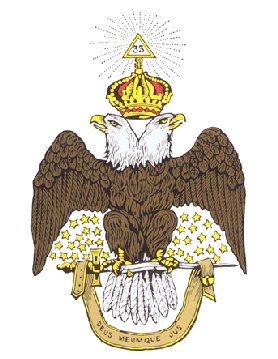
The Ancient and Accepted Scottish Rite of Freemasonry is a rite within the broader context of Freemasonry. It is the most widely practiced Rite in the world. In some parts of the world, and in the Droit Humain, it is a concordant body and oversees all degrees from the 1st to 33rd degrees, while in other areas, a Supreme Council oversees the 4th to 33rd degrees.

A Masonic lodge, also called a private lodge or constituent lodge, is the basic organisational unit of Freemasonry.
The history of Freemasonry encompasses the origins, evolution and defining events of the fraternal organisation known as Freemasonry. It covers three phases. Firstly, the emergence of organised lodges of operative masons during the Middle Ages, then the admission of lay members as "accepted" or "speculative" masons, and finally the evolution of purely speculative lodges, and the emergence of Grand Lodges to govern them. The watershed in this process is generally taken to be the formation of the first Grand Lodge in London in 1717. The two difficulties facing historians are the paucity of written material, even down to the 19th century, and the misinformation generated by masons and non-masons alike from the earliest years.

Freemasonry in Malta has a lengthy history dating from the eighteenth century. The main masonic influences have been from the United Grand Lodge of England, the Grand Lodge of Scotland, and the Grand Lodge of Ireland. Today Regular Freemasonry is under the jurisdiction of the English Constitution since 1815, the Sovereign Grand Lodge of Malta, which was formed in 2004 as well as the Grand Lodge of Scotland.

The Knights Templar, full name The United Religious, Military and Masonic Orders of the Temple and of St John of Jerusalem, Palestine, Rhodes and Malta, is a fraternal order affiliated with Freemasonry. Unlike the initial degrees conferred in a regular Masonic Lodge, which only require a belief in a Supreme Being regardless of religious affiliation, the Knights Templar is one of several additional Masonic Orders in which membership is open only to Freemasons who profess a belief in Christianity. One of the obligations entrants to the order are required to declare is to protect and defend the Christian faith. The word "United" in its full title indicates that more than one historical tradition and more than one actual order are jointly controlled within this system. The individual orders 'united' within this system are principally the Knights of the Temple, the Knights of Malta, the Knights of St Paul, and only within the York Rite, the Knights of the Red Cross.
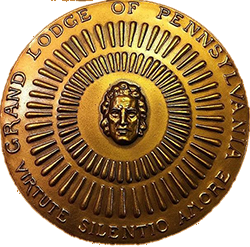
The Grand Lodge of Pennsylvania, officially The Right Worshipful Grand Lodge of the Most Ancient and Honorable Fraternity of Free and Accepted Masons of Pennsylvania and Masonic Jurisdictions Thereunto Belonging, sometimes referred to as Freemasons of Pennsylvania, is the premier masonic organization in the Commonwealth of Pennsylvania. The Grand Lodge claims to be the oldest in the United States, and the third-oldest in the world after England and Ireland, having been originally established as the Provincial Grand Lodge of Pennsylvania in 1731. This claim is disputed by both the Grand Lodge of Massachusetts and the Grand Lodge of Virginia.
Freemasonry in Sweden was introduced by the Swedish Order of Freemasons, founded in 1735 as the oldest still active Swedish fraternal order, working the Swedish Rite of Freemasonry. It is under royal patronage of the King of Sweden and closely associated with the Lutheran Church of Sweden. It is a jurisdiction that admits Christian men only, and is recognised by the United Grand Lodge of England as a Regular Masonic jurisdiction. Its total membership is about 16,500.

The Grand Lodge of Texas, Ancient Free and Accepted Masons is the largest of several governing bodies of Freemasonry in the State of Texas, being solely of the Ancients' tradition and descending from the Ancient Grand Lodge of England, founded on 17 June 1751 at the Turk's Head Tavern, Greek Street, Soho, London. According to historian James D. Carter, the "Grand Lodge of the Republic of Texas, A.F. & A.M." was founded on 16 April 1838. However, its first Grand Master and other grand officers were installed by Sam Houston on 11 May 1838. The Grand Lodge of Texas is one of the largest in the world, reporting 69,099 members in 2019. The current Grand Lodge of Texas facilities were made possible by the fundraising efforts of Waco Masonic Lodge No. 92.
Freemasonry in Denmark was first established in 1743 and is today represented by a number of Grand Lodges. The oldest and biggest Masonic Grand Lodge in Denmark is the Danish Order of Freemasons, in English also known as the Grand Lodge of Denmark.
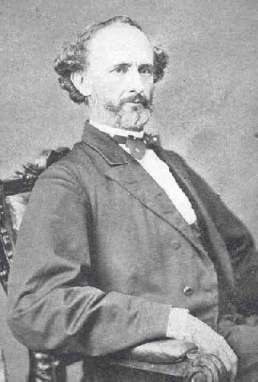
Henry Pelham Holmes Bromwell was an American lawyer, politician from Illinois, and prominent Freemason. He was a lawyer and judge who served as a U.S. representative from Illinois from 1865–1869 and continued to practice law when he moved to Colorado in 1870 where he was appointed to compile the state's statutes. Bromwell was initiated into freemasonry in 1854, and he became the Grand Master of Illinois in 1864. When he moved to Colorado he became that state's first Honorary Grand Master. He developed the Free and Accepted Architects, a new rite for Freemasonry which sought to teach its initiates the lost work of the craft embodied in Bromwell's Geometrical system. After his death, the Grand Lodge of Colorado published his work on the esoteric nature of Sacred geometry in the book Restorations of Masonic Geometry and Symbolry.
Freemasonry in France has been influential on the worldwide Masonic movement due to its founding of Continental Freemasonry.

The Grand Lodge of Free & Accepted Masons of Indiana is one of two statewide organizations that oversee Masonic lodges in the state of Indiana. It was established on January 13, 1818. In 2016 the number of Freemasons in the Grand Lodge of Indiana was 55,553 amongst its 394 separate lodges, currently making it the sixth largest Masonic jurisdiction in the U.S. The Grand Lodge of Indiana's offices and archives are located in the Indianapolis Masonic Temple. The historically black Most Worshipful Prince Hall Grand Lodge of Indiana F&AM is the second regular Masonic grand lodge in the state, and it was originally established in 1856 as the Independent Union Grand Lodge of Free and Accepted Masons of the State of Indiana. The two grand lodges agreed to mutual recognition in May 1998, and they jointly share sovereignty over the Masonic fraternity in Indiana.

Masonic ritual is the scripted words and actions that are spoken or performed during the degree work in a Masonic lodge. Masonic symbolism is that which is used to illustrate the principles which Freemasonry espouses. Masonic ritual has appeared in a number of contexts within literature including in "The Man Who Would Be King", by Rudyard Kipling, and War and Peace, by Leo Tolstoy.
The history of Freemasonry in Mexico can be traced to at least 1806 when the first Masonic lodge was formally established in the nation.
Freemasonry in Scotland in lodges chartered by the Grand Lodge of Scotland comprises the Scottish Masonic Constitution as regular Masonic jurisdiction for the majority of freemasons in Scotland. There are also lodges operating under the Scottish Masonic Constitution in countries outside of Scotland. Many of these are countries linked to Scotland and the United Kingdom through the Commonwealth of Nations and prior colonies and other settlements of the British Empire although there are several lodges in countries such as Lebanon, Belgium, Chile and Peru, which do not have such connections.

The Grand Lodge of Ancient, Free And Accepted Masons of New Mexico is the oldest and largest of the two regular Masonic Grand Lodges in the State of New Mexico. It was founded on August 7, 1877, in Santa Fe, New Mexico.

