Related Research Articles
A tariff is a tax imposed by the government of a country or by a supranational union on imports or exports of goods. Besides being a source of revenue for the government, import duties can also be a form of regulation of foreign trade and policy that taxes foreign products to encourage or safeguard domestic industry. Protective tariffs are among the most widely used instruments of protectionism, along with import quotas and export quotas and other non-tariff barriers to trade.
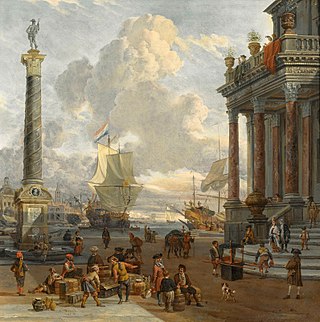
Free trade is a trade policy that does not restrict imports or exports. In government, free trade is predominantly advocated by political parties that hold economically liberal positions, while economic nationalist and left-wing political parties generally support protectionism, the opposite of free trade.
A subsidy or government incentive is a type of government expenditure for individuals and households, as well as businesses with the aim of stabilizing the economy. It ensures that individuals and households are viable by having access to essential goods and services while giving businesses the opportunity to stay afloat and/or competitive. Subsidies not only promote long term economic stability but also help governments to respond to economic shocks during a recession or in response to unforeseen shocks, such as the COVID-19 pandemic.

Agricultural policy describes a set of laws relating to domestic agriculture and imports of foreign agricultural products. Governments usually implement agricultural policies with the goal of achieving a specific outcome in the domestic agricultural product markets.
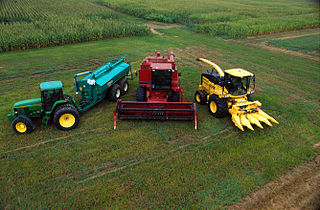
An agricultural subsidy is a government incentive paid to agribusinesses, agricultural organizations and farms to supplement their income, manage the supply of agricultural commodities, and influence the cost and supply of such commodities.

Agriculture, forestry, and fishing form the primary sector of industry of the Japanese economy together with the Japanese mining industry, but together they account for only 1.3% of gross national product. Only 20% of Japan's land is suitable for cultivation, and the agricultural economy is highly subsidized.

The Central Union of Agricultural Co-operatives, in short JA-Zenchu (JA全中), is an independent administrative Japanese body within the Japan Agriculture (JA) Group which determines policy and administrates the group. Its legal status was originally a Recognised Corporate Body under the control of the Ministry of Agriculture, Forestry and Fisheries (MAFF), but since 2002 has become a Special Civilian Corporate Body.
The Agreement on Agriculture (AoA) is an international treaty of the World Trade Organization. It was negotiated during the Uruguay Round of the General Agreement on Tariffs and Trade, and entered into force with the establishment of the WTO on January 1, 1995.
Japan Agricultural Cooperatives, also known as Nōkyō (農協) or JA Group, refers to the national group of 694 regional co-ops in Japan that supply members with input for production, undertake packaging, transportation, and marketing of agricultural products, and provide financial services. As of 2012, there are 4.6 million official members and 5.4 million associate members in JA. While "JA" refers to co-ops that operate in respective municipalities, the "JA Group" includes administrative bodies that supervise regional co-ops across several prefectures, run wholesale business in food products and production inputs across municipal and prefectural borders (Zen-Noh), manage credit unions, offer insurance, and a national headquarters that controls the entire group and manages government relations. "JA" and "JA Group" are often used interchangeably.

Roughly one-third of Iran's total surface area is suited for farmland, but because of poor soil and lack of adequate water distribution in many areas, most of it is not under cultivation. Only 12% of the total land area is under cultivation but less than one-third of the cultivated area is irrigated; the rest is devoted to dryland farming. Some 92 percent of agricultural products depend on water. The western and northwestern portions of the country have the most fertile soils. Iran's food security index stands at around 96 percent.

Agriculture in South Korea is a sector of the economy of South Korea. Korean agriculture is the basic industry of the Korean economy, consisting of farming, animal husbandry, forestry and fishing. At the time of its founding, Korea was a typical agricultural country, with more than 80% of the population engaged in agricultural production. After land reform under the Lee Seung-man administration, economic revitalization under the Park Chung-hee military government and the wave of world trade liberalization that began in the 1980s, Korean agriculture has undergone dramatic changes. Through the Green Revolution, Korea became self-sufficient in rice, the staple food, in 1978, and in 1996, Korea became the first Asian country after Japan to mechanize its agriculture with fine-grained cultivation. The development of Korean agriculture has also led to the development of agriculture-related industries such as fertilizer, agricultural machinery and seed.
The beef hormone controversy or beef hormone dispute is one of the most intractable agricultural trade controversies since the establishment of the World Trade Organization (WTO).

China primarily produces rice, wheat, potatoes, tomato, sorghum, peanuts, tea, millet, barley, cotton, oilseed, corn and soybeans.
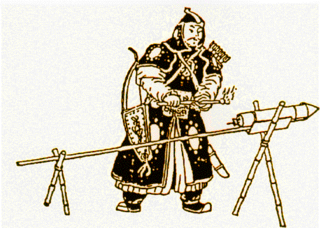
For millennia, agriculture has played an important role in the Chinese economy and society. By the time the People's Republic of China was established in 1949, virtually all arable land was under cultivation; irrigation and drainage systems constructed centuries earlier and intensive farming practices already produced relatively high yields. But little prime virgin land was available to support population growth and economic development. However, after a decline in production as a result of the Great Leap Forward (1958–60), agricultural reforms implemented in the 1980s increased yields and promised even greater future production from existing cultivated land.

In New Zealand, agriculture is the largest sector of the tradable economy. The country exported NZ$46.4 billion worth of agricultural products in the 12 months to June 2019, 79.6% of the country's total exported goods. The agriculture, forestry and fisheries sector directly contributed $12.653 billion of the national GDP in the 12 months to September 2020, and employed 143,000 people, 5.9% of New Zealand's workforce, as of the 2018 census.

Rice production in Japan is important to the food supply in Japan, with rice being a staple part of the Japanese diet. Most people in Japan see this food as a substantial part of their daily diet.

Agriculture in Saudi Arabia is focused on the export of dates, dairy products, eggs, fish, poultry, fruits, vegetables, and flowers to markets around the world after achieving self-sufficiency in the production of such products. The government of Saudi Arabia is heavily involved in the agriculture industry and subsidizing corporate farming and the Ministry of Environment, Water and Agriculture is primarily responsible for agricultural policy. In the private sector, farmers receive long-term interest-free government loans and low-cost water, fuel, electricity, and duty-free imports of raw materials and machinery.
Consumers Union of Japan (日本消費者連盟) or CUJ was founded in 1969 by Takeuchi Naokazu. CUJ is certified as a non-profit organization by Japan's NPO legislation. CUJ publishes "Consumer Report" as a member newsletter, as well as online services in Japanese and English.
The Catfish Dispute started in 2001, as a trade war between Vietnam and the United States' catfish producers. The main argument concerns the import volume of catfish from Vietnam which results in lower profits for U.S. catfish producers. In dealing with major losses in profit, the Catfish Farmers of America (CFA), presented a series of lawsuits to the U.S. Department of Commerce against frozen catfish from Vietnam.

Agriculture in Ireland began during the neolithic era, when inhabitants of the island began to practice animal husbandry and farming grains. Principal crops grown during the neolithic era included barley and wheat.
References
- ↑ Montanez, Cathie (2014-04-07). "LDRD FY2013 Annual Report" (PDF). doi:10.2172/1128897. OSTI 1128897.
{{cite journal}}: Cite journal requires|journal=(help) - 1 2 Naoi, Megumi; Kume, Ikuo (October 2011). "Explaining Mass Support for Agricultural Protectionism: Evidence from a Survey Experiment During the Global Recession". International Organization. 65 (4): 771–795. doi:10.1017/S0020818311000221. ISSN 0020-8183.
- 1 2 Olson, Mancur. (1995). The logic of collective action : public goods and the theory of groups . Harvard University Press. ISBN 9780674537514. OCLC 847088245.
- ↑ Horiuchi, Yusaku; Saito, Jun (December 2010). "Cultivating Rice and Votes: The Institutional Origins of Agricultural Protectionism in Japan". Journal of East Asian Studies. 10 (3): 425–452. doi: 10.1017/s1598240800003684 . hdl: 1885/29007 . ISSN 1598-2408.
- ↑ Cox, Gary W. (1987). The Efficient Secret. Cambridge: Cambridge University Press. doi:10.1017/cbo9780511571473. ISBN 9780511571473.
- ↑ Takada, Aya (February 9, 2015). "Japan's Farm Lobby Concedes to Abe's Agriculture Reform Plans". Bloomberg. Retrieved 2019-08-02.
- ↑ "First human case of mad cow disease in Japan". www.newscientist.com. Retrieved 2019-08-02.
- ↑ "Food Action Nippon". Washoku Lovers. 2016-03-14. Retrieved 2019-08-02.
- ↑ "Japan shows food education works - BCFN Foundation". www.barillacfn.com. Retrieved 2019-08-02.
- ↑ Yamashita, Kazuhito; (2015); Japanese Agriculture Trade Policy and Sustainable Development; Issue Paper No. 56; International Centre for Trade and Sustainable Development, Geneva, Switzerland, www.ictsd.org.